
Knowledge – Fish
Burbot: Features, habitat, best time and baits
The burbot (Lota lota), also called Rutte, Aalquappe or Trüsche, is the only member of the cod family that lives only in fresh and brackish water. It hides by day, hunts on the bottom at night and is most active in cold water. In Germany it is classed as endangered.
In short: The best time to catch burbot is October, in the evening, at night and in the morning. Good spots on a lake: the drop-off edge and deep bottom; on a river: undercut banks, rock armouring and deep pools. Proven baits: a bunch of lobworms on a ledger rig and, where allowed, also a dead baitfish or fish strips. The burbot is listed as endangered on Germany’s Red List. It is protected all year in Hesse, North Rhine-Westphalia, Rhineland-Palatinate and Saarland, from 1 November to 28 February in Baden-Württemberg, from 1 November to 31 March in Thuringia and from 1 January to 28 February in Schleswig-Holstein (as of October 2026). Step by step: Fishing for burbot.
- A single long barbel on the chin
- Second dorsal fin about six times as long as the first, plus a very long anal fin
- Pelvic fins in a throat position: set in front of the pectoral fins
Catch chances through the year
- Hardly any chance
- Possible
- Good
- Peak season
- Spawning (observe the closed season)
Editorial assessment for waters in Germany, not a measured value and no guarantee. Spawning time is not the same as the legal closed season.
Species profile and sources in the catch calendarAll species compared month by monthThe rules of your federal state
How to recognise it
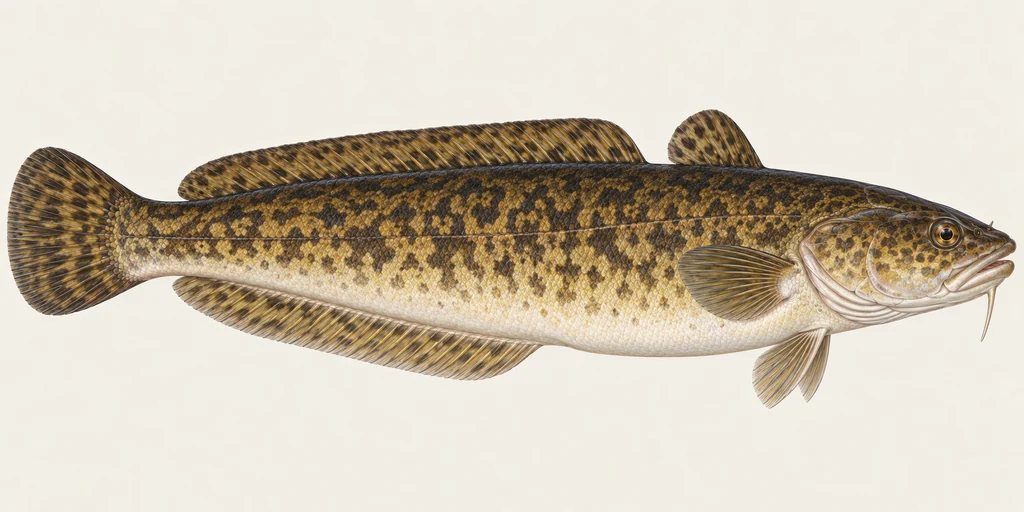
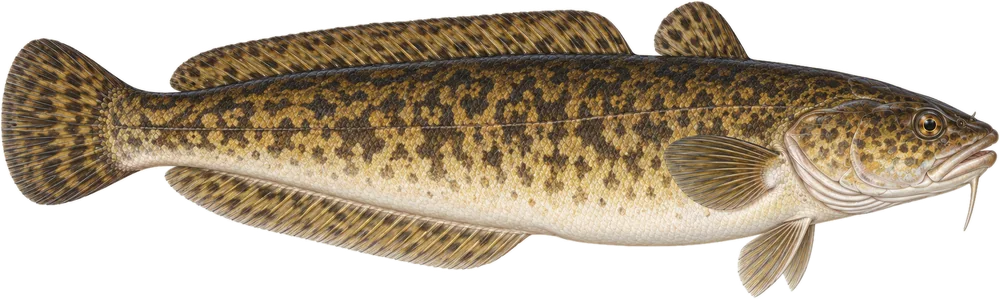
The burbot has an elongated body that is round at the front and flattens sideways towards the tail. The head is broad, the mouth wide and slightly underslung. There is a single barbel on the chin, plus two very short skin flaps at the nostrils. The pelvic fins are jugular, that is, set under the throat in front of the pectoral fins.
There are two dorsal fins. The second is at least six times as long as the first, the anal fin is also long, and the tail fin is rounded. The back is grey-green, olive or brown with dark marbling, the underside pale.
The Landesfischereiverband Bayern and the state of Lower Saxony give 30 to 60 centimetres as the average. A brochure from North Rhine-Westphalia speaks of fish mostly up to 50 centimetres, in exceptional cases over 70. According to Blinker it seldom grows larger than 40 centimetres. FishBase gives 152 centimetres, 34 kilograms and 20 years as the highest reported values. Life expectancy is about twelve years. It usually matures in its third or fourth year at 25 to 40 centimetres.
The burbot resembles small catfish and the eel. In the eel the dorsal, tail and anal fins form one continuous fringe, and there are no pelvic fins. The wels catfish has two long barbels on the upper jaw and four shorter ones on the lower jaw, not just one on the chin. Unlike the brown bullhead, the wels catfish has no adipose fin.
A single chin barbel, two dorsal fins and pelvic fins in front of the pectorals do not occur together in any other freshwater fish in Europe.
Side by side
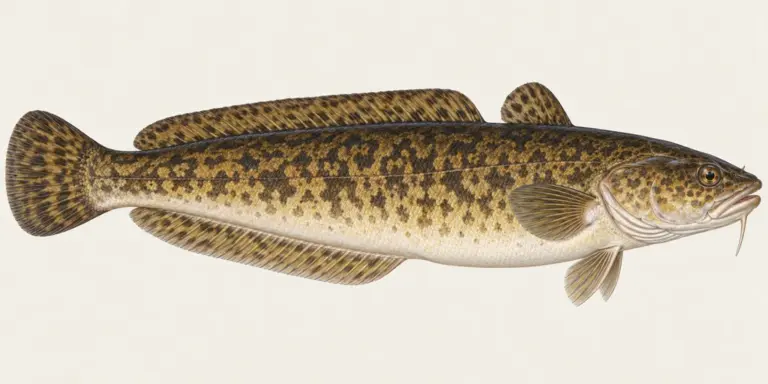
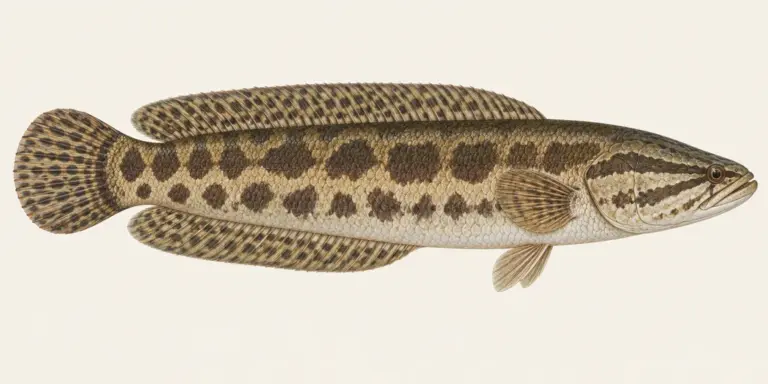
AI-generated illustrations.
Where it lives
In running water the burbot occupies nearly all stretches, from the trout zone down to the lower reaches. It also lives in cool lakes with a through-flow, in the lowlands as in the high mountains, and in some low-salinity brackish areas of the North Sea and Baltic Sea. As a fish of cool waters it avoids warm water: the Landesfischereiverband Baden-Württemberg writes that it tolerates more than 23 degrees only briefly and feels most comfortable at 16 to 18 degrees. FishBase gives a range of 4 to 18 °C. Oxygen should not fall below 40 per cent saturation.
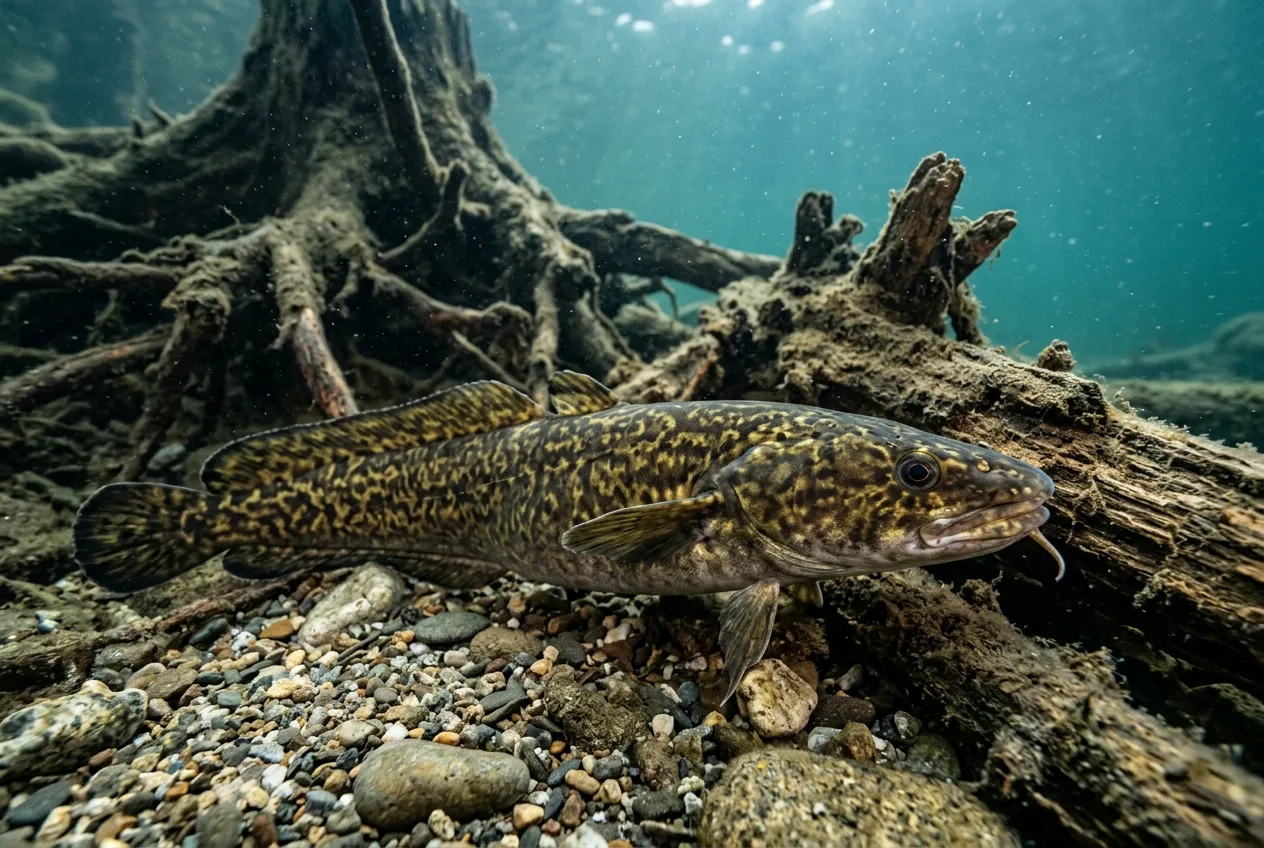
By day it hides under stones, roots, dead wood or in dense plants. According to FishBase, burbot in rivers gather in deep holes all year outside the spawning season. It avoids strong current: at more than 0.25 metres per second it can hold its position for only a few minutes. It therefore stays in slack zones, behind stones and in scour pools.
Anglers report success on steeply shelving banks of deep lakes, at river and ditch mouths, on undercut banks, on rock armouring and at locks and weirs. By this experience, running waters connected to a lake often hold a good stock.
Holding spots in the picture
Choose a season and time of day: the picture shows where the species sits then. Tap a fish or a spot in the list to bring it closer. The picture is schematic and AI-generated, every water is different.
Catch chances in springpossible
Catch chance in summerhardly any
Catch chance in autumnpossible
Catch chances in winterpossiblespawning season, observe the closed seasons
- J
- F
- M
- A
- M
- J
- J
- A
- S
- O
- N
- D
Spawning season
Active time The burbot looks for food at dusk and at night and spends the day resting in hiding.
No main time The burbot looks for food at dusk and at night and spends the day resting in hiding.
Active time The burbot looks for food at dusk and at night and spends the day resting in hiding.
Active time The burbot looks for food at dusk and at night and spends the day resting in hiding.
In the lake
Shelf edge
Burbot are found here all year.
Deep bottom
Burbot are found here all year.
The burbot prefers large, deep lakes with cool, oxygen-rich water. There it holds at steeply shelving stretches of bank where it finds enough hiding places. By day it stays under roots, stones and among dense plants.
Spring: catch chance according to the catch calendar possible in March and April, slim in May.
Summer: catch chance according to the catch calendar slim. In summer the burbot eats little and stays deep. On summer nights it also comes into shallower water to feed.
Autumn: catch chance according to the catch calendar possible in September, good in October, possible in November.
Winter: catch chance according to the catch calendar possible. This is when spawning falls, so observe the closed seasons. At spawning time from November to March it moves into shallower water and spawns at night over sand and gravel. On a lake the spawning shoals are hard to find, and in this period the burbot is protected in many places.
In the river
Undercut bank, overhanging branches, timber
Burbot are found here all year.
Pools, deep spot
Burbot are found here all year.
riprap, sheet piling, harbour
Burbot are found here all year.
In the river the burbot holds at undercut banks and rip-rap, at locks and weirs and in river and ditch mouths. It seeks shelter under stones, in bank crevices and between tree roots. Outside the spawning season river burbot gather in deep holes.
Spring: catch chance according to the catch calendar possible in March and April, slim in May.
Summer: catch chance according to the catch calendar slim. In summer it takes longer rests and prefers deep water.
Autumn: catch chance according to the catch calendar possible in September, good in October, possible in November.
Winter: catch chance according to the catch calendar possible. This is when spawning falls, so observe the closed seasons. During spawning the burbot often migrates upstream and sometimes piles up at structures in the river. It spawns over sandy-gravelly spots, and in this period it is protected in many places.
Depth: It lives on the bottom over gravel or sand and avoids mud. In summer it prefers deep water.
Size comparison: AI-generated drawing, schematic.
How it hunts and spawns
Small burbot eat plankton, water lice, freshwater shrimps, worms, insect larvae and molluscs. With age, fish play an ever larger part, along with spawn and frogs. The eel eats similar food and, according to the Landesfischereiverband Bayern, can affect the stock as a food competitor.
The burbot hunts at dusk and at night. In summer it is not very active and goes into a kind of summer rest. As temperatures fall in autumn it becomes clearly more active, most of all below 4 °C. In summer it moves into shallower areas at night to feed.
The spawning migration usually begins between September and November, when the water drops to 10 to 12 degrees. Spawning takes place at night, according to the sources between November and March, depending on region at water temperatures below 4 to 6 °C. Up to 20 fish form a ball about 60 centimetres across that rolls over the bottom. A female lays 350,000 to 750,000 eggs per kilogram of body weight, the highest number of all native freshwater fish. The eggs hatch after 40 to 70 days. The larvae need shallow, flooded floodplain waters. Spawning migrations of more than 100 kilometres have been documented in rivers, formerly in the Elbe.
When it bites
The burbot is a winter fish. Specialist articles give October to December or November to March as the best time. Its most active period coincides with spawning, which usually starts in December and during which it is protected in many places. Anglers report that the chances are better shortly before and after spawning, because the fish are hungry then and do not gather in spawning shoals. Anglers see good chances on dark, rainy nights in slightly coloured water.
In the catch calendar the burbot is therefore rated only Possible from November to March and Good in October. In summer it eats little and stays deep.
Today’s catch index needs JavaScript. Season and spawning time are in the catch calendar.
You will find the monthly overview of all species and the water temperature check in the catch calendar.
From the blog: Fishing in November: which fish bite now and where I look for them
What to catch it with
Step by step: Fishing for burbot: tips on bait, rig and tackle – season, swims, baits, tackle and rules on one page.
Where burbot may be fished for, bottom fishing with natural baits is the usual method, mostly at night (night fishing). A simple running ledger rig is usual. For the hooklength, Blinker authors give 30 to 70 centimetres, in a mountain lake only 5 to 15. For hooks, recommendations range from fine-wire sizes 4 to 6 up to large hooks around 1/0. The burbot easily swallows small hooks deep, so winter specialists advise larger patterns with the barb pinched down.
The bait of choice is a bunch of lobworms or dendrobaenas. Because the burbot reacts to movement, you renew it regularly. Whether fish can compete is judged differently by specialist authors: the species profile considers the worm bunch superior, while a Hunte specialist catches the larger burbot with a finger-length dead baitfish and says the lobworm brings mainly smaller ones. Fish pieces up to about ten centimetres are also regarded as a good bait in winter (Baitfish).
The swims are prone to snags. The main line must be abrasion-resistant; monofilament lines between 0.25 and 0.40 millimetres or thin braid are named, although braid ices up in frost. A sturdy bottom rod with a casting weight of 30 to 70 grams and a length of about three metres is usual.
In rivers, stalking with a short spinning rod also works. There burbot often give themselves away with small puffs of mud and can be offered a bait by sight with a fixed lead and a hooklength of about 20 centimetres.
Rules first, then the swim: Before every session check whether burbot may be fished for in your water. Many states and waters protect it.
The worm has to move: Renew the worm bunch regularly. The burbot looks for prey in the dark and goes by movement.
Allow for snags: Rigs easily catch among stones, roots and dead wood. A sturdy line and a short rig on the bottom prevent break-offs.
Suitable lures
A bunch of lobworms on a ledger rig and, where allowed, also a dead baitfish or fish strips.
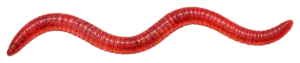
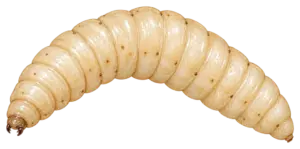
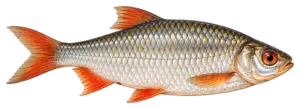
AI-generated illustrations. A click opens the lure’s page.
Rigs for these baits: running ledger rig, baitfish rig, float rig.
Endangered and protected in many places: whether you may fish for burbot is regulated by the federal state and your fishing permit (Erlaubnisschein).
What you need to observe
The burbot is listed as endangered on Germany’s 2023 Red List; before that it was on the Near Threatened list (Vorwarnliste). Experts discuss warm-water discharges, lack of shade and warming waters as causes. In North Rhine-Westphalia it is classed as critically endangered on the state list, and in the Rhine catchment of Baden-Württemberg as endangered. In many places the stock is supported by hatchery and stocking measures.
Because of its threatened status, protection rules apply to the burbot in many places. It is protected all year in Hesse, North Rhine-Westphalia, Rhineland-Palatinate and Saarland. Other states protect it precisely in the winter months, which count as the best time to catch it: Baden-Württemberg from 1 November to 28 February (LFischVO), Thuringia from 1 November to 31 March and Schleswig-Holstein from 1 January to 28 February. Bavaria has no closed season but a minimum size of 40 centimetres (as of October 2026). What applies on your water is also set out in the water rules and your fishing permit (Erlaubnisschein).
Closed seasons (Schonzeit), minimum sizes (Mindestmaß) and harvest windows are set by the federal states (Bundesland), and on many waters additionally by the club or leaseholder. They differ depending on the water and the time of year. We give figures only with a date and a source; always binding are the fisheries regulation of your federal state and your fishing permit (Erlaubnisschein). You will find a list of links to the official sources in the catch calendar.
A fish of legal size that you want to keep you stun and kill at once, in line with animal welfare rules. Protected, undersized fish or fish too large under a harvest slot you unhook, if possible still in the water and with wet hands, and release gently. What exactly applies is regulated by state law and your fishing permit (Erlaubnisschein).
What closed season, minimum size and harvest slot mean and where to find them is explained on the page Closed season and minimum size explained.
What state law prescribes for closed season and minimum size for this species is in the “At a glance” box on the pages for Baden-Württemberg, Bavaria, Berlin, Brandenburg, Bremen, Hamburg, Hesse, Lower Saxony, North Rhine-Westphalia, Rhineland-Palatinate, Saarland, Saxony-Anhalt, Schleswig-Holstein and Thuringia. Our overview does not list this species for the other states; there the state fisheries regulation (Landesfischereiverordnung) applies.
Frequently asked questions (FAQ)
Which bait catches burbot?
Usually a regularly renewed bunch of lobworms on the bottom. For larger burbot some specialists recommend a small dead baitfish or fish pieces.
Why does the burbot bite mainly in winter?
It is adapted to cold water. In summer it is not very active; as temperatures fall in autumn its activity rises clearly, most strongly below 4 °C.
May I take a burbot home?
It depends on the federal state and the water. The species is endangered and protected in many places. State law and your fishing permit (Erlaubnisschein) are binding.
Sources
The rating of catch chances is an editorial assessment. The facts come from these sources, and the text is worded in our own words. The illustration is an original design by Angel Momente in the style of a natural history plate (AI-generated, see the AI notice).
- Landesfischereiverband Bayern: Fischlexikon (Laichzeit, Lebensraum, Nahrung, Aktivität)
- FishBase: Lota lota (Höchstalter, Laichtemperatur, Lebensraum)
- Rote-Liste-Zentrum: Quappe (Rote Liste der Süßwasserfische Deutschlands 2023: stark gefährdet)
- Blinker: Steckbrief Quappe (Merkmale, Standplätze, Angelzeit, Köder)
- LAVES Niedersachsen: Vollzugshinweise zum Schutz von Fischarten, Quappe (Stand November 2011)
- Wasserlauf NRW, Stiftung für Gewässerschutz und Wanderfische: Die Quappe im Rheingebiet (März 2023)
- Landesfischereiverband Baden-Württemberg: Artenschutz Quappe
- Blinker: Quappenangeln, 6 Tipps für deinen Erfolg (Top-Zeit November bis März, Vorfach, Haken, Schnur, 2024)
- Blinker: Quappen im Winter, 5 Tipps zum Erfolg (Laichzeit, große Haken gegen tiefes Schlucken, Köder, 2024)
- Blinker: Im Fluss gezielt auf Quappe angeln (Hauptzeit Oktober bis Dezember, Köderfisch für große Quappen, 2025)
- Bayern: AVBayFiG, Anlage 1 (Schonzeiten und Schonmaße, Fassung ab 1.6.2025)
- Baden-Württemberg: Landesfischereiverordnung (LFischVO), Schonzeiten
- Wikipedia: Quappe (Merkmale, Größe, Alter, Temperaturbereich, Laichzeit, Schutz)
Created with AI support from the sources listed. Figures only appear in the text if a source gives them. Last updated: 1 November 2026. Found a mistake? Write to us. Who is behind this site: About me.
More in the lexicon
- All fish species at a glance
- Catch calendar – month, water temperature and profile for 93 species
- Line calculator – breaking strain after the knot, drag guideline, backing
- Angling methods