
Waters · Germany
Fishing on the Danube
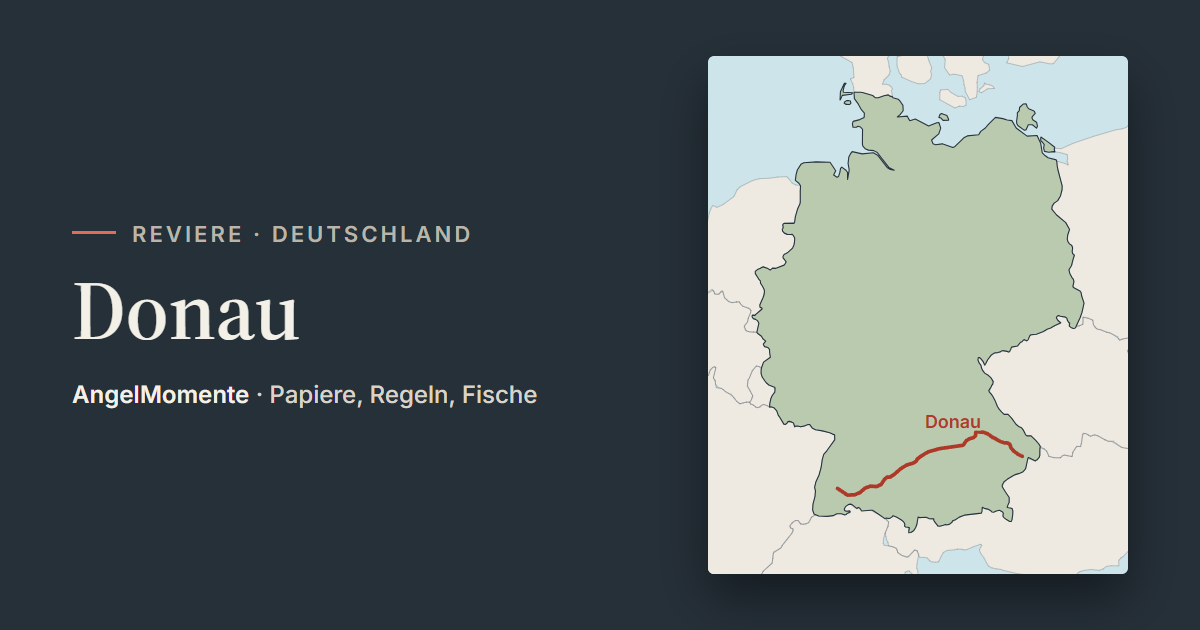
The Danube begins at Donaueschingen and leaves Germany at the border at Jochenstein. From Kelheim large cargo ships operate, many stretches are impounded, and between Straubing and Vilshofen it flows free for about 70 km. Two state laws apply to fishing, and the permit changes from stretch to stretch.
- Papers
- Fishing licence (Fischereischein), fishing levy (Fischereiabgabe) and fishing permit (Erlaubnisschein) for the stretch
As of October 2026
At a glance
- Papers
- Fishing licence (Fischereischein), fishing levy (Fischereiabgabe) and fishing permit (Erlaubnisschein) for the stretch
- Licence and permit
- Fishing permit (Erlaubnisschein) from the rights holder of the stretch, e.g. Deggendorf online
- Day fishing permit (Erlaubnisschein) Straubing from the district angling club (Bezirksfischereiverein)
- Visitors without residence in Germany: annual fishing licence (Fischereischein) from the municipality at the fishing location
| Fish | Minimum size | Closed season | Note |
|---|---|---|---|
| Huchen (Danube salmon) | 90 cm | 15.2.–30.6. | BW 70 cm, 1.2.–31.5. |
| Zander | 50 cm | 15.2.–30.4. | Lower Bavaria until 31.5.; BW 45 cm, 1.4.–15.5. |
| Pike | 50 cm | 15.2.–30.4. | Lower Bavaria until 31.5.; BW 15.2.–15.5. |
| Barbel | 40 cm | 1.5.–30.6. | from Niederachdorf 15.4.–15.6.; BW 1.5.–15.6. |
| Common nase | 30 cm | 1.3.–30.4. | BW 35 cm, 15.3.–31.5. |
| Asp | 40 cm | 1.3.–30.4. | BW 1.3.–31.5. |
| Wels catfish | – | none | |
| Aitel (chub) | – | none | |
| Carp | 35 cm | none | |
| Eel | – | none | Swabia 50 cm |
Bavarian state law for the Danube area (AVBayFiG) with district regulations of Lower Bavaria and Swabia; BW values in the note. The fishing permit (Erlaubnisschein) may be stricter. As at: October 2026. What counts are the regulation and your fishing permit.
Location and waters From Donaueschingen via Ulm and Regensburg to Passau
- Young Danube: In Donaueschingen the Brigach and Breg meet, and the town calls this point the source of the Danube (Stadt Donaueschingen).
- Bavarian Danube: It runs from Ulm to Passau (LfU Bayern). The river is dammed in sections, and every barrage comes with a lock, a weir and a hydropower plant (WSA Donau MDK).
- Waterway from Kelheim: From Kelheim (Danube km 2414,72) to the border at Jochenstein (km 2201,75) the Danube is a federal waterway. Alongside cargo ships, many passenger and hotel ships run here (WSA Donau MDK).
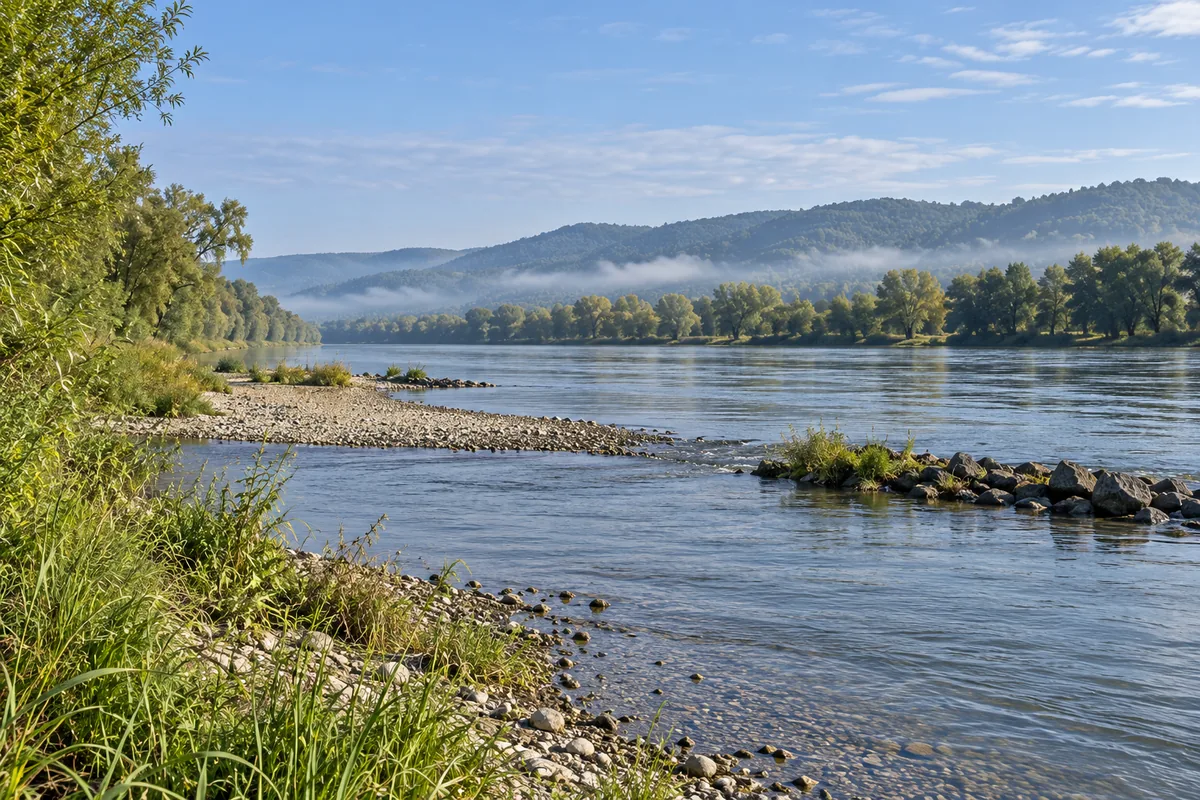
- Free-flowing stretch: Between Straubing and Vilshofen the Danube is undammed for about 70 km. Around 250 groynes and over 70 longitudinal training walls shape the bank, and the stretch is a Natura 2000 site (WSV, Donauausbau).
Fish and best time Huchen and the Danube fish of eastern Bavaria
With 52 fish species, the eastern Bavarian Danube is one of the richest stretches of river in Central Europe for fish. Many species that like current spawn there on flooded gravel bars (WSV, Donauausbau).
- Danube fish: The huchen is native only to the Danube basin. In Bavaria it has been recorded at only a fifth of its former sites (LfL, Fischzustandsbericht 2024). Danube roach (Frauennerfling), striped ruffe (Schrätzer), streber and zingel occur almost only in the Danube basin and are protected all year round in Bavaria and in Baden-Württemberg alike.
- Bream, barbel and chub: In the surveys of 2010 and 2011 between Straubing and Vilshofen, bream, common nase and barbel made up the greatest fish biomass in the main river. Among chub and barbel there were many young fish in the catch (EU-Studie Donauausbau, Fachteil Fischfauna). The common nase is regarded there as highly endangered (Bericht zum Ist-Zustand), while the asp is still fairly common (WSV).
- Predatory fish: Zander, wels catfish, pike and eel also live in this stretch, and all four are supported by stocking. In the oxbow lakes and side arms, the wels catfish makes up the greatest biomass after bream (EU-Studie). Near Deggendorf, pike, zander and wels catfish are among the common catches (Deggendorfer Fischereiberechtigte).
- Gobies: The first round gobies in Germany were recorded around 1985 in the Danube in Bavaria. Kessler’s goby now lives throughout the navigable Danube (Landesfischereiverband Bayern, 2015).
The catch calendar shows which species bites when.
Papers and permit Fishing licence and day permits in Ulm and Regensburg
In Bavaria and in Baden-Württemberg you need the fishing licence (Fischereischein) with proof of the fishing levy (Fischereiabgabe), plus a fishing permit (Erlaubnisschein) for the stretch where you fish (Landwirtschaftsministerium Bayern, § 31 Fischereigesetz BW). What applies to guests, children and licences from other states is covered under Fishing in Bavaria and Fishing in Baden-Württemberg.
In Bavaria the permit is issued by the holder of the fishing rights or, with their consent, by the leaseholder or the board of a fisheries cooperative (Art. 26 Bayerisches Fischereigesetz). In the larger towns, these bodies issue permits:
- Ulm: The Fischereiverein Ulm/Neu-Ulm angling club sells day permits to guest anglers, including for the Danube near Donaustetten, in the town area and on the chain of reservoirs (FV Ulm/Neu-Ulm, Gastkarten).
- Ingolstadt: From Bergheim to Manching the Donau- und Sandrachfischer issue the permit. Further downstream to Pförring, the Kreisfischereiverein Ingolstadt manages the Danube (KFV Ingolstadt).
- Regensburg: For the Danube from the mouth of the Regen to Donaustauf, the Anglerbund Regensburg, a public fisheries cooperative, issues day permits. It issues them only to anglers holding a membership card of an angling association (Anglerbund Regensburg).
- Straubing: The Bezirksfischereiverein Straubing sells day permits for the Danube, and registered guest anglers can also get them online (BFV Straubing).
- Deggendorf: The Deggendorfer Fischereiberechtigte issue permits for about 14 km of free-flowing Danube and 2 km of the Isar, with day and weekly permits also available online (Angeln in Deggendorf).
- Passau: The Bezirksfischereiverein Passau und Umgebung manages the Danube at the Kachlet barrage and near Vilshofen. Permits for all its waters are available from its office (BFV Passau).
For other stretches, the district office (Landratsamt) will tell you who issues the permit, as it approves the permits (Landkreis Regensburg). On the young Danube near Donaueschingen, the town’s tourist information office also sells permits.
Special rules Closed seasons by district and stricter day permits
- Closed seasons and minimum sizes: The values in the box apply under Bavarian law for the Danube basin (Anlage zur AVBayFiG). Deviating values for Baden-Württemberg (§ 1 LFischVO BW), Lower Bavaria (Bezirksfischereiverordnung) and Swabia (Bezirksfischereiverordnung) are given as a note in each case.
- Stricter permits: On the Regensburg day permit, fishing for predators is banned from 15 February to 31 May, and zander must be 60 cm there (Gewässerbestimmungen Donau). Near Deggendorf, predator baits are prohibited from 1 February to 31 May (Bestimmungen).
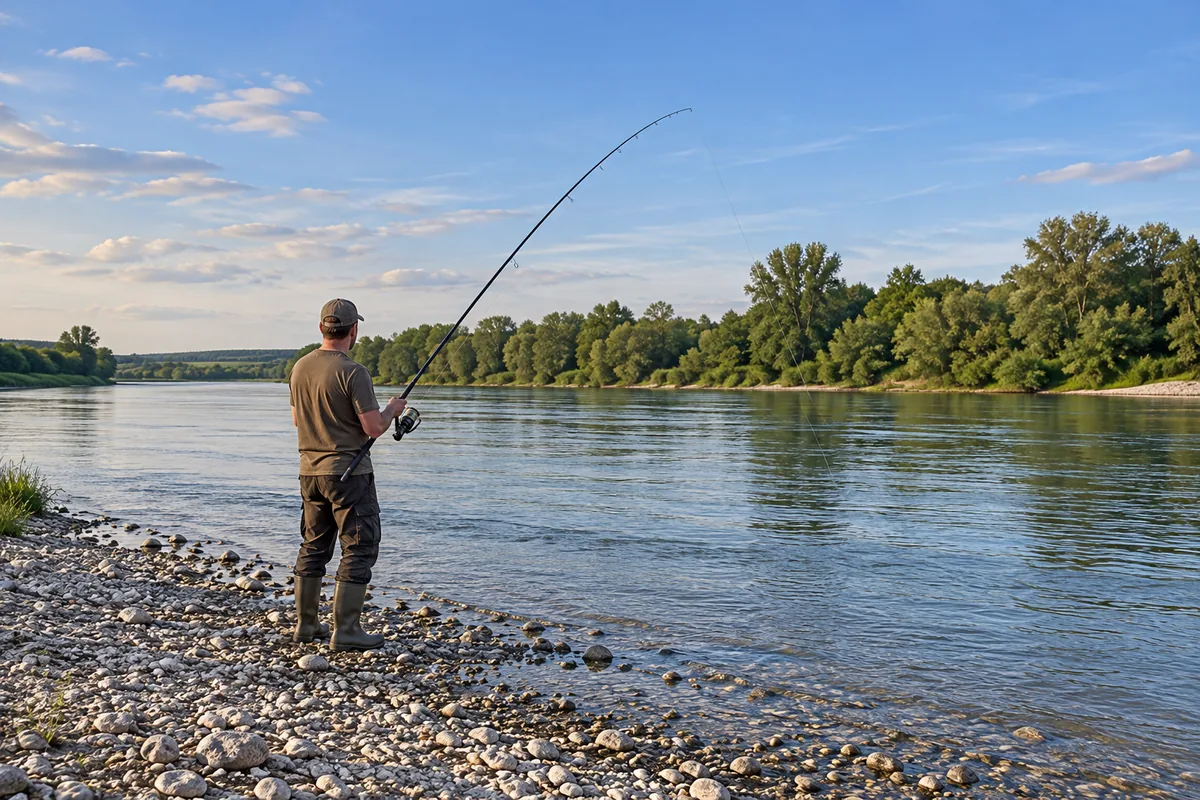
- Tackle: In Bavaria, no more than two hand-held rods with a combined total of six bite points (hook points) are allowed, and live baitfish and fishing in fish passes are prohibited. In Baden-Württemberg, two rods with no more than three hooks each are allowed (§ 3 LFischVO BW).
- Gobies and returning fish in Bavaria: Fish that are not listed in the Anlage zur AVBayFiG must not be put back into the water. Gobies are not listed there. Targeting fish in order to release them is a criminal offence in Bavaria (Landwirtschaftsministerium Bayern).
- Boat from Kelheim: On the waterway between Kelheim and Jochenstein, the Donauschifffahrtspolizeiverordnung applies. It has its own rules for vessels while fishing. Anyone who breaks them commits an administrative offence (DonauSchPV, §§ 1 und 5). In Regensburg and Deggendorf you may fish only from the bank.
- Federal waterway: You must not set foot on groynes, longitudinal training walls, weirs and locks owned by the federal government. Banks and service paths are permitted on foot, at your own risk (§ 2 WaStrBAV). Exceptions are granted by the waterways and shipping office (Wasserstraßen- und Schifffahrtsamt) (§ 6).
As of October 2026. The district ordinances apply in Swabia until the end of 2027 and in Lower Bavaria until the end of 2028. Before you take a boat onto the waterway, ask the Wasserstraßen- und Schifffahrtsamt Donau MDK about the rules. The ordinances and the conditions on your fishing permit are what count.
Safety
- Suction and waves: A moving ship creates suction and strong waves. Cargo ships cannot brake, and their blind spot extends up to 350 m (WSV, Stand 2024). From Kelheim, keep your distance from the shipping channel, especially when a ship is approaching.
- Water levels and floods: Water levels on the federal waterway are shown by PEGELONLINE, and flood warnings for Bavaria are issued by the Hochwassernachrichtendienst. Check before every trip.
- Emergency: 112 or 110. More under Bank and waders.
Related
- Fishing a river and Fishing in Germany
- Fishing in Bavaria, Fishing in Baden-Württemberg and, further downstream, the Danube in Austria
- Species in the Danube: huchen, zander, wels catfish, barbel, common nase, chub
- Closed season and minimum size explained and Stunning and killing a fish
Sources
- Verordnung zur Ausführung des Bayerischen Fischereigesetzes (AVBayFiG) (Text gültig ab 01.06.2025) und Bayerisches Fischereigesetz
- Bezirksfischereiverordnung Niederbayern (11.10.2023, gültig bis 31.12.2028) und Bezirksfischereiverordnung Schwaben (06.09.2022, gültig bis 31.12.2027)
- Bayerisches Landwirtschaftsministerium: Angelfischerei in Bayern (24.06.2025)
- Landesfischereiverordnung Baden-Württemberg (Fassung vom 18.01.2022) und Fischereigesetz Baden-Württemberg
- EU-Studie Donauausbau Straubing–Vilshofen, Anlage I.13: Schutzgutbezogene Bestandsdarstellung (2012) und LfL Institut für Fischerei: Fischzustandsbericht 2024
- WSA Donau MDK: Die Donau und Donauschifffahrtspolizeiverordnung (Stand 31.10.2019, Abdruck aus gesetze-im-internet.de)
Guide without guarantee, as of October 2026. What counts is the fisheries law of Bavaria and Baden-Württemberg with the district fisheries ordinances, the conditions of your fishing permit, the Donauschifffahrtspolizeiverordnung and the Wasserstraßen-Betriebsanlagenverordnung in their current versions.