
Knowledge – Fish
Dusky grouper (brown grouper): Features, habitat and protection
The dusky grouper (Epinephelus marginatus), also called brown grouper, is the best-known grouper of the Mediterranean. It sticks to one place in rocky caves, lives to a great age and is regarded as endangered in the Mediterranean. It is not a target fish for anglers.
In short: Endangered in the Mediterranean according to the IUCN and not a target fish. In France spearfishing is banned on the Mediterranean coast, and off Occitania and Provence-Alpes-Côte d’Azur fishing with a hook is banned too. What to do with a bycatch: Dusky grouper as bycatch.
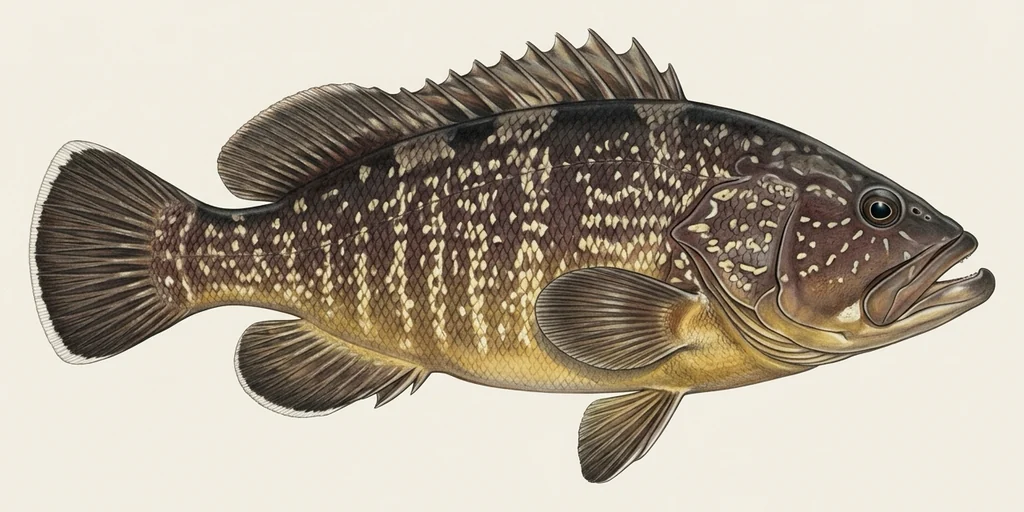
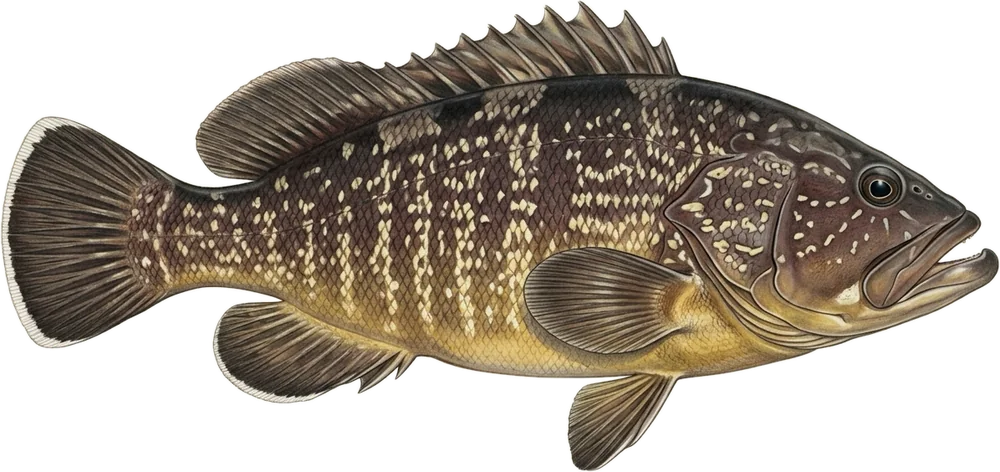
- Dark reddish-brown to grey back, belly usually yellowish gold
- Irregular light blotches on the head and body, mostly in vertical rows
- Narrow white edge on the anal and tail fins
Catch chances through the year
- Hardly any chance
- Possible
- Good
- Peak season
- Spawning (observe the closed season)
Editorial assessment for the home area (Mediterranean and eastern Atlantic), not a measured value and not a guarantee. The rules of the country you are visiting are binding.
How to recognise it
The dusky grouper is a massive fish with a large head and a wide mouth. The back and head are dark reddish-brown or grey, the underside is usually yellowish gold. Irregular white, pale green or silver-grey spots are scattered over head and body, mostly in vertical rows. A dark stripe often runs along the upper jaw.
The unpaired fins are dark brown. The anal and tail fins, often the pectoral fins too, have a narrow white edge, and the pelvic fins are blackish towards the tips. The edge of the spiny dorsal fin is often golden yellow. The dorsal fin has eleven spines.
FishBase gives maximum values of 150 centimetres, 60 kilograms and an age of 60 years. The Portuguese marine institute IPMA also gives up to 60 kilograms and, for age, up to 50 years.
Other groupers live in the Mediterranean, for example Epinephelus costae, Epinephelus caninus, Epinephelus aeneus and Mycteroperca rubra. With the dusky grouper, look for the pale spots in vertical rows and the white fin edges. In France the species named fall under the same fishing ban, so identification changes nothing about how to treat the fish there.
Apart from part of the name it has little in common with the perch or the sea bass. It belongs to the grouper family (Epinephelidae).
Side by side
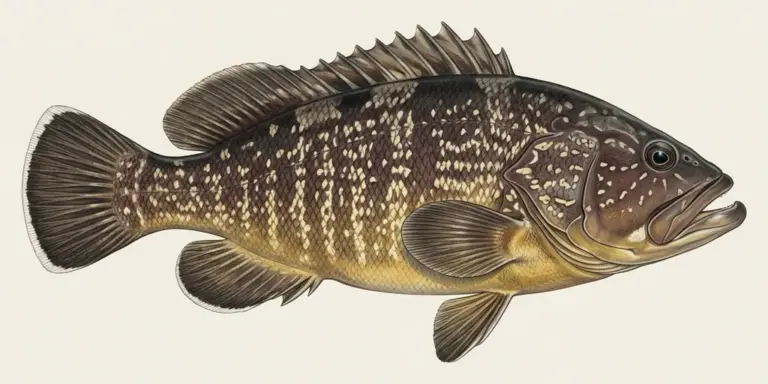
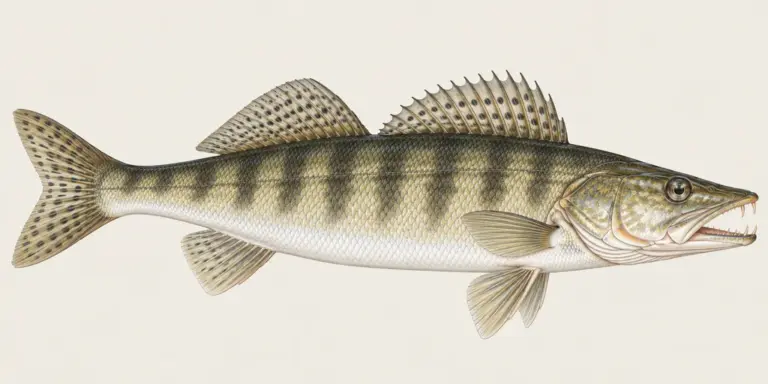
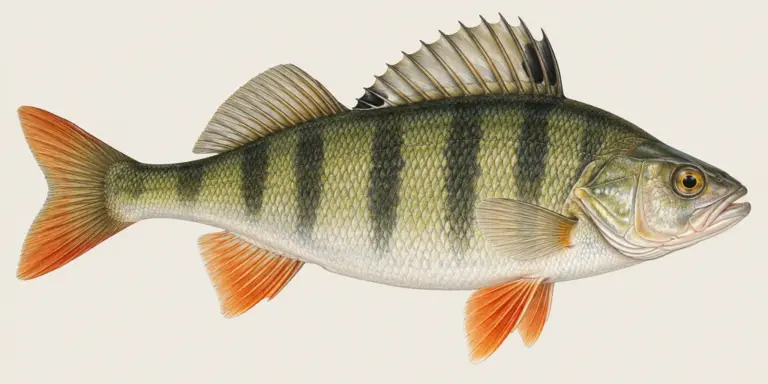
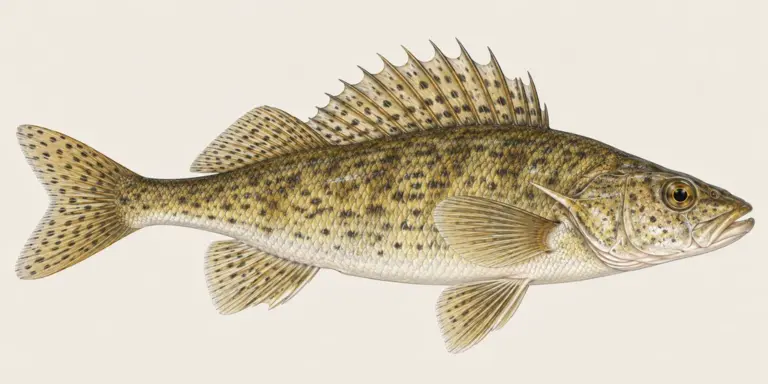
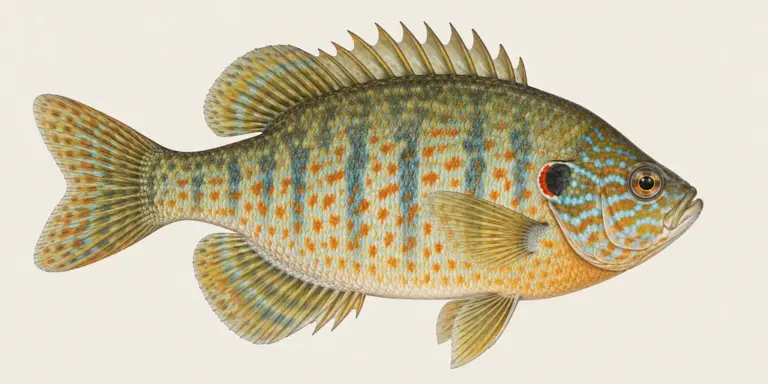
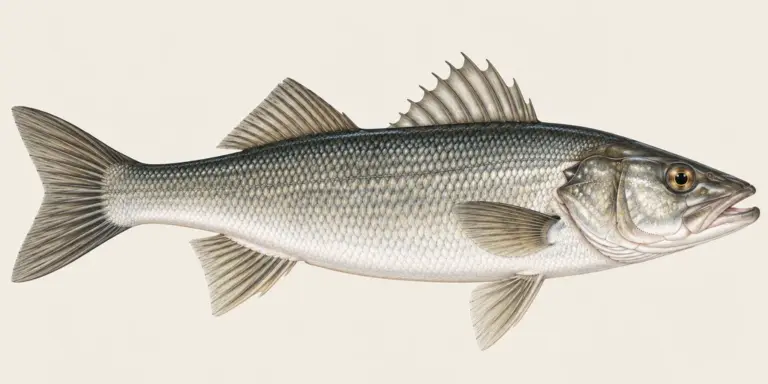
AI-generated illustrations.
Where it lives
The dusky grouper occurs throughout the Mediterranean and in the eastern Atlantic from the southern Bay of Biscay to the southern tip of Africa. Further populations lie in the south-western Atlantic off Brazil, Uruguay and Argentina and in the western Indian Ocean. Single stray fish have been reported as far as the British Isles and the English Channel. In Portugal it can be found along the whole coast, most often around the Azores.
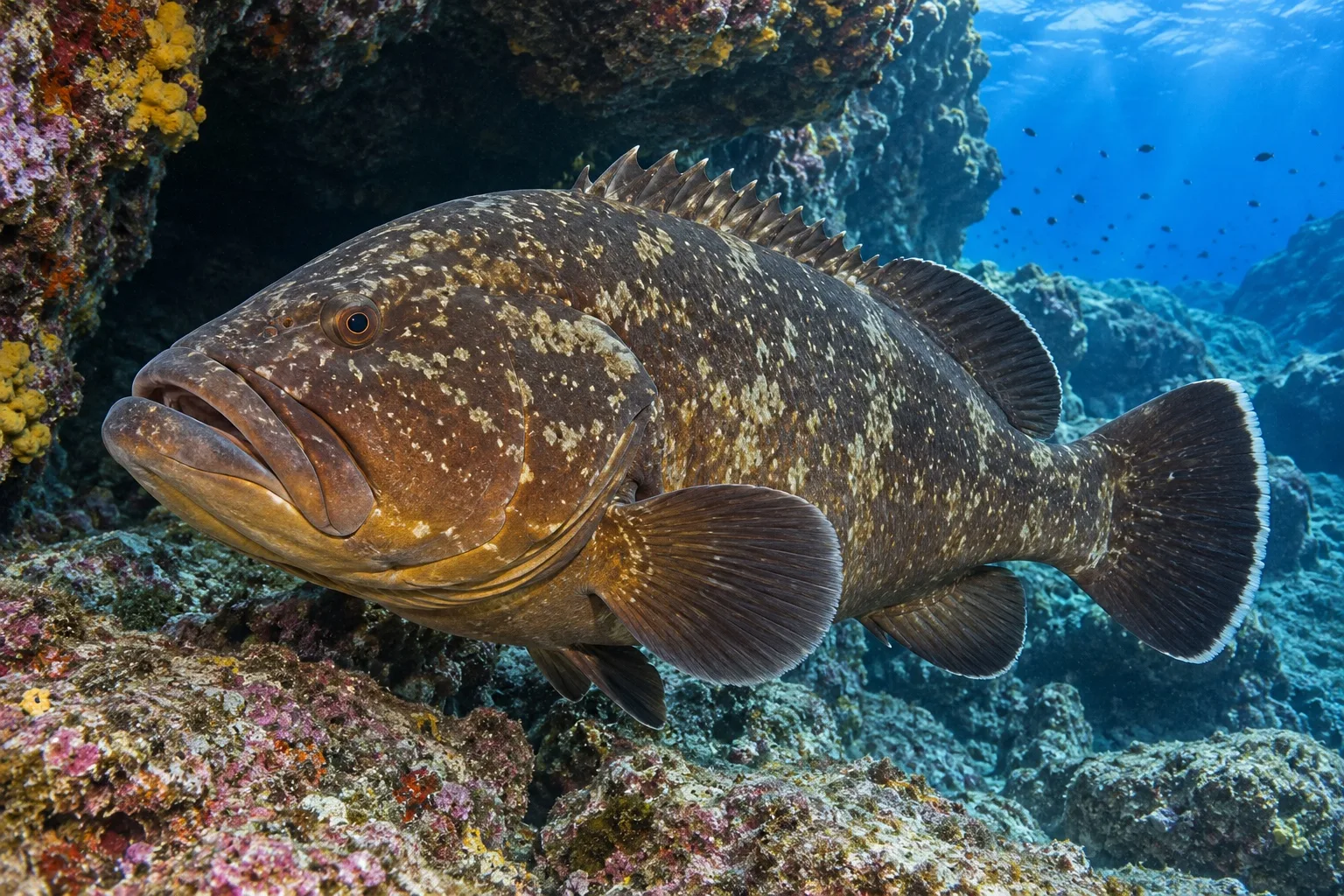
Adults prefer rocky ground. According to FishBase its depth range runs from 8 to 300 metres, but it mostly lives above 50 metres. Among the rocks it often picks a fixed cave as a shelter. Juveniles stay closer to the shore, also in rocky tide pools, and occasionally push into brackish water.
Holding spots in the picture
Choose the time of day: the picture shows where the species holds. We do not show German seasons for travel fish; the bars give the chance of a catch for each month. Tap a fish or a spot in the list to bring it closer. The picture is schematic and AI-generated, and every water is different.
On the coast
Stony mixed ground
Dusky grouper (also called brown grouper) are present here all year round.
Wreck, reef
Dusky grouper (also called brown grouper) are present here all year round.
The dusky grouper lives over rocky bottom and often takes up a fixed cave there, which it defends as its territory. Young fish stay closer to the shore and can even be found in tide pools between rocks.
Depth: It occurs from 8 to 300 metres, but mostly shallower than 50 metres.
Size comparison: AI-generated drawing, schematic.
How it lives and reproduces
Adults live alone and defend their territory. They eat mainly crabs and octopuses; larger fish increasingly hunt fish, mostly species of rocky reefs. According to IPMA it is curious and gets used to divers easily, which makes it valuable for diving tourism.
The change of sex is remarkable: the grouper is a protogynous hermaphrodite, first maturing as a female and later becoming a male. It reaches maturity as a female at about five to seven years. According to FishBase the change to male in Europe mostly happens at 14 to 17 years at 80 to 90 centimetres; other studies name younger and smaller fish. For spawning, mature animals form aggregations. This slow development makes the species vulnerable to overfishing.
When and where you meet it
The dusky grouper does not migrate; it stays in its territory all year round. Spawning takes place in summer: data in FishBase show June to September for the Balearic Islands and the Pelagie Islands, and July and August for the eastern Algerian coast.
There is no angling season for it, because owing to its endangered status it is not a target fish. That is why all months in the calendar are set to zero.
What to do with a bycatch
As bycatch: Fishing for dusky grouper? – why the species is not a target fish and what to do with a bycatch.
Do not target the dusky grouper deliberately. On rocky coasts it can still end up on the hook when bottom fishing with natural baits for other species, because according to FishBase it bites readily.
If a grouper is on the hook, keep the fight short and do not lift it out of the water for photos. Remove the hook in the water with pliers if possible and let the fish swim off at once. If the hook sits too deep, cut the line close to the mouth. Where fishing bans apply, the fish may not be kept anyway.
Keep disgorgers or pliers to hand: Anyone fishing the bottom with natural baits along rocky coasts in the Mediterranean is fishing in grouper habitat, and it bites easily. The faster a bycatch is off the hook, the better.
Check the local rules beforehand: Fishing bans for groupers differ from country to country and from protected area to protected area. Before the trip, ask the responsible fisheries authority (Fischereibehörde).
Suitable lures
We deliberately show no baits for this species.
Endangered in the Mediterranean, fishing ban (Fangverbot) in France: do not target it, release a bycatch gently at once.
Protection and rules
In the Mediterranean the IUCN classes the dusky grouper regionally as endangered (Endangered, assessment in the IUCN report on the Mediterranean marine fishes of 2011). The reason is earlier overfishing: locally catches fell by up to 95 per cent, and for the whole Mediterranean the IUCN cautiously estimates a decline of more than half between 1990 and 2010. The species is also listed in Annex III of the Berne Convention and in Annex III of the Barcelona Convention, which allow regulated use.
According to the IUCN, France has banned spearfishing for it since 1993 along the French Mediterranean coast and off Monaco. Off Provence-Alpes-Côte d’Azur and Occitania, a regulation of the French maritime administration DIRM Méditerranée prohibits spearfishing as well as recreational and commercial fishing with hooks, lines and longlines for the dusky grouper and other groupers. After a public consultation in November 2023 it was decided to continue this rule for ten years.
Other countries and marine protected areas have their own rules. The national fisheries authorities (Fischereibehörde) and the management of the protected area concerned are binding. If in doubt: do not fish for it, release a bycatch at once.
Frequently asked questions (FAQ)
May I fish for dusky grouper in the Mediterranean?
It is endangered in the Mediterranean and not a target fish. In France catching it with a spear or a fishing hook on the Mediterranean coast is banned; other countries have their own rules. A bycatch belongs straight back in the water.
Why does the grouper change sex?
It is a protogynous hermaphrodite: young animals are females, older ones become males. In Europe, according to FishBase, this mostly happens only at 14 to 17 years.
How big does the dusky grouper grow?
According to FishBase up to 150 centimetres and 60 kilograms. It can live up to 60 years.
Sources
The rating of catch chances is an editorial assessment. The facts come from these sources, and the text is worded in our own words. The illustration is an original design by Angel Momente in the style of a natural history plate (AI-generated, see the AI notice).
- FishBase: Epinephelus marginatus, Dusky grouper
- FishBase: Spawning List, Epinephelus marginatus
- IUCN: Overview of the Conservation Status of the Marine Fishes of the Mediterranean Sea (2011)
- DIRM Méditerranée: Arrêté portant réglementation de la pêche de différentes espèces de mérous (Entwurf zur Konsultation 2023)
- DIRM Méditerranée: Synthèse de la consultation du public (Mérou und Corb, 2023)
- Instituto Português do Mar e da Atmosfera (IPMA): Mero, Epinephelus marginatus
- Préfecture de Corse: Reconduction des moratoires sur la pêche du corb et du mérou pour 10 ans (Pressemitteilung, 22. Dezember 2023)
Created with AI support from the sources listed. Figures only appear in the text if a source gives them. Last updated: 27 October 2026. Found a mistake? Write to us. Who is behind this site: About me.
More in the lexicon
- All fish species at a glance
- Catch calendar – month, water temperature and profile for 93 species
- Line calculator – breaking strain after the knot, drag guideline, backing
- Angling methods