
Knowledge · Lures
Tailspinner
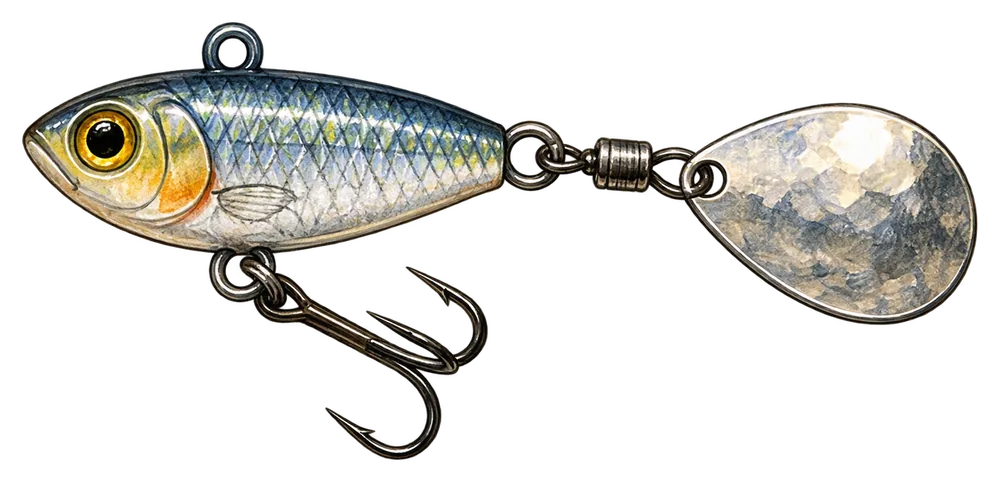
Metal lures · Spin fishing
A tailspinner, usually called a jig spinner or spin-jig in German, is a compact body of lead or soft iron with a small rotating blade at the tail end. It is heavy, flies far and sinks fast, and its blade sends out pressure and light stimuli on the retrieve. For perch it is one of the best lures.
- Water depth
- Bottom to mid-water
- Retrieve
- Active: cast far, retrieve steadily or jig on the bottom
- Fishing method
- Spinning
- Category
- Metal lures
How a tailspinner works
The tailspinner combines the weight of a jig with the stimulus of a spinner blade. The body is made of lead or soft iron. A treble or double hook sits on the belly and a small metal blade at the end. On the retrieve it turns and produces pressure waves and flashes of light. The lures vibrate so strongly that you feel it right up to the rod handle. Predators pick up the pressure waves from a greater distance too.
Because of its high weight for its size, the tailspinner flies very far and sinks fast. Heavy models, some weighing over 30 grams, reach the bottom in four to eight metres of water within seconds. That makes it a searching lure for large areas. It also keeps contact in wind, while small soft plastics form large bows in the line.
Small models of 4 to 10 grams on a sensitive rod with a low casting weight count as a way in. The rig is simple, because you only have to cast the lure out and wind it in. Heavy metal lures need a stronger rod; one practitioner names a length of 2,10 to 2,40 metres and a casting weight of 15 to 40 grams.
How to work the lure
Active: cast far, retrieve steadily or jig on the bottom
Schematic illustration, AI-generated.
- Cast
- sink to the bottom
- lift and let fall
- reel in
Anatomy
The points on the picture above explain the most important parts – on hover or tap.
- Eyelet on the back: This is where the snap attaches.
- Lead body: Lead or soft iron: plenty of weight in a small space, for long casts and fast sinking.
- Treble hook: Sits under the body. The number of hooks and trebles is governed by state law and the water’s rules.
- Swivel: Joins the blade to the body and lets it turn freely.
- Spinner blade: Rotates on the retrieve, flashes and vibrates strongly.
Rig in three steps
- 1. Tie on the hooklengthWhere pike occur, you add steel or titanium. One practitioner ties about a metre of fluorocarbon in front of it.
- 2. Attach the snapA small but sturdy clip is enough. The blade hangs on its own swivel.
- 3. Into the back eyeletAttach the snap to the eyelet on the back.
Drawings: AI-generated, schematic.
When the target fish are in season
Hardly any chancePossibleGoodPeak seasonValues from the catch calendar.
When and where
In summer, perch spread out over large areas of open water and sometimes really hunt there. Then it is a matter of finding them. Tailspinners can be worked fast, send out vibration and cover a lot of water in a short time. If a hunting shoal is there, you retrieve fast and pick fish out. When the hunt slackens, you work the same lure slower and deeper, because the bigger perch often lurk beneath the shoal. In deep lakes and in winter, you inch it across the bottom.
Other predators take it too: pike, zander, asp and trout. Worked at speed just under the surface, it becomes an asp lure. In places with drifting weed, a soft plastic shad with a single hook can have the edge, because trebles pick up more weed. Where pike occur, you must always expect pike.
How to choose weight, hook and hooklength
- Tie on the leader Where pike occur, tie on steel or titanium.
- Attach the snap A small but sturdy clip is enough. The blade already hangs on its own swivel.
- Into the eyelet on the back The snap goes into the eyelet on the back.
The weight depends on depth, wind and rod. Small models of 4 to 10 grams suit a way in and shallower stretches, heavy ones from about 20 grams suit depth and distance. With light tackle, choose a short, not too stiff spinning rod with a tip action. Small models also catch small perch, because even perch of ten centimetres chase lures of the same length.
Tailspinners are often taken aggressively and then sit deep in the throat. The treble makes unhooking hard. Where allowed, you can swap the treble for a single hook, which, according to a field report, catches just as well when fishing for asp. The number of hooks, trebles and barbs is governed by state law, the water’s rules and the fishing permit (Erlaubnisschein).
Where pike occur, steel or titanium belongs in front of the lure, otherwise you will be bitten off. A perch specialist feels morally obliged to fish with steel on all lures with trebles. One practitioner ties about a metre of fluorocarbon behind the thin braid and a short piece of titanium to that.
How to work it and make the most of bites
Normally it is retrieved steadily. Depending on speed, it runs just above the bottom or in mid-water. If you want to offer it on the bottom, let it sink and inch it slowly across the bottom like a jig head with a soft plastic shad. One variant is high-speed lift-and-drop: one or two strong turns of the handle, then let it sink back to the bottom.
In summer you can wind it in at speed just under the surface. Asp then come in with full force. Bites often come hard and aggressive. Watch the line as it sinks: if it goes slack too early, a fish has taken.
Fish actively rather than passively, because that lowers the number of deep-hooked pike. An unhooking mat and a disgorger belong at the spot. Above a water temperature of 22 degrees, researchers at the Humboldt-Universität zu Berlin and the IGB advise against catching and releasing pike.
Which colour?
Starting points to try, not rules. Depth and speed are usually more important than colour.
Tailspinner or another lure after all?
| Baits and lures | Depth | Retrieve | Take this lure if … |
|---|---|---|---|
| Tailspinner | Bottom to mid-water | Active: cast far, retrieve steadily or jig on the bottom | this page |
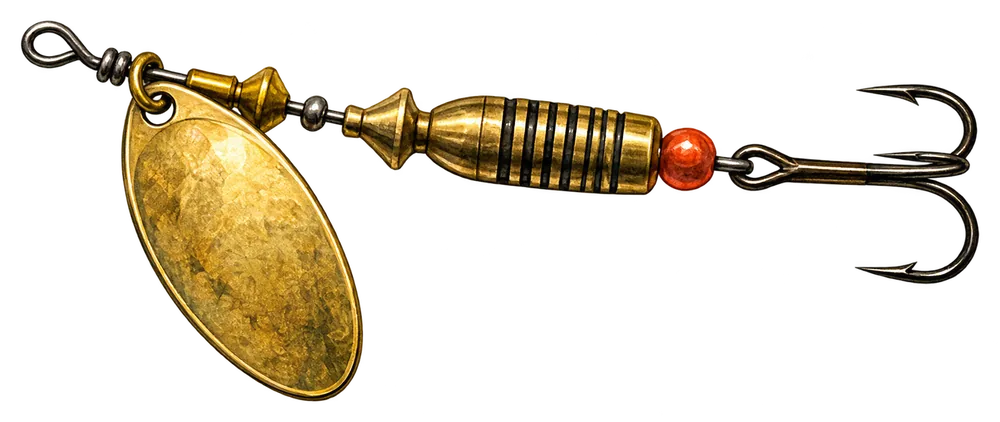 Spinner | Near the surface to mid-water | Active: retrieve steadily, speed up when fish follow | you want to fish shallow and slowly and the lure should work at the slightest pull |
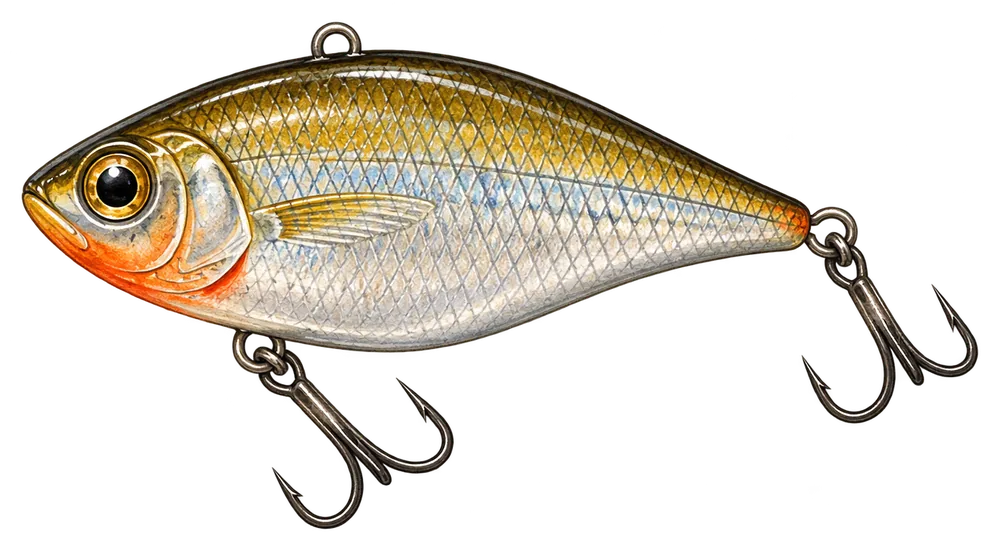 Lipless crankbait | mid-water to bottom | Active: retrieve, tick along the bottom or jig | you want the body itself to vibrate, without a rotating blade |
 Jig | Bottom to mid-water | Vertical: drop to the bottom, lift, let it fall; from a boat it can also be cast a long way | you are fishing vertically at sea |
What you need
- Spinning rodFor small models a sensitive rod with a low casting weight, for heavy metal lures 15 to 40 g. More on this
- LineThin braid with about a metre of fluorocarbon in front, low-stretch and good for long casts. More on this
- Pike hooklengthSteel or titanium protects against bite-offs where pike also bite. More on this
- DisgorgerRemoves trebles that sit deep in the throat without you searching long in the mouth. More on this
More on the method: spin fishing and ultralight fishing.
At a glance
Editorial assessment, not measured values.
If it does not work
Check the swivel at the tail and free it of weed.
Lift it straight after it lands and follow the sinking phase on a taut line.
Watch the line: if it goes slack too early, a fish has taken. Then strike.
Where allowed, swap to a single hook. Remove deep-set hooks with the disgorger and do not hold the fish longer than necessary.
Add steel or titanium. Without bite-proof material you will be bitten off.
Match the lure weight to the rod. Small models of 4 to 10 g belong on a sensitive rod, heavy lures on stronger tackle.
Frequently asked questions
Tailspinner or jig spinner?
Both terms mean the same lure: a compact body of lead or soft iron with a rotating blade at the end. Spin-jig is also common.
How do I work it?
Mostly retrieve steadily, above the bottom or in mid-water depending on speed. On the bottom you can inch it like a jig head, and in summer you can also work it fast just under the surface.
Which weight to start with?
Small models of 4 to 10 grams on a sensitive rod with a low casting weight. Heavy models over 30 grams fly further and reach depth quickly.
Do I need a wire leader?
Where pike occur, yes. They like to take the small lure, and without a bite-proof hooklength you will be bitten off. The perch does not mind the piece of steel or titanium.
Does it also catch fish other than perch?
Yes, pike, zander, asp and trout take it too. Worked at speed just under the surface, it is an asp lure.
Before fishing, the current permits, state rules and water rules apply: bait bans, number of hooks, closed seasons, protected species and catch limits can differ. Many federal states expressly ban live baitfish. Take bait remains and packaging away with you. All details are guide values without guarantee and do not replace legal advice.
Sources
- Blinker: Mit Spin-Jigs auf Barsche, Druckmacher mit großer Wirkung
- Blinker: Barsch-Alarm, fängt man mit Stahl wirklich weniger?
- Fisch & Fang: Jig-Spinner, was ist dran am neuen Trend?
- Rute & Rolle: Grundkurs Spinnfischen, erfolgreich angeln mit Kunstködern
- Rute & Rolle: Blech für Barsch
- Rute & Rolle: Rapfen, rasante Räuber
- Humboldt-Universität zu Berlin und IGB: Waidgerechtes Zurücksetzen, Hecht
- Deutscher Angelfischerverband: Der Flussbarsch, Fisch des Jahres 2023 (Broschüre)
The sources explain terms and basic principles. Retrieve, colour choice and values are editorial starting points and depend on water, weather and lure.
More metal lures
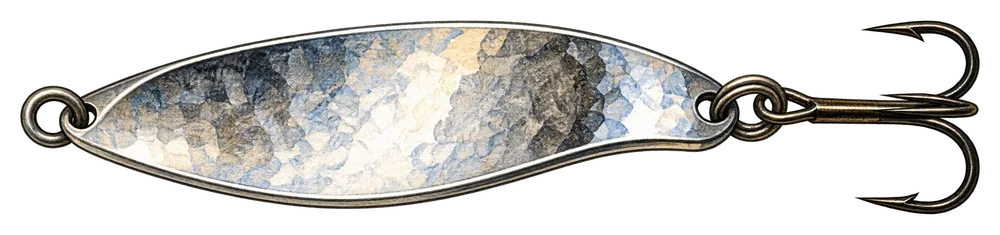 Spoon
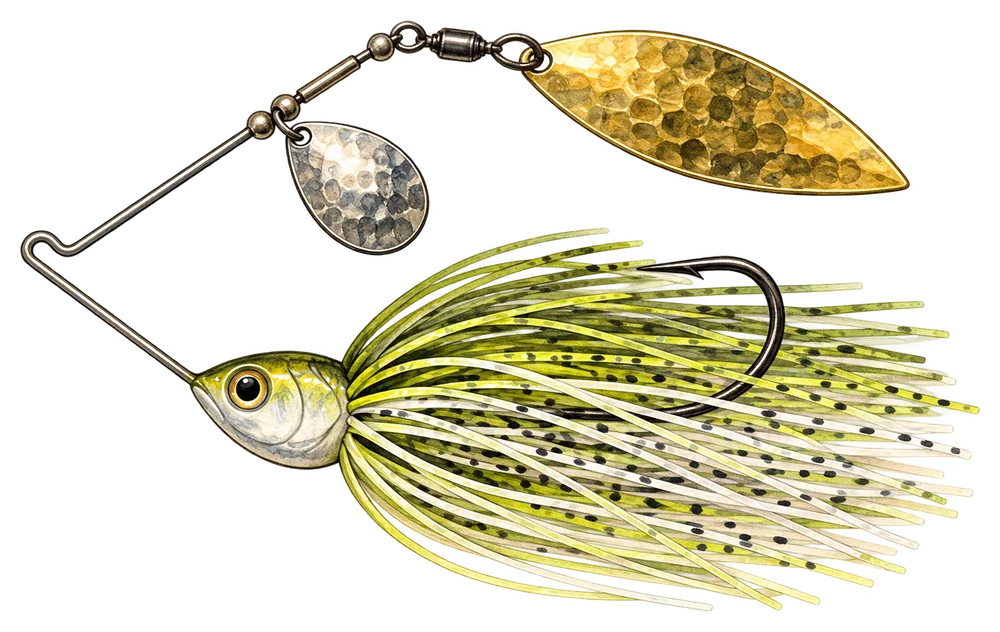 Spinnerbait
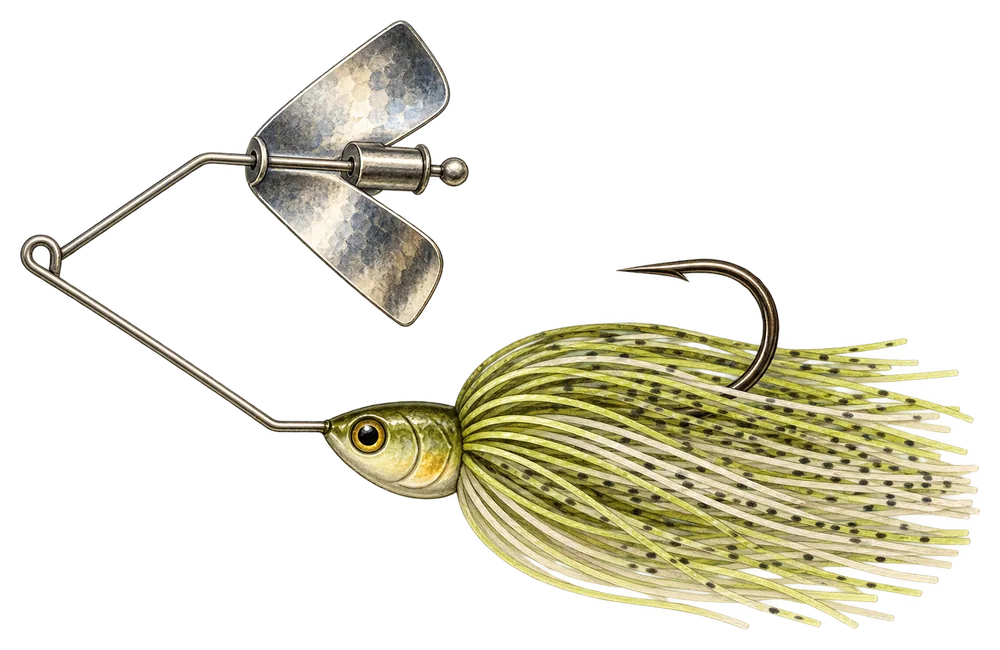 Buzzbait
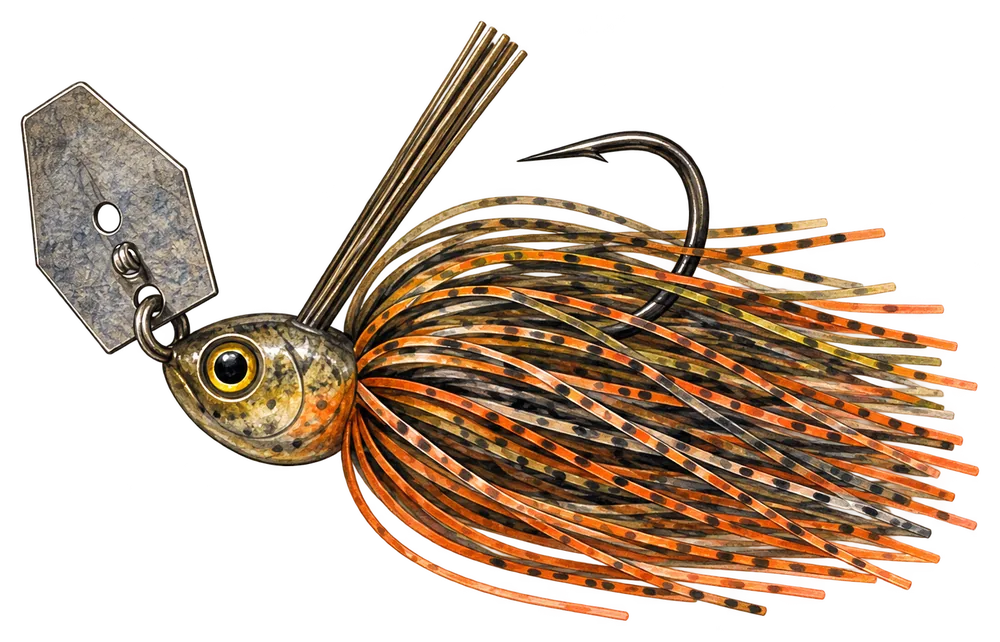 Bladed jig
Created with AI support from the sources listed (AI notice). Last updated: 31 October 2026. Found a mistake? Write to us. Who is behind the site: About me.