
Knowledge – Fish
Tarpon: Features, season, methods and rules
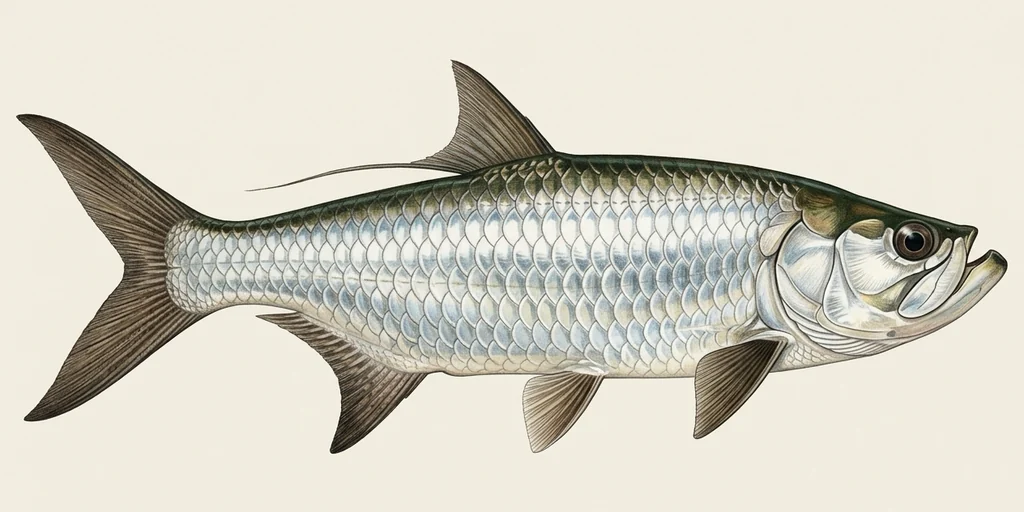
The tarpon (Megalops atlanticus) is a large, silvery shining coastal fish of the Atlantic. It can breathe air, grows to over two metres long and is known in Florida for its leaps during the fight. It may only be kept there in exceptional cases.
In short: According to the catch calendar, the best time is April. Good spots on the coast: open water, just below the surface and the channel in front of the sandbank; in rivers: undercut bank and quiet bay. Proven baits: live baitfish and crabs, dead baits on the bottom and lures. In Florida it is a pure catch and release fishery, and large tarpon must stay in the water. The IUCN lists the species as Vulnerable. Step by step: Fishing for tarpon.
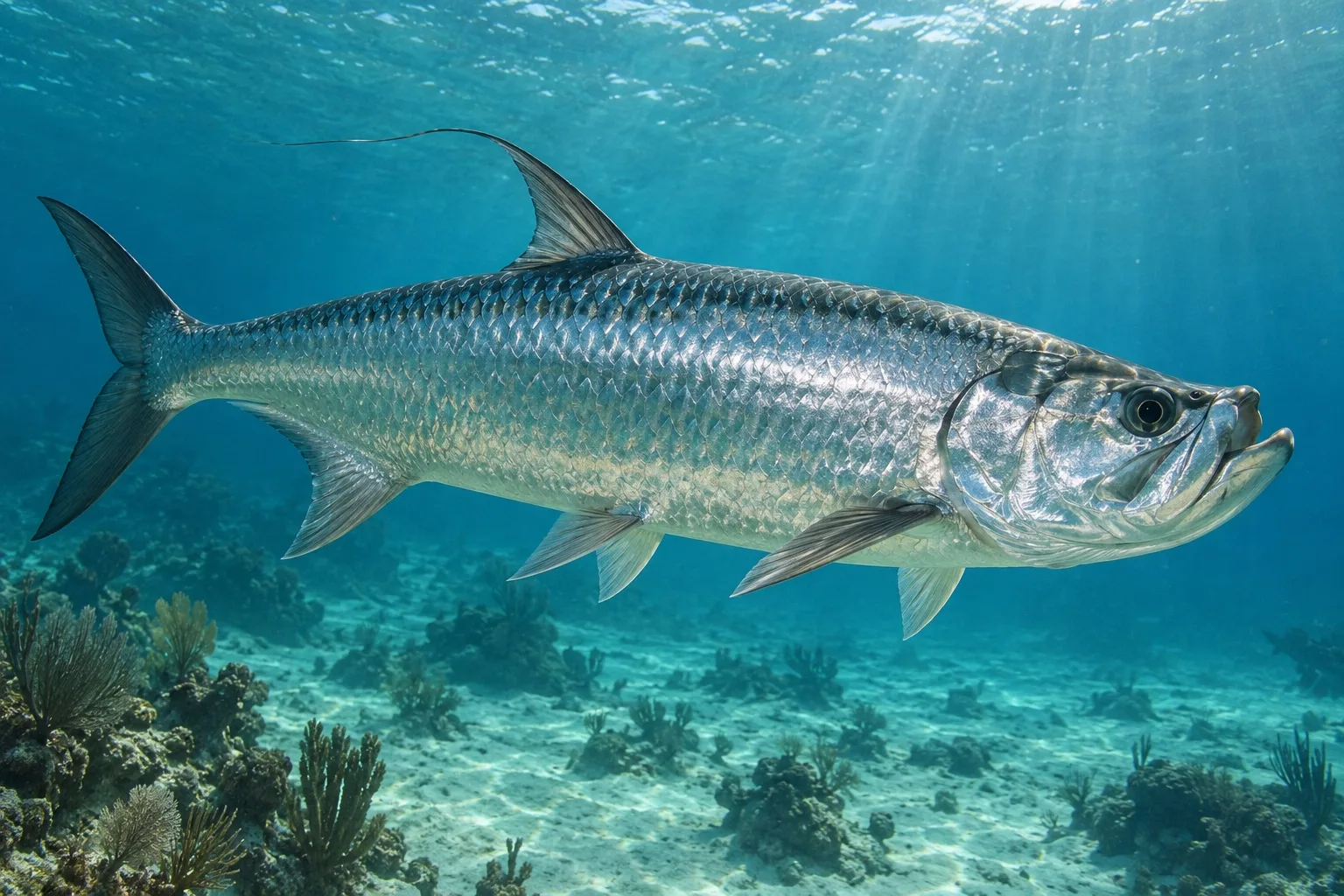
- Upturned mouth, lower jaw projecting far forward
- Very large, shining silver scales on the flanks
- Last dorsal ray extended into a long filament
Catch chances through the year
- Hardly any chance
- Possible
- Good
- Peak season
- Spawning (observe the closed season)
Editorial assessment for the home range (Florida and the Gulf of Mexico), not a measurement and no guarantee. The rules of the country you visit are what count.
How to recognise it
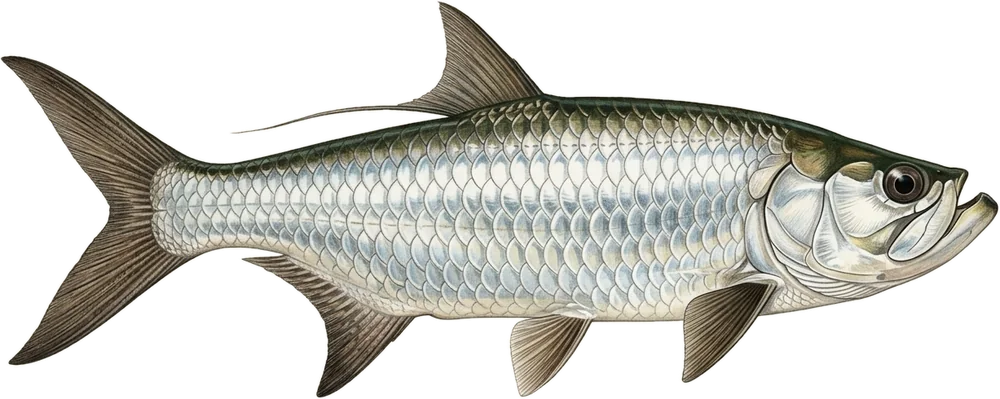
The most striking features are the large, silvery shining scales on the tall flanks. The back is dark blue to greenish black, in fish from inland waters rather brownish or brass-coloured. The dorsal and tail fins have dark edges. The mouth is upturned, and the lower jaw projects far forward.
All the fins consist of soft rays. The dorsal fin is tall at the front, and its last ray is extended into a strong filament. The tail fin is deeply forked. The large mouth holds only very fine teeth, so prey is usually swallowed whole.
A special feature is the swim bladder: it is connected to the gullet and filled with air from the surface. That is why tarpon roll at the surface again and again. According to FishBase, the tarpon grows to 250 centimetres long and 161 kilograms, and around 130 centimetres is usual. According to the Florida Museum, females live to over 50 years and males to over 30.
With its large scales and projecting lower jaw, the adult tarpon is hard to confuse. The only other species of the genus is the Indo-Pacific tarpon (Megalops cyprinoides).
It is related to the bonefish: both pass through a transparent, ribbon-like larval stage, like eels. In Florida it often shares passes and mangrove edges with the snook.
Side by side
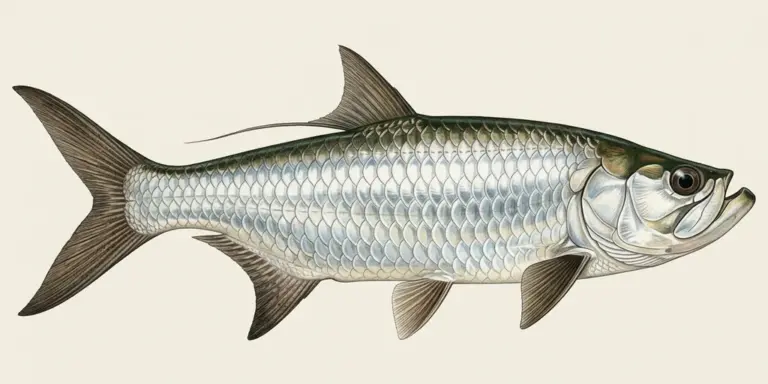
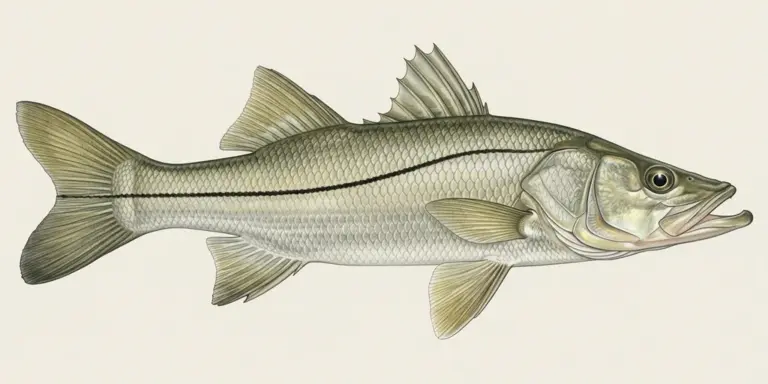
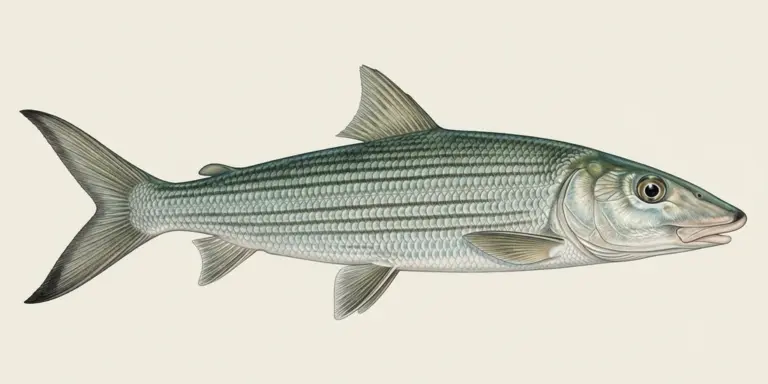
AI-generated illustrations.
Where it holds
Found on both sides of the Atlantic, in the west from Nova Scotia to Argentina and in the east along the coast of West Africa. The focus in the western Atlantic is the Gulf of Mexico, Florida and the West Indies.
The tarpon lives on coasts, in bays, river mouths and lagoons fringed with mangroves, usually no deeper than 30 metres. It tolerates water from fresh to strongly saline and travels far up rivers. It is limited mainly by temperature: sudden cold snaps have already killed many tarpon, and in the cold they move to warmer, deeper water.
Holding spots in the picture
Choose the time of day: the picture shows where the species holds. We do not show German seasons for travel fish; the bars give the chance of a catch for each month. Tap a fish or a spot in the list to bring it closer. The picture is schematic and AI-generated, and every water is different.
Chance of a catch per month according to the catch calendar
- J
- F
- M
- A
- M
- J
- J
- A
- S
- O
- N
- D
Spawning season
No main time Adult tarpon hunt both by day and by night.
Active time Adult tarpon hunt both by day and by night.
No main time Adult tarpon hunt both by day and by night.
Active time Adult tarpon hunt both by day and by night.
On the coast
gully in front of the sandbank
Tarpon are here all year.
Open water, mid-water
Tarpon are here all year.
Just below the surface
Tarpon are here all year.
Tarpon travel along the coast, through bays and passes, and hunt shoaling fish in open water. Because they gulp air, they roll at the surface again and again.
In the river
Undercut bank, overhanging branches, timber
Tarpon are here all year.
Calm bay with aquatic plants
Tarpon are here all year.
The tarpon is at home in river mouths and lagoons with mangrove banks, and it also tolerates fresh water. From there it travels far upstream. Young tarpon grow up in sheltered parts of estuaries.
Depth: It mostly stays shallower than 30 metres. In cold snaps it moves into deeper, warmer water.
Size comparison: AI-generated drawing, schematic.
How it lives and spawns
Young tarpon eat plankton and small fish. Adults hunt in open water, mainly mullet, pinfish, sea catfish, garfish, sardines, shrimp and crabs, by day as well as by night.
Tarpon grow slowly and mature only at six to seven years old, at a length of about 1,2 metres. To spawn they travel far out to the open sea, mostly from May to July. A two-metre female carries about twelve million eggs. Currents then carry the larvae to nursery areas near the coast, for example in river mouths. Large sharks such as bull sharks and hammerheads are the main enemies of adult tarpon.
When and where the season is
In the Florida Keys, April to June count as the main months, because large tarpon then migrate along the coast. In the Florida fisheries authority (Fischereibehörde) study of Boca Grande Pass on the west coast, the season ran from April to July.
In winter the warmth-loving fish avoid cold snaps and stay deeper.
What it is caught on
Step by step: Fishing for tarpon: tips on bait, rig and tackle – season, spots, bait, tackle and rules on one page.
In Florida the tarpon may only be caught with rod and line. In Boca Grande Pass, guides fish mainly with live bait. The fisheries authority (Fischereibehörde) also documented dead baits on the bottom, lures and free-drifting crabs without a weight. In the study, more fish were landed on live bait and, on average, larger ones on lures.
Hooked tarpon are known for their high leaps. Multiple hooks on natural baits and deliberate foul-hooking (snagging) are prohibited in Florida. According to a study from Puerto Rico, a circle hook, that is, a hook with the point curved inwards, lowers the risk of the fish swallowing it deep.
Tire it first, then release it: The Florida Museum advises against bringing a tarpon that is still strong to the boat. Large fish can thrash violently during release and injure people. Leave the fish in the water beside the boat.
Sharks and air time: In the Boca Grande study, just under 10 per cent of the released tarpon demonstrably died to sharks. Keep the fight as short as possible and the fish in the water. The study from Puerto Rico recommends limiting air time to two minutes at most.
Suitable lures
Live baitfish and crabs, dead baits on the bottom and lures.
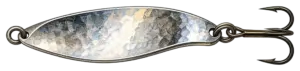
AI-generated illustrations. A click opens the lure’s page.
Catch and release only in Florida; unhook large tarpon in the water
What you need to know in Florida
According to Chapter 68B-32 of the Florida Administrative Code, Florida manages the tarpon as a pure catch and release fishery. Only someone who wants to claim a world or state record and has bought a tarpon tag beforehand, at most one per year, may keep it. Larger tarpon must not be lifted out of the water, and the limit is set out in rule 68B-32.004. Buying and selling are prohibited. You will find the current text of the rules at flrules.org.
In addition, you generally need a licence to fish in salt water, and visitors can also get one for three or seven days (Florida Statutes 379.354). In other countries separate rules apply, and the local fisheries authority (Fischereibehörde) is the one that counts. The IUCN has classed the tarpon as Vulnerable since 2018.
Frequently asked questions (FAQ)
Can you keep a tarpon in Florida?
Only with a tarpon tag bought beforehand and only if the fish is to be claimed for a world or state record. Otherwise catch and release applies.
Why does the tarpon come to the surface?
It also breathes air. Its swim bladder is connected to the gullet, so it can also live in water low in oxygen.
When is tarpon season in Florida?
In the Florida Keys mainly from April to June, and on the west coast at Boca Grande from April to July. In winter the warmth-loving fish avoid cold snaps.
Sources
The rating of catch chances is an editorial assessment. The facts come from these sources, and the text is worded in our own words. The illustration is an original design by Angel Momente in the style of a natural history plate (AI-generated, see the AI notice).
- FishBase: Megalops atlanticus, Tarpon
- Florida Museum of Natural History: Discover Fishes – Tarpon
- Florida Department of State: Florida Administrative Code, Chapter 68B-32 Tarpon (Regeltext)
- Florida Fish and Wildlife Conservation Commission: Catch-and-Release Mortality Study on Tarpon in Boca Grande Pass, 2002–2004
- Mississippi State University: Horowitz et al. (2023), Postrelease Mortality of Angled Tarpon in Puerto Rico, Marine and Coastal Fisheries
- Florida Senate: Florida Statutes 379.354, Recreational licenses, permits, and authorization numbers
Created with AI support from the sources listed. Figures only appear in the text if a source gives them. Last updated: 27 October 2026. Found a mistake? Write to us. Who is behind this site: About me.
More in the lexicon
- All fish species at a glance
- Catch calendar – month, water temperature and profile for 93 species
- Line calculator – breaking strain after the knot, drag guideline, backing
- Angling methods