
Knowledge – Fish
Snook (Robalo): Features, habitat, season and rules
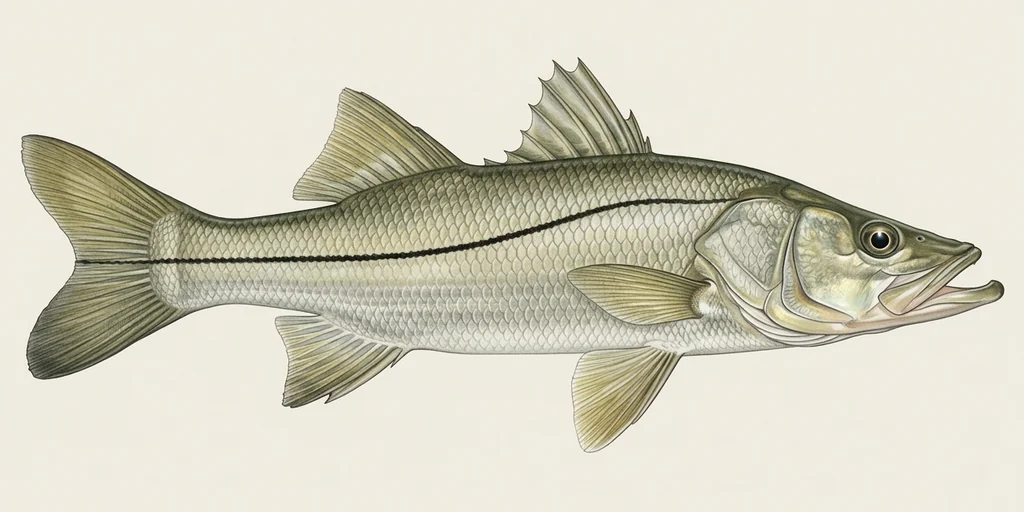
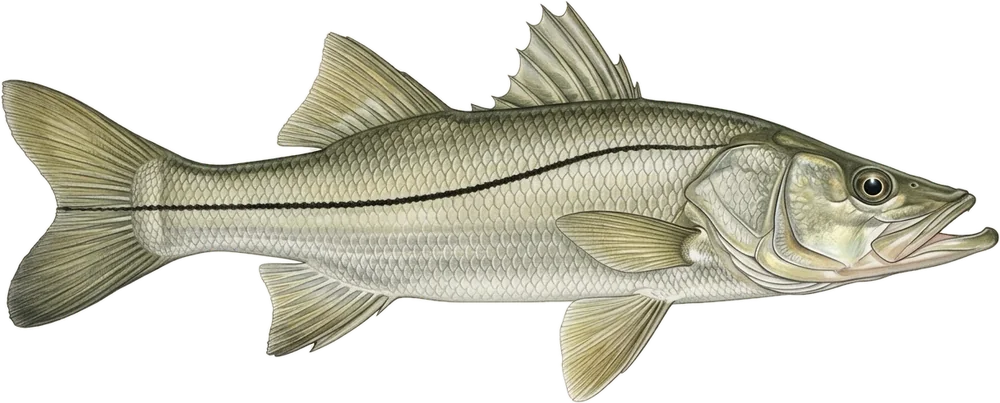
The snook (Centropomus undecimalis), Spanish Robalo, is a slender predator of the mangrove coasts of the western Atlantic. In Florida it is one of the most popular coastal fish. It is unmistakable thanks to its deep black lateral line on a pale flank.
In short: According to the catch calendar, the best time is April and October. Good spots on the coast: surf, seagrass and wreck, reef; in rivers: undercut bank, rock fill and current seam. Proven baits: baitfish, shrimp and crabs, and lures that imitate them. Sensitive to cold: cold snaps can kill many snook in Florida. For keeping fish, Florida has regional closed seasons (Schonzeit) and slot limits, and a snook permit is also required. Step by step: Fishing for snook.
- Deep black, unbroken lateral line running right into the tail fin
- Sloping forehead with large mouth and projecting lower jaw
- Two separate, tall dorsal fins
Catch chances through the year
- Hardly any chance
- Possible
- Good
- Peak season
- Spawning (observe the closed season)
Editorial assessment for the home range (Florida), not a measurement and no guarantee. The rules of the country you visit are what count.
How to recognise it
The snook has a slender, elongated body with a sloping forehead, a large mouth and a projecting lower jaw. The two dorsal fins are tall and clearly separated, and the spines of the anal fin are rather short. The surest feature is the deep black lateral line, which runs as a sharp line along the whole flank.
The base colour is golden yellow to silvery, and the pelvic fins are pale yellow. At spawning time the pelvic and tail fins become distinctly yellower. There are no teeth on the maxilla, while fine bands of teeth sit on the premaxilla and lower jaw.
FishBase gives a common length of 50 centimetres and a maximum of 140 centimetres. The record fish on rod and line weighed 24,3 kilograms and came from Costa Rica. In Florida, the largest female examined measured a good 110 centimetres. Snook can live to about 20 years.
The common snook is the largest species of its family. In Florida the snook rules have applied since 1987 to all fish of the genus Centropomus, including the smaller species. Anyone who cannot identify the species with certainty should follow the stricter rules.
In the same waters, for example at passes and mangrove edges, the tarpon is often found. It is much deeper-bodied, has an upturned mouth and very large scales, and has no black lateral line.
Side by side
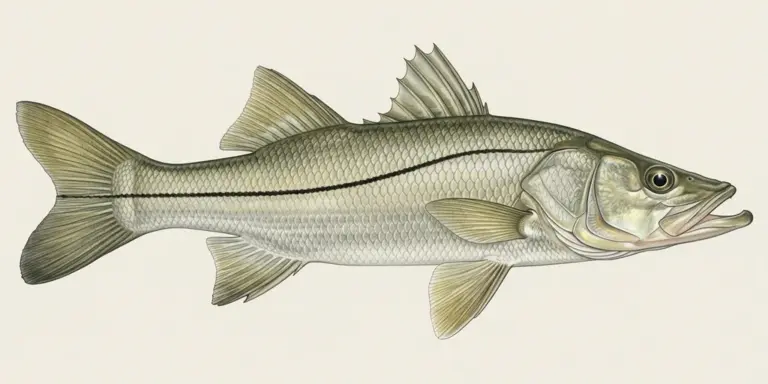
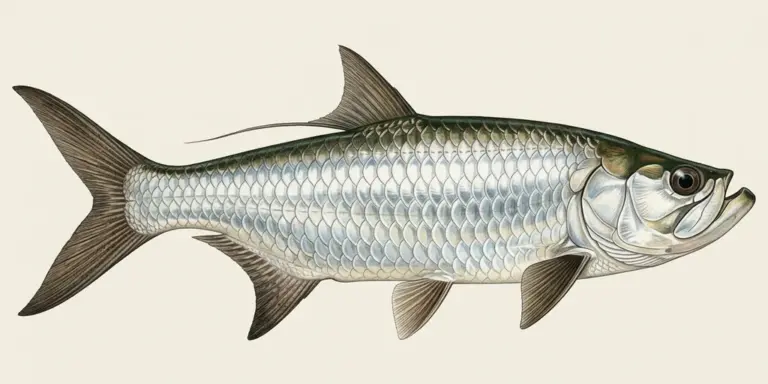
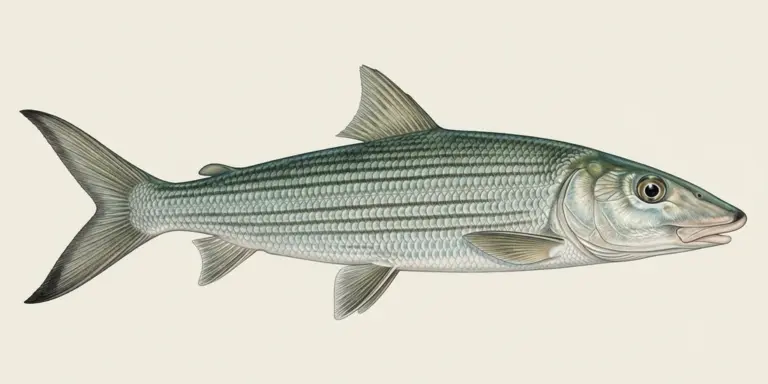
AI-generated illustrations.
Where it holds
The snook lives in the western Atlantic from southern Florida along the coasts of the Gulf of Mexico and the Caribbean to Rio de Janeiro. In Florida it is common on the Atlantic coast from Cape Canaveral to the Keys and on the Gulf coast as far as Cedar Key.
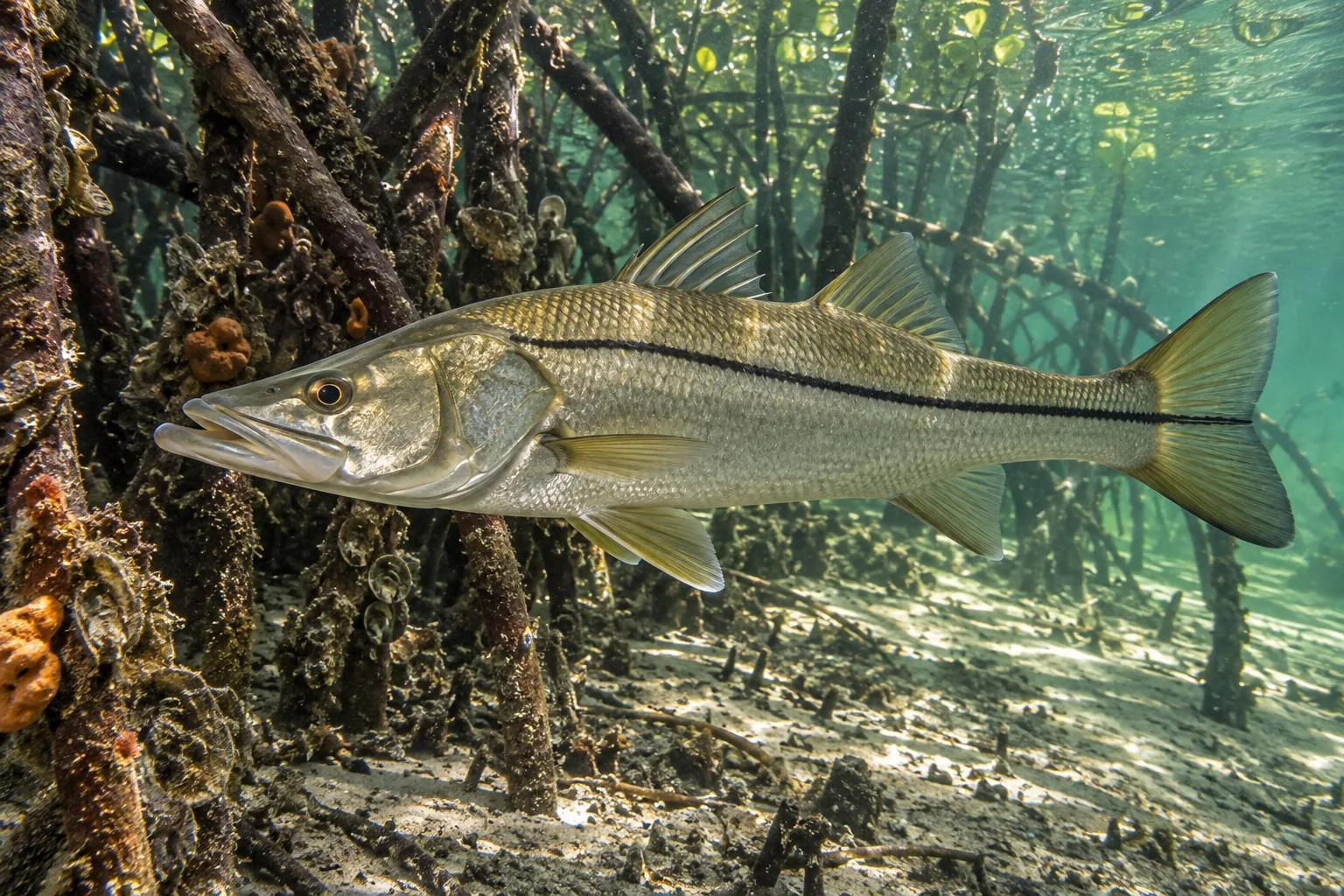
Adult snook follow the mangroves closely in their distribution, as these are their most important habitat. But they also stand off beaches, in river mouths, on near-shore reefs, in salt marshes and on seagrass meadows, and they move into fresh water. Juveniles grow up in sheltered, shallow river and estuary areas with overhanging bank vegetation.
Warmth is decisive for the snook. For adult fish the lower lethal water temperature is, according to the Florida Museum, about 6 to 12 °C, and higher for juveniles. A severe cold snap in the winter of 2010 killed about a quarter of the spawning fish at a spawning site studied in Tampa Bay.
Holding spots in the picture
Choose the time of day: the picture shows where the species holds. We do not show German seasons for travel fish; the bars give the chance of a catch for each month. Tap a fish or a spot in the list to bring it closer. The picture is schematic and AI-generated, and every water is different.
Chance of a catch per month according to the catch calendar
- J
- F
- M
- A
- M
- J
- J
- A
- S
- O
- N
- D
Spawning season
On the coast
Surf close to the shore
Snook (robalo) is found here all year round.
gully in front of the sandbank
Snook (robalo) is found here all year round.
Seagrass, gravel and stones in the shallows
Snook (robalo) is found here all year round.
Wreck, reef
Snook (robalo) is found here all year round.
Snook sit at beaches, on seagrass beds and at reefs close to the shore. In the spawning season they gather at the mouth of passes. They like to lie in wait at edges where the current runs.
In the river
Undercut bank, overhanging branches, timber
Snook (robalo) is found here all year round.
riprap, sheet piling, harbour
Snook (robalo) is found here all year round.
Current seam
Snook (robalo) is found here all year round.
The most important habitat is mangroves, and in river mouths snook also move into fresh water. They lie in wait right up against roots, bridge pilings and current edges. Juveniles grow up in shallow, sheltered areas under overhanging bankside vegetation.
Size comparison: AI-generated drawing, schematic.
How it feeds and spawns
Juveniles eat small crustaceans and, from a length of about four and a half centimetres, switch to fish, shrimp and crabs. Adults hunt mainly small shoaling fish such as gobies, mojarras and anchovies.
Snook are protandrous hermaphrodites: they mature first as males, and many later change into females. Small snook are therefore mostly male, and large ones almost always female. During the spawning season, from about May to September, the fish gather at the mouths of passes and rivers. They spawn only once the water has warmed to about 25 °C after winter, according to one study mostly in the afternoon and early evening.
When and where the season is
In Florida the catches are spread over the whole year. On the Gulf coast, according to data from the Florida fisheries authority (Fischereibehörde) from the 1990s, most snook were caught and released in spring and early summer, and distinctly fewer in winter. On the Atlantic coast a large share of the fish kept were taken in autumn.
In summer many snook gather to spawn at passes and river mouths. In Florida, keeping fish is then prohibited: on the Atlantic coast from June to August, on the Gulf coast from May to August, and in the Charlotte Harbor and Southwest regions until the end of September. There is also a winter break, on the Gulf coast from 1 December to the end of February and on the Atlantic coast from 15 December to 31 January (as of: October 2026). After severe cold snaps in winter the fish are weakened and should be spared.
What it is caught on
Step by step: Fishing for snook: tips on bait, rig and tackle – season, spots, bait, tackle and rules on one page.
In Florida the snook may only be caught with rod and line. Because it feeds on fish, shrimp and crabs, natural baits of this kind and lures that imitate them are used. Treble hooks on natural baits have been prohibited since 1987.
Anglers report that snook like to stand right by mangrove roots, bridge piers and edges in the current. Anyone fishing there needs strong tackle, because hooked fish head straight for cover.
Release with care: In Florida the great majority of snook are released. According to a study by the fisheries authority (Fischereibehörde), only a small share of them die, about two per cent. With so many catches, however, this still makes up a noticeable part of total mortality. So keep the fish in the water and unhook it quickly.
Spare them after cold: After severe cold snaps the surviving snook are weakened. A study from Tampa Bay found distinctly lower fat reserves in the liver of the spawning fish after the winter of 2010. Leave stressed fish alone in such periods.
Suitable lures
Baitfish, shrimp and crabs, and lures that imitate them.
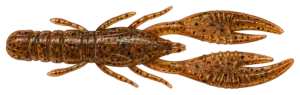
AI-generated illustrations. A click opens the lure’s page.
In Florida, observe the regional closed seasons (Schonzeit), slot limits and the snook permit
What you need to know in Florida
Florida lists the snook as a protected species. Chapter 68B-21 of the Florida Administrative Code regulates closed seasons (Schonzeit), slot limits and daily bag limits separately by coastal region. One fish per day is allowed, on the Atlantic coast of 28 to 32 inches (71 to 81 cm) and on the Gulf coast of 28 to 33 inches (71 to 84 cm) total length (as of: October 2026). Buying and selling snook is prohibited, and the rules apply to all species of the genus Centropomus.
Anyone who wants to keep a snook needs, in addition to the saltwater fishing licence, an annual snook permit, including as a visitor (Florida Statutes 379.354). The current rules of the Florida fisheries authority (Fischereibehörde) FWC are binding. In Mexico, Costa Rica and other countries, separate regulations apply. The IUCN lists the snook as Least Concern.
Frequently asked questions (FAQ)
How do I recognise a snook?
By the deep black lateral line, which runs like a stroke across the pale flank. The sloping forehead and projecting lower jaw also help.
Can I keep a snook in Florida?
Only outside the regional closed seasons, within the slot limit and with a licence and a snook permit. The FWC publishes the exact rules for each region.
Why do snook die in the cold?
The snook is a tropical fish. For adults the lethal water temperature is, according to the Florida Museum, about 6 to 12 °C, and juveniles tolerate even less cold.
Sources
The rating of catch chances is an editorial assessment. The facts come from these sources, and the text is worded in our own words. The illustration is an original design by Angel Momente in the style of a natural history plate (AI-generated, see the AI notice).
- FishBase: Centropomus undecimalis, Common snook
- Florida Museum of Natural History: Discover Fishes – Common Snook
- Florida Fish and Wildlife Conservation Commission / FMRI: The 2000 Stock Assessment Update of Common Snook (Muller 2000)
- Florida Department of State: Florida Administrative Code, Chapter 68B-21 Snook
- Florida Senate: Florida Statutes 379.354, Recreational licenses, permits, and authorization numbers
- University of South Florida: Hayslip (2013), Investigation of Condition Effects on Batch Fecundity of the Common Snook in Tampa Bay
- Florida Fish and Wildlife Conservation Commission: Snook, Regeln nach Bewirtschaftungsregionen (Meldungen 05/2026 und 08/2026)
Created with AI support from the sources listed. Figures only appear in the text if a source gives them. Last updated: 27 October 2026. Found a mistake? Write to us. Who is behind this site: About me.
More in the lexicon
- All fish species at a glance
- Catch calendar – month, water temperature and profile for 93 species
- Line calculator – breaking strain after the knot, drag guideline, backing
- Angling methods