
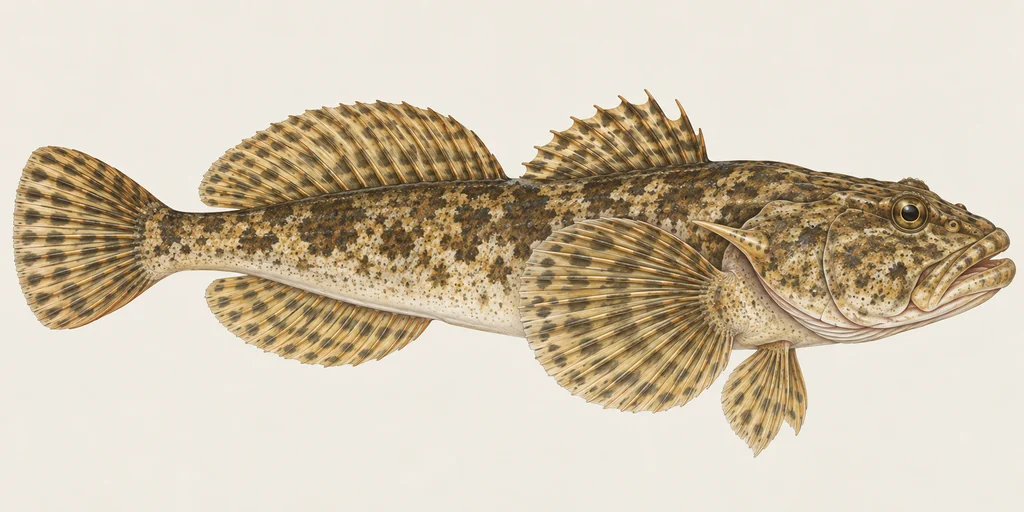
Knowledge – Fish
Bullhead (miller's thumb): Features, habitat and protection
The bullhead or miller’s thumb (Cottus gobio) is a small, scaleless bottom-dweller with a broad head that lives under stones in cool, clear streams. It has no swim bladder and moves across the bed in jerks. The species is listed in Annex II of the Habitats Directive (FFH Directive) and is not a target fish.
In brief: A species of the Habitats Directive (FFH, Annex II) found in the trout and grayling zones, not a target fish. Protection rules are set by state law; in Bavaria (as of October 2026) the closed season (Schonzeit) is 1.2.–30.4.
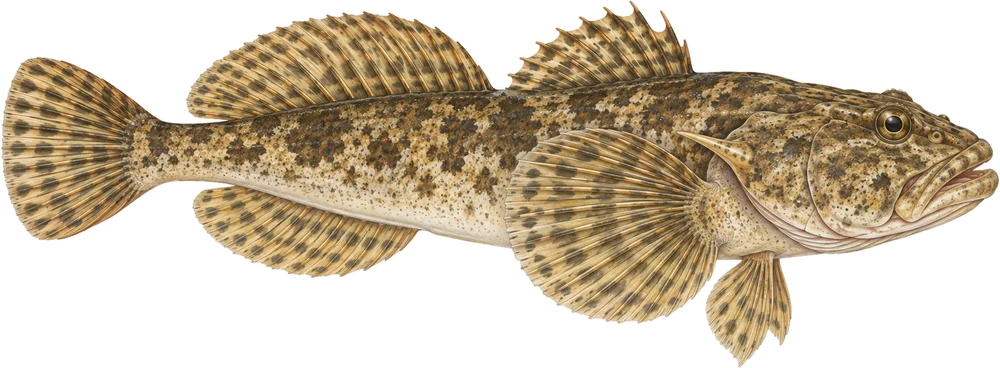
- Large, broad head with a wide, terminal mouth
- Large, fan-shaped pectoral fins and separate, thoracic pelvic fins
- Strong spine on the gill cover
Catch chances through the year
- Hardly any chance
- Possible
- Good
- Peak season
- Spawning (observe the closed season)
Editorial assessment for waters in Germany, not a measured value and no guarantee. Spawning time is not the same as the legal closed season.
Species profile and sources in the catch calendarAll species compared month by monthThe rules of your federal state
How to recognise it
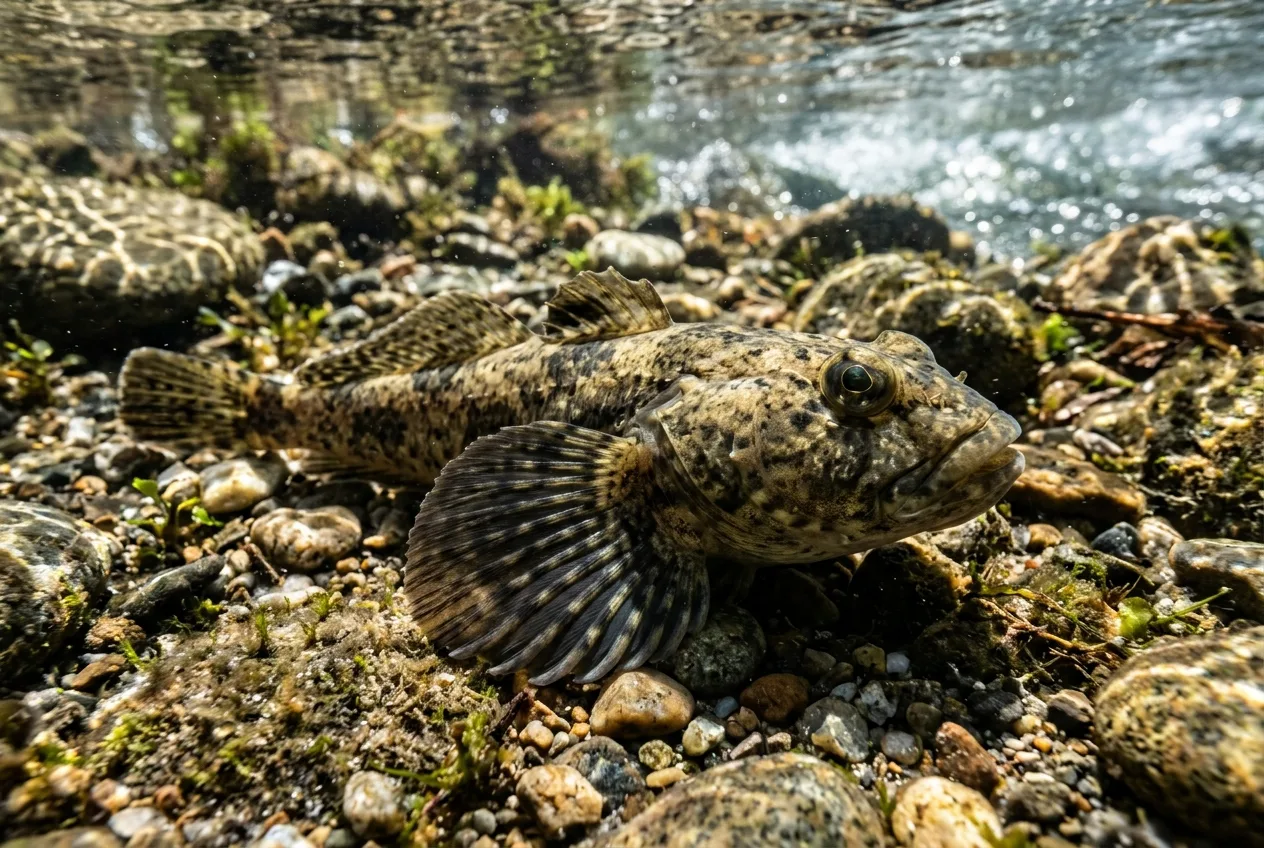
The bullhead has a club-shaped body with a large, broad head and a wide, terminal mouth. In the male the head is broader, in the female more pointed. The skin is smooth and has no scales. It usually reaches 10 to 15 centimetres in length; FishBase gives 18 centimetres as the maximum.
The large pectoral fins stand out. The pelvic fins sit far forward, level with the pectoral fins, and are not fused together. The two dorsal fins merge into one another. On each gill cover the bullhead carries a strong spine. It has no swim bladder, which is why it lies on the bottom.
Its colouring depends heavily on the bed. The upper side is usually grey, ochre or brown with irregular blotches, the underside paler. A bullhead resting on stones is almost impossible to spot.
The bullhead is often confused with gobies, such as the marbled goby or the round goby. The reliable difference is on the underside: in gobies the pelvic fins are fused into a sucker disc, in the bullhead they are separate.
Germany also has several other bullhead species. The 2023 Red List includes the Rhine bullhead (Rhein-Koppe) as a separate species alongside Cottus gobio. For anglers the name bullhead is usually enough, but for population data the exact species matters.
Side by side
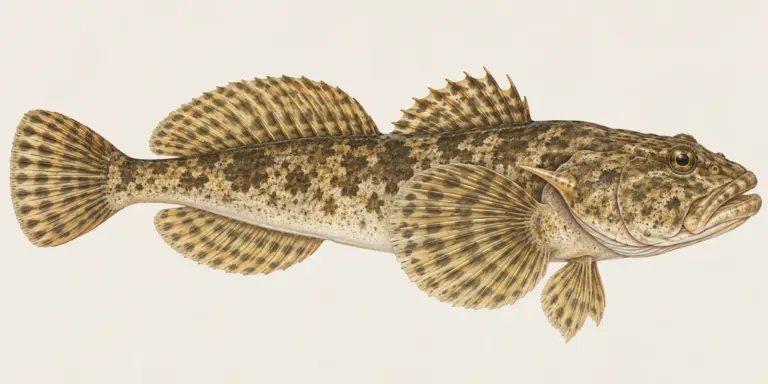
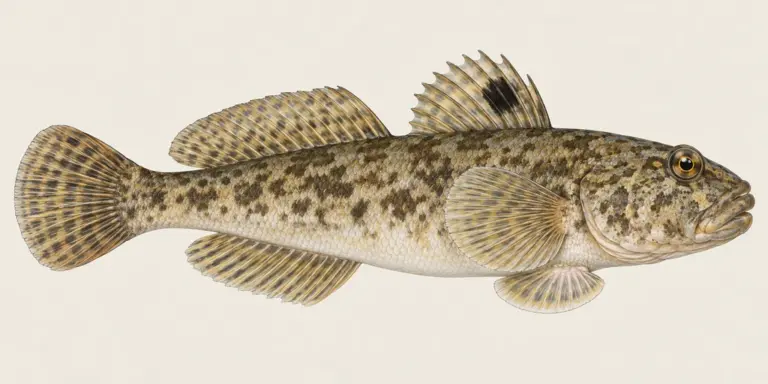
AI-generated illustrations.
Where it lives
The bullhead is a typical companion of the trout zone and lives in clear, oxygen-rich streams and rivers as well as in lakes that stay cool in summer. It needs a stony, gravelly or sandy bed with many gaps where it can hide.
According to the Federal Agency for Nature Conservation (Bundesamt für Naturschutz, BfN), it occurs in all federal states (Bundesländer) except Berlin and Bremen, with a focus on the upland ranges.
Because it is a poor swimmer, even low weirs can be impassable for it. Channel engineering, barriers across the river and pollution harm it. If the gaps in the stream bed silt up, it loses hiding places and spawning sites. The BfN also names heavy stocking with predatory species such as trout as a problem.
Holding spots in the picture
Choose a season and time of day: the picture shows where the species sits then. Tap a fish or a spot in the list to bring it closer. The picture is schematic and AI-generated, every water is different.
Active time By day the bullhead lies under stones; it usually comes out to feed only at dusk and at night.
No main time By day the bullhead lies under stones; it usually comes out to feed only at dusk and at night.
Active time By day the bullhead lies under stones; it usually comes out to feed only at dusk and at night.
Active time By day the bullhead lies under stones; it usually comes out to feed only at dusk and at night.
In the river
Slack water behind rocks
The bullhead (miller’s thumb, Mühlkoppe) is found here all year round.
Gravelly shallow (riffle)
The bullhead (miller’s thumb, Mühlkoppe) is found here all year round.
The bullhead lies on the bottom of cool, clear, oxygen-rich streams and small rivers, typical of the trout zone. It needs a stony, gravelly or sandy bed with many hollows in which it hides. Because it has no swim bladder, it darts jerkily across the bottom.
Spring: This is the spawning period, so observe the closed seasons (Schonzeit). Until May the males sit under hollow-lying stones and guard the attached eggs.
Winter: Depending on the water, spawning starts as early as February; then the males take up their caves under stones.
Size comparison: AI-generated drawing, schematic.
How it hunts and guards its brood
During the day the bullhead hides under stones; it becomes active mainly at dusk and at night. It hardly swims, but moves across the bottom in jerks with its pectoral fins spread.
It feeds on small bottom-dwelling animals, mainly insect larvae and freshwater shrimp. Older literature describes it as an egg predator, and the Landesfischereiverband Bayern also counts fish eggs and fry as food, but according to FishBase, contrary to older literature, fish eggs and larvae are not a common part of its diet.
Spawning takes place between February and May, depending on the water. The female sticks her pink to yellowish eggs in clumps to the underside of a hollow-lying stone or in a pit the male has prepared. Several females may spawn in the same cavity. According to FishBase, the male guards the clutch for about three weeks.
According to the BfN, a female lays 50 to 1.000 eggs. Some bullheads are sexually mature by the end of their first year. In warm waters they live two to four years, in cool ones up to ten.
Is there a season?
There is no angling season for the bullhead. It is not fished for deliberately.
In late winter and spring the bullheads spawn, and the males sit for weeks under their stones above the clutch. If you wade a trout stream at this time, avoid gravel bars and shallow, stony stretches where you can, and do not turn over stones.
You will find the monthly overview of all species and the water temperature check in the catch calendar.
From the blog: Freshwater fish in Germany: which species you catch where
What to do with a bycatch
The bullhead is not a target fish and is not fished for deliberately.
If one does end up on the hook, unhook it in the water or with wet hands and put the bullhead straight back in the same spot. Watch out for the spine on the gill cover when you handle it. It is best to take photos in shallow water, not on land.
Check underneath: Separate pelvic fins: bullhead. Pelvic fins fused into a sucker disc: goby.
Leave stones alone: Do not turn over stones in bullhead streams. In spring, males sit beneath them guarding their eggs.
Suitable lures
We deliberately show no baits for this species.
FFH species: do not target it, return any bycatch gently at once; closed seasons are set by state law.
What you need to observe
The bullhead is listed in Annex II of the Habitats Directive (FFH Directive). In the 2023 Red List of Germany’s freshwater fish, the bullhead (Cottus gobio) is rated as of least concern, although its numbers have declined moderately in the long term.
Whether and when it may be caught is regulated by the federal states. In Bavaria the bullhead has a spring closed season under the Ausführungsverordnung zum Bayerischen Fischereigesetz. Viable fish caught during the closed season must be returned promptly and carefully to the same stretch of water.
Closed seasons (Schonzeit), minimum sizes (Mindestmaß) and fishing bans are set by the federal states (Bundesland). They differ by state and water. We give figures only with a date and a source; what counts is always the fisheries regulation of your federal state and your fishing permit (Erlaubnisschein). You will find a list of links to the official sources in the Fishing calendar.
What closed season, minimum size and harvest slot mean and where to find them is explained on the page Closed season and minimum size explained.
What state law says about the closed season (Schonzeit) and minimum size (Mindestmaß) for this species is in the “At a glance” box on the state page for Bavaria. Our overview does not list this species for the other states; the state fisheries regulation applies there.
Frequently asked questions (FAQ)
Is Groppe the same as Mühlkoppe?
Yes. Groppe, Koppe and Mühlkoppe are all names for Cottus gobio. Germany also has closely related bullhead species such as the Rhine bullhead (Rhein-Koppe).
How do I tell a bullhead from a goby?
By the pelvic fins. In the bullhead they are separate, in gobies they are fused into a sucker disc.
Does the bullhead eat trout spawn?
Fish eggs are occasionally mentioned as food. According to FishBase, however, the eggs and larvae of other fish only rarely appear on its menu. It feeds mainly on insect larvae and freshwater shrimp.
Sources
The rating of catch chances is an editorial assessment. The facts come from these sources, and the text is worded in our own words. The illustration is an original design by Angel Momente in the style of a natural history plate (AI-generated, see the AI notice).
- Landesfischereiverband Bayern: Fischlexikon – Mühlkoppe (Groppe, Koppe)
- Bundesamt für Naturschutz: Artenporträt Cottus gobio (FFH-Anhang II, Verbreitung, Biologie, Gefährdung)
- Rote-Liste-Zentrum: Koppe, Cottus gobio (Rote Liste der Süßwasserfische Deutschlands 2023: ungefährdet)
- Rote-Liste-Zentrum: Rhein-Koppe, Cottus rhenanus (eigene Art in der Roten Liste 2023)
- FishBase: Cottus gobio, Bullhead (Größe, Alter, Lebensraum, Brutpflege)
- FishBase: Neogobius melanostomus, Round goby (Bauchscheibe)
- LAWA-Projekt O 10.20 (Leibniz-IGB, 2021): Temperaturempfindlichkeiten der Fischgemeinschaften
- Bayern.Recht: Verordnung zur Ausführung des Bayerischen Fischereigesetzes (AVBayFiG) mit Anlage Schonzeiten
Created with AI support from the sources listed. Figures only appear in the text if a source gives them. Last updated: 8 November 2026. Found a mistake? Write to us. Who is behind this site: About me.
More in the lexicon
- All fish species at a glance
- Catch calendar – month, water temperature and profile for 93 species
- Line calculator – breaking strain after the knot, drag guideline, backing
- Angling methods