
At a glance
- Coast
- Fishing for eel banned, EU rule until 31 March 2027
- Bycatch
- return it gently straight away
- Inland
- minimum size (Mindestmaß) and closed season (Schonzeit) under state law
- Suggestion
- Extending the ban until 31 March 2028
- Next step
- EU Fisheries Council on 14 and 15 December 2026
The ban on the coast
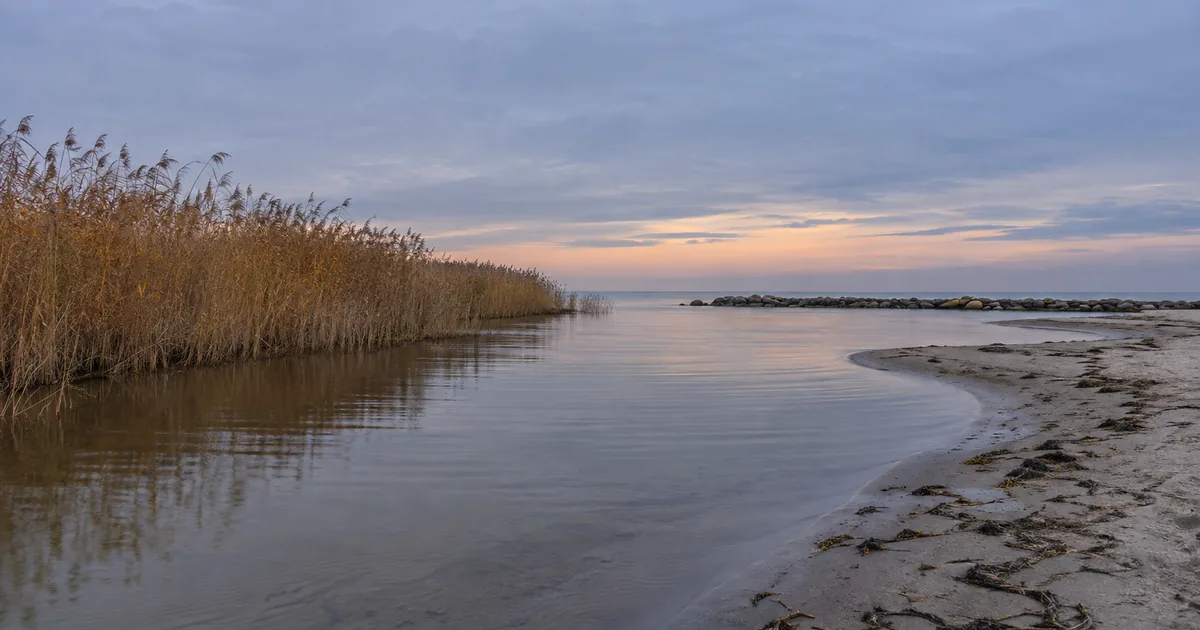
Under Article 14(8) of Council Regulation (EU) 2026/249, angling for European eel is prohibited at every life stage. The article covers the North Sea and the Baltic including brackish water, expressly also river mouths, coastal lagoons and transitional waters. It applies from 1 April 2026 to 31 March 2027 and continues a ban that has existed in this form since 2023.
If an eel ends up on your hook while you are fishing for other species, it must go back straight away and gently. Schleswig-Holstein and Mecklenburg-Western Pomerania require this; there a general order from the state office LALLF forbids catching, keeping and landing eels. Since 10 January 2026 the EU has required coastal states to register sea anglers. The duty for the individual angler is to be set out in Germany’s Sea Fisheries Act (Seefischereigesetz); according to the federal and state fisheries portal, that procedure was still under way in November 2026. In Schleswig-Holstein and on the Baltic, even an eel that has been returned is reported through the European Commission’s RecFishing app.
The closed season on eel for commercial fishing has been running since September, until 28 February 2027 in the German North Sea and until 15 March 2027 in the Baltic. It changes nothing for anglers.
Where the coast ends
The states describe differently how far upstream the ban reaches. Schleswig-Holstein exempts the Lower Elbe, Lower Eider, Schlei and Trave landward of certain lines, on the Schlei for example inside the pierheads at Schleimünde. In Lower Saxony the lower reaches count as coastal waters, so the Elbe below Hamburg, the Weser as far as the Bremen border and the Ems below the Papenburg lock. For Bremen the Senate puts the boundary level with the mouth of the Hunte; from Farge to Hemelingen the ban does not apply. In Mecklenburg-Western Pomerania, according to the LALLF leaflet (as of 2023), harbours behind the pierheads and the Kleiner Jasmunder Bodden are exempt. For Hamburg, none of the official sources I checked names a line.
The amended coastal fisheries regulation of Mecklenburg-Western Pomerania has been in force since 29 September 2026. It sets a minimum size of 50 centimetres for eel, but only as far as EU law does not require anything stricter. For anglers on the coast the ban therefore stays.
Inland: state law and fishing permit (Erlaubnisschein)
Rivers and lakes beyond these limits are not covered by the EU ban. The Federal Ministry of Agriculture sees eel protection there as a matter for the states. Three examples from state law:
- Mecklenburg-Western Pomerania sets a minimum size of 50 centimetres in inland waters and a closed season from 1 December to 28 February.
- Lower Saxony requires 35 centimetres, and 28 centimetres in eight coastal districts as well as Emden and Wilhelmshaven.
- North Rhine-Westphalia requires 50 centimetres. On the main channel of the Rhine, excluding side waters, no eel may be taken from 1 October to 1 March, so the ban is running right now.
Water rules and fishing permit can be stricter. Before I unpack my rod on a new river, I read both.
The stock does not depend on fishing alone. The ministry also names lost habitats and barriers across rivers. Making rivers passable again is part of the states‘ eel management plans, which are currently being revised.
What is coming up before the end of the year
The situation has not eased. According to the Thünen-Institut, the International Union for Conservation of Nature (IUCN) lists the European eel as critically endangered. In its advice of 6 November 2026, the International Council for the Exploration of the Sea (ICES) still describes the state of the stock as critical and again advises for 2027 that no eels be caught in any waters, angling included. In the North Sea in 2026, according to provisional figures, 1,2 per cent as many glass eels arrived as on average in the years 1960 to 1979, and 6,4 per cent in the rest of Europe.
The EU rule ends on 31 March 2027, the general order (Allgemeinverfügung) in Mecklenburg-Western Pomerania on 31 December 2026. For the period after that, the EU Commission presented its proposal for fishing opportunities in 2027 on 5 November 2026. It takes over the angling ban for the North Sea and Baltic, including brackish water, with the same wording, now from 1 April 2027 to 31 March 2028, as well as the closed season of at least six months for commercial fishing. For now this is a draft: the Commission intends to adjust it in line with the ICES advice, and the Fisheries Council is due to adopt it on 14 and 15 December 2026. According to the ministry, the EU framework for eel protection will also be redefined at the end of 2026.
This is not legal advice, as of 7 November 2026. What is binding are the official regulations, the rules of your state and your fishing permit. Whether a water still counts as coast is, if in doubt, settled by the fisheries authority (Fischereibehörde).
Related
- Eel: life stages and migration profiled
- Closed season and minimum size explained: terms and how to measure
- Fishing permit and water map: what the permit says
- Releasing a fish: how to put a bycatch gently back in the water
- Fishing at locks and weirs: what is banned at the fish pass
- Fishing for eel: step by step, with closed seasons and minimum sizes for each federal state (Bundesland)
- Pike on the coast of Mecklenburg-Western Pomerania: the second rule change on the Baltic
Sources
- Rat der EU: Verordnung (EU) 2026/249 (Art. 14, Art. 62, Erwägungsgründe 16 und 17)
- Europäische Kommission: Vorschlag COM(2026) 608 vom 5.11.2026, Ratsdokument 15162/26 (Entwurf Art. 14, Geltung bis 31.3.2028) und Pressemitteilung IP/26/2353 vom 5.11.2026 (Fischereirat 14./15.12.2026)
- ICES: European eel throughout its natural range, Advice 2026, 6.11.2026 (Empfehlung für 2027, Glasaal-Index)
- BMLEH: Pressemitteilung Nr. 39/2026 vom 30.4.2026 (Binnenland, Ursachen, Ausblick)
- BLE: Bekanntmachung zum Aalfangverbot in der Nordsee, BAnz AT 24.04.2026 B7 (Schonzeit der Berufsfischerei)
- Land Schleswig-Holstein: Aal 2026 in den Küstengewässern (Beifang, Grenzlinien, Meldepflicht, Fischereirat)
- Portal Fischerei von Bund und Ländern: Meeresangeln (Registrierung, RecFishing-App, Stand der deutschen Umsetzung)
- LALLF Mecklenburg-Vorpommern: Allgemeinverfügung vom 4.5.2026, Aktuelles, Merkblatt zum Aalfangverbot, Küstenfischereiverordnung, Lesefassung 2026, Mindestmaße und Schonzeiten
- Staatliches Fischereiamt Bremerhaven (Niedersachsen): Fangverbot Aal, Die niedersächsischen Küstengewässer
- Senat Bremen: Mitteilung vom 19.5.2026, Aalfang in der Weser
- Landesrecht: § 3 Binnenfischereiordnung Niedersachsen, Landesfischereiverordnung Nordrhein-Westfalen
- Thünen-Institut, Fischbestände online: Bestandsdatenblatt Europäischer Aal, Artseite Aal
Text AI-assisted, title image AI-generated, photo in the text: Iwan Belokurov. Sources opened and checked on 12 October 2026, the legal sources again on 26 October 2026, the Commission proposal and ICES advice on 7 November 2026.
All information is provided without guarantee. The official versions of the regulations named are what count.