
Knowledge – Fish
Red Snapper: Features, habitat, season and rules
The red snapper (Lutjanus campechanus) is a pinkish-red snapper from the western Atlantic and the Gulf of Mexico. In the USA it is a sought-after sport and food fish, caught over reefs, wrecks and rocky ground, usually at depths of 30 to 130 metres.
In short: According to the catch calendar the best time is April to October. Good spots along the coast: wrecks, reefs, drop-offs and rocky mixed ground. Proven baits: squid or ladyfish as natural bait on a circle hook over reefs and wrecks. You may keep fish only during the fishing periods set each year by the US authorities. Released fish can suffer from barotrauma, and in the US federal zone of the Gulf a descending device or a venting tool is compulsory. Step by step: How to fish for red snapper.
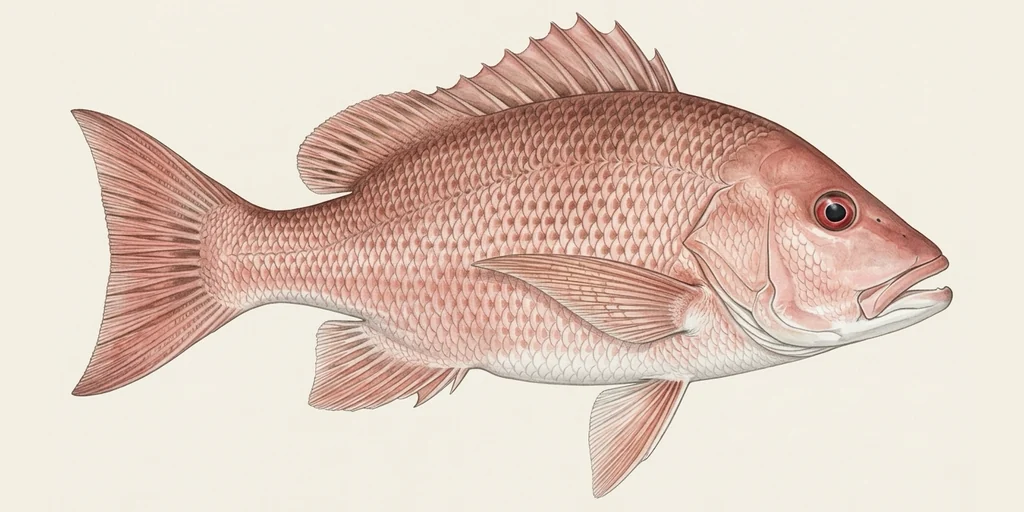
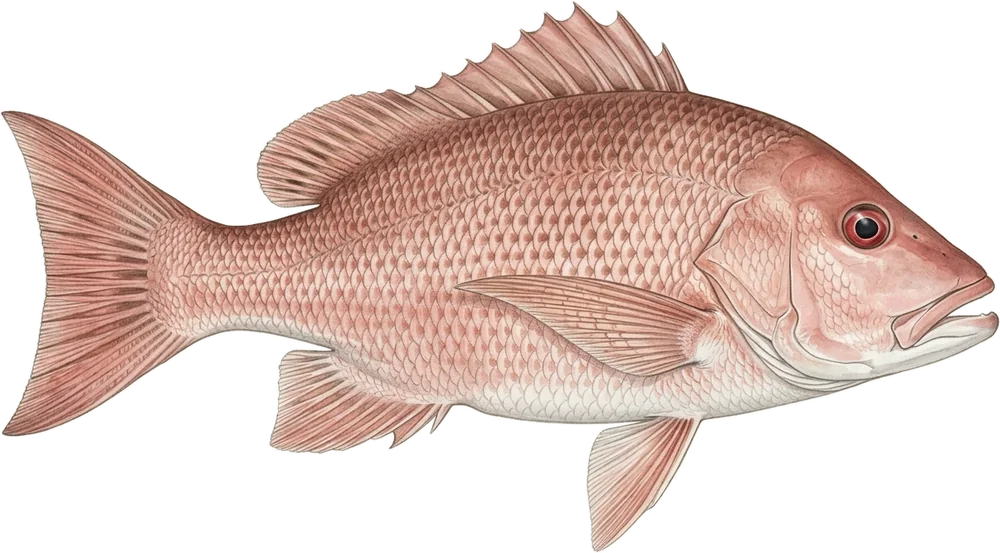
- Pinkish-red body, white towards the belly, small red eyes
- Large head with a triangular profile, forehead line steeper than the throat
- Long pectoral fins that reach the anus when laid back
Catch chances through the year
- Hardly any chance
- Possible
- Good
- Peak season
- Spawning (observe the closed season)
Editorial estimate for the home waters (Gulf of Mexico and the south-east coast of the USA), not a measurement and not a guarantee. The rules of the country you are visiting are binding.
How to recognise it
Body and fins are pinkish red, fading to white towards the belly. According to NOAA Fisheries, fish from deeper water are usually a stronger red than those from shallow water. The head is large and forms a long triangle whose upper line slopes more steeply than the lower. The eyes are small and red. The two dorsal fins merge with a slight notch, and the tail fin is cut straight.
The pectoral fins are long and, laid back, reach the anus. In the upper jaw, alongside fine brush-like teeth, sit several enlarged canines, a feature of all snappers. Juveniles under about 35 centimetres carry a dark spot on the upper flank beneath the front, soft part of the dorsal fin, and some show bluish lengthwise stripes.
FishBase gives a usual length of 60 centimetres, a maximum of one metre and 22,8 kilograms. NOAA Fisheries gives similar values for US waters. Red snapper live very long: 57 years are documented in the Gulf of Mexico, 51 years in the South Atlantic.
Several snappers of the region look similar. According to the Florida Museum the closest is the blackfin snapper (Lutjanus buccanella), which has a clear black spot at the pectoral fin. The red snapper lacks this spot. Other snappers also have the dark flank spot of juveniles; here head shape and the length of the pectoral fins help.
Despite its colour and name it has nothing to do with the redfish of the North Atlantic. The red snapper belongs to the snapper family (Lutjanidae).
Side by side

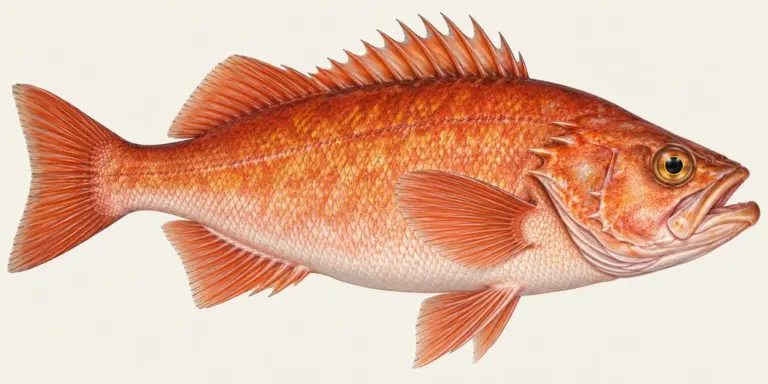
AI-generated illustrations.
Where it holds
The red snapper lives in the western Atlantic, throughout the Gulf of Mexico and along the US east coast; north of the Carolinas it is rare. FishBase gives depths from 10 to 190 metres, mostly 30 to 130 metres.
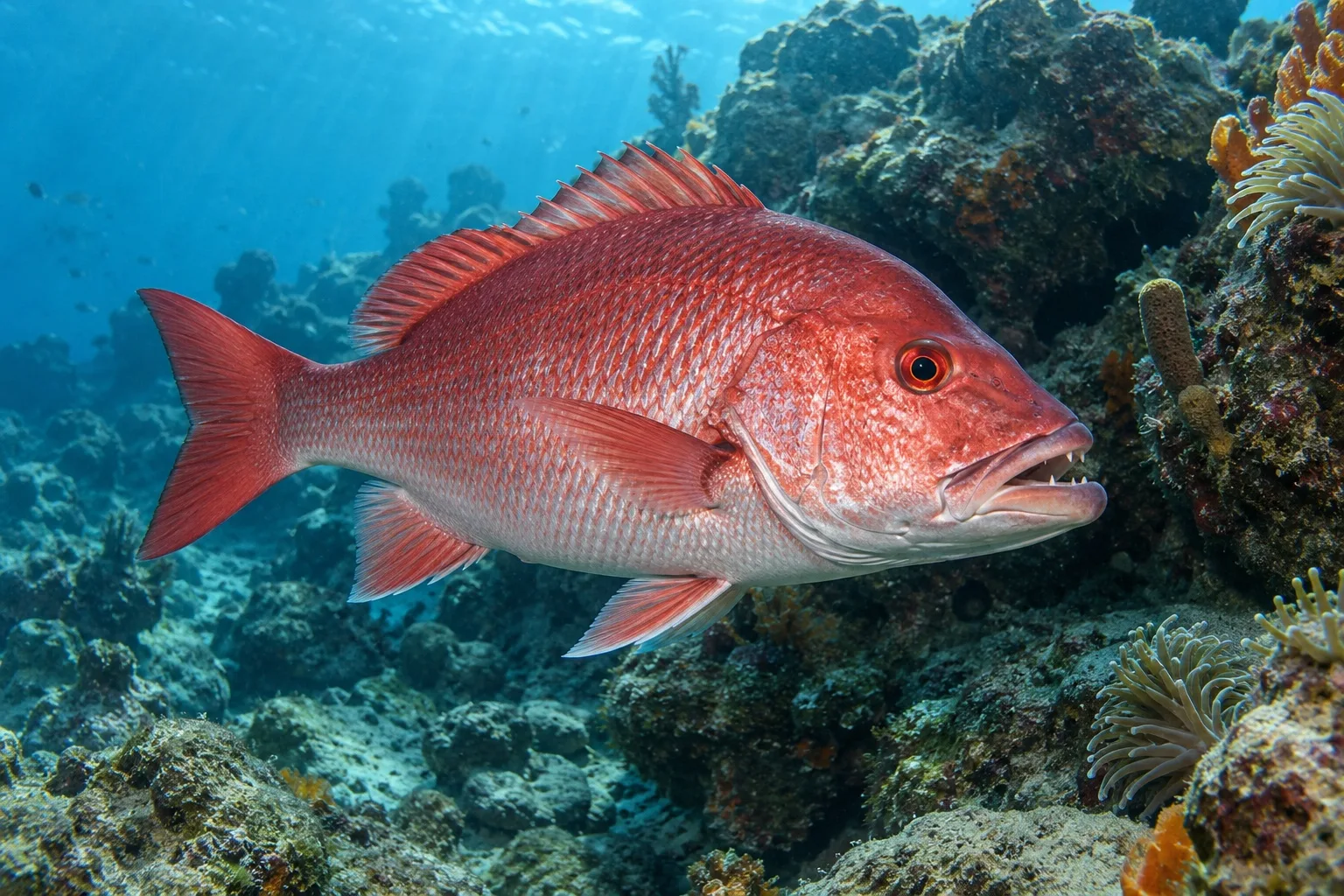
Adults live near the bottom, mostly at hard structures with marked relief on the continental shelf: coral and artificial reefs, rocks, drop-offs and caves. According to the Florida Museum, stocks over such structures are larger than over smooth ground, and older, larger fish prefer cooler, deeper water. Juveniles grow up over sand and mud and later move to drop-offs, rocks and wrecks.
Holding spots in the picture
Choose the time of day: the picture shows where the species holds. We do not show German seasons for travel fish; the bars give the chance of a catch for each month. Tap a fish or a spot in the list to bring it closer. The picture is schematic and AI-generated, and every water is different.
Chance of a catch per month according to the catch calendar
- J
- F
- M
- A
- M
- J
- J
- A
- S
- O
- N
- D
Spawning season
On the coast
Sandy bottom
The red snapper is here all year round.
Stony mixed ground
The red snapper is here all year round.
Drop-off
The red snapper is here all year round.
Wreck, reef
The red snapper is here all year round.
Deep, colder water
The red snapper is here all year round.
Red snappers live on the bottom around hard structure: coral and artificial reefs, wrecks, rocks, drop-offs and caves. To feed they move onto the flat areas next to the reefs. Juveniles grow up over sand and mud.
Depth: It usually holds at 30 to 130 metres, and overall occurs from 10 to 190 metres. Older, larger fish seek cooler, deeper water.
Size comparison: AI-generated drawing, schematic.
How it feeds and spawns
Young red snapper eat zooplankton, later shrimps, squid and octopuses. Adults hunt fish, crustaceans and molluscs near the bottom, often on the flat areas next to the reefs.
Spawning takes place away from the reefs over shallow sandy ground at 18 to 37 metres. The spawning season runs from May to October depending on the region. In the north-western Gulf the peak is from June to August according to the Florida Museum, and off south-western Florida in August and September. A female spawns several times per season and can release more than nine million eggs in a single spawning. Females can spawn at two years of age.
When and where the season is
The red snapper stays in its territory all year. In winter, according to the Florida Museum, it withdraws from the cooler shallow water into deeper water. It is therefore caught all year, but you may keep it only in the fishing periods that the states and federal authorities set every year.
In the Gulf of Mexico the five bordering states have set their own recreational season since 2020. In Mississippi it ran from the end of May to the beginning of July in 2026. In the South Atlantic, joint management by the federal government and the states is under discussion. Anyone planning a trip should know the fishing period of the state where they land the catch.
How it is caught
Step by step: How to fish for red snapper: tips on bait, rigs and tackle – season, holding spots, bait, tackle and rules on one page.
Red snapper are caught almost exclusively on hook and line near the bottom, from a boat over reefs, wrecks and artificial reefs. Commercial fishers use vertical lines with several hooks and a weight at the end; recreational anglers also fish mainly with hook and line.
As the most productive baits the Florida Museum names ladyfish (Elops saurus) and squid. Anyone fishing the Gulf with natural bait for reef fish must, under US federal law, use circle hooks (hooks with the point bent inwards) made of non-stainless steel. In the South Atlantic a circle hook requirement applies to snappers and groupers north of latitude 28 degrees north.
Keep a descending device ready: When a red snapper comes up quickly from depth, its swim bladder expands (barotrauma). For released fish, NOAA Fisheries recommends venting tools or descending devices that take the fish back down to the depth where it was caught. In the US federal zone of the Gulf, one of them must be ready for use on board.
Check the fishing period before the trip: Whether you may keep a red snapper depends on the state, on whether you are in federal or state waters, and on the date. The fishing periods are set anew every year.
Suitable lures
Squid or ladyfish as natural bait on a circle hook over reefs and wrecks.
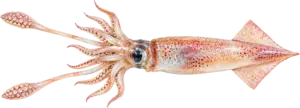
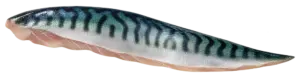
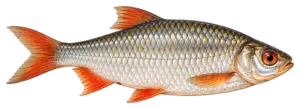
AI-generated illustrations. A click opens the lure’s page.
Check the US fishing periods and the circle hook requirement with the responsible authority
What applies locally
The red snapper is managed by NOAA Fisheries together with the fishery management councils for the Gulf of Mexico and the South Atlantic. In the Gulf the state rules for recreational anglers differ markedly from the federal rules; fishing periods, minimum sizes and daily limits vary from state to state and from year to year. We therefore do not give figures: the responsible authority is binding, for example the Mississippi Department of Marine Resources for landings in Mississippi or NOAA Fisheries for federal waters.
On top of that come reporting and permit requirements of the states. In Mississippi one angler per boat and trip must report the catch through the state reporting system, and every licensed angler on board needs a landing permit for reef fish.
The IUCN lists the red snapper as vulnerable (Vulnerable, assessment of 2015). According to NOAA Fisheries the Gulf stock is not overfished but is still being rebuilt under a plan of 2005. A separate rebuilding plan has applied to the South Atlantic since 2010.
Frequently asked questions (FAQ)
How do I recognise a red snapper?
By the pinkish-red body with a white belly, the small red eyes and the triangular head profile. The pectoral fins reach the anus when laid back, and there is no black spot at the pectoral fin.
Why do you need a descending device for red snapper?
When hauled up quickly from depth, the swim bladder expands. A descending device takes released fish back down. In the US federal zone of the Gulf it, or a venting tool, is compulsory.
How old does a red snapper get?
Very old: NOAA Fisheries gives 57 years in the Gulf of Mexico and 51 years in the South Atlantic.
Sources
The rating of catch chances is an editorial assessment. The facts come from these sources, and the text is worded in our own words. The illustration is an original design by Angel Momente in the style of a natural history plate (AI-generated, see the AI notice).
- FishBase: Lutjanus campechanus, Northern red snapper
- NOAA Fisheries: Red Snapper
- Florida Museum of Natural History: Lutjanus campechanus (Northern red snapper)
- Mississippi Department of Marine Resources: Red Snapper
- South Atlantic Fishery Management Council: Snapper Grouper
Created with AI support from the sources listed. Figures only appear in the text if a source gives them. Last updated: 27 October 2026. Found a mistake? Write to us. Who is behind this site: About me.
More in the lexicon
- All fish species at a glance
- Catch calendar – month, water temperature and profile for 93 species
- Line calculator – breaking strain after the knot, drag guideline, backing
- Angling methods