
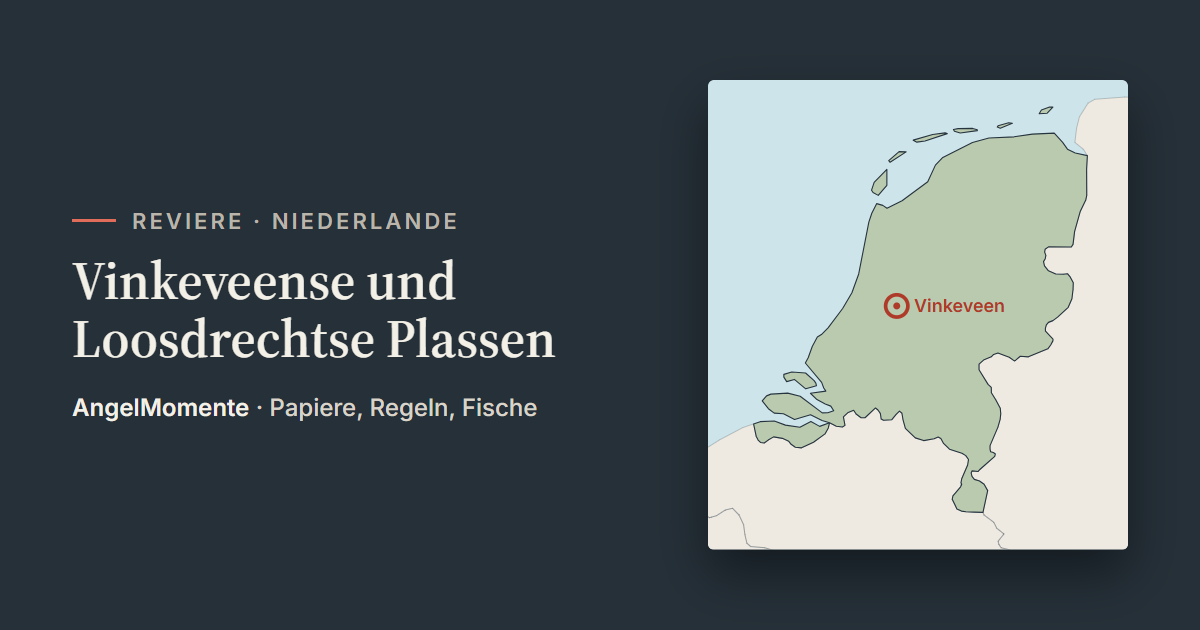
Destinations · the Netherlands
Fishing on the Vinkeveense and Loosdrechtse Plassen
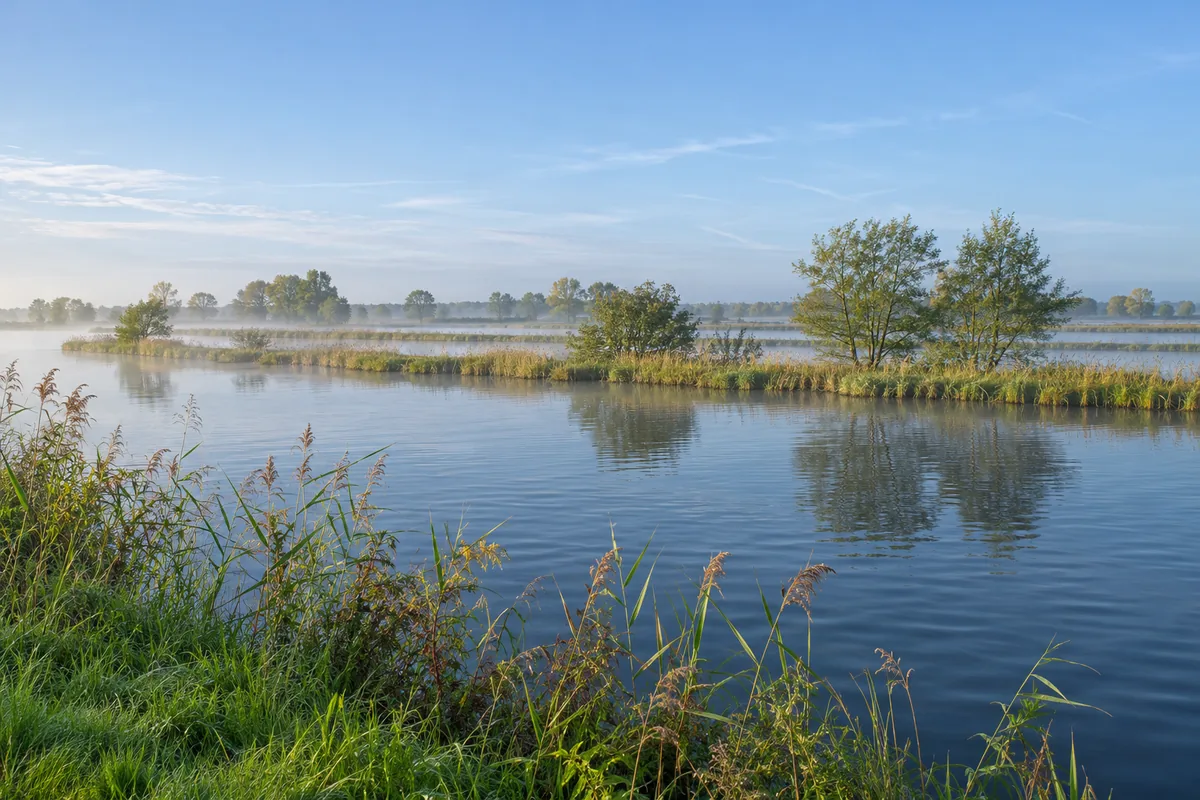
The Vinkeveense and Loosdrechtse Plassen lie between Utrecht and Amsterdam: lakes left by peat extraction with narrow strips of land, in Vinkeveen up to about 50 m deep. You fish here with the fishing licence (VISpas), and on both lakes there are also the rules of the fishing-rights holders and strict navigation rules for boats.
- Papers
- VISpas with list of waters; Vinkeveen only VISpas with number 07
- Season
- all year; artificial lures and cut bait banned from 1.4., allowed from the last Saturday in May
As of October 2026
At a glance
- Papers
- VISpas with list of waters; Vinkeveen only VISpas with number 07
- Licence and permit
- Season
- all year; artificial lures and cut bait banned from 1.4., allowed from the last Saturday in May
- Fishing seasons
- Night fishing: Vinkeveen only with permission of the AWHB, Loosdrecht only Plassen 3 to 5
| Fish | Minimum size | Closed season | Catch limit | Note |
|---|---|---|---|---|
| Pike | 45 cm | 1.3.–31.5. | Vinkeveen: no keeping fish | Loosdrecht: 1 pike from 45 to 80 cm; closed season ends on the last Saturday in May |
| Zander | 42 cm | 1.4.–31.5. | Vinkeveen: 1 from 55 cm | Loosdrecht: 2 zander from 42 to 70 cm; closed season ends on the last Saturday in May |
| Perch | 22 cm | 1.4.–31.5. | Vinkeveen: no keeping fish | Loosdrecht: 3 perch from 22 to 45 cm; closed season ends on the last Saturday in May |
| Carp | – | none | no keeping fish | Vinkeveen: landing net, unhooking mat and third rod of the AWHB |
| Bream | – | none | Vinkeveen: no keeping fish |
Minimum sizes and closed seasons under the Uitvoeringsregeling visserij; keeping fish in Vinkeveen under the AWHB rules, in Loosdrecht under the VISpas conditions. As of October 2026. The regulation and your fishing permit (Erlaubnisschein) take precedence.
Location and waters Vinkeveense and Loosdrechtse Plassen
The Vinkeveense Plassen lie north-east of Vinkeveen. Since the Dutch Golden Age, peat was cut here. The peat dried on the long strips of land (legakkers), the bog between them was dredged away, and the banks gradually broke up. Later, sand was extracted for the A2 motorway and Amsterdam-Zuidoost. Since then the lake has been around 50 m deep in places. Twelve sand islands protect the strips of land from waves. Near the Botshol nature reserve, recreational use is restricted (municipality of De Ronde Venen). The water level lies 4.5 m above the neighbouring polder (Waterschap AGV).
The Loosdrechtse Plassen belong to the Oostelijke Vechtplassen protected area on the border of North Holland and Utrecht, between the Vecht and the Utrecht Hill Ridge. These lakes too were formed by peat extraction and the collapse of strips of land that had become too narrow (Natura 2000). The Waterschap is rebuilding some of the strips with dredged material from the lakes (Waterschap AGV).
Fish and best time Pike, zander, carp and bream
- Vinkeveen: The water is clear today. In the large parts, Noordplas and Zuidplas, there are therefore fewer bream and small perch than before, but more pike. You find more fish in the small plas, in the ditches and in the shallow areas with water plants (Waterschap AGV). For zander and carp the fishing-rights holder has its own rules, see below.
- Loosdrecht: The water is turbid here. Many fish, such as the bream, stir up the bottom. The Waterschap therefore plans to remove fish in a targeted way from winter 2027 to spring 2028 (Waterschap AGV). Pike can be seen in the plassen as well (Waterschap AGV).
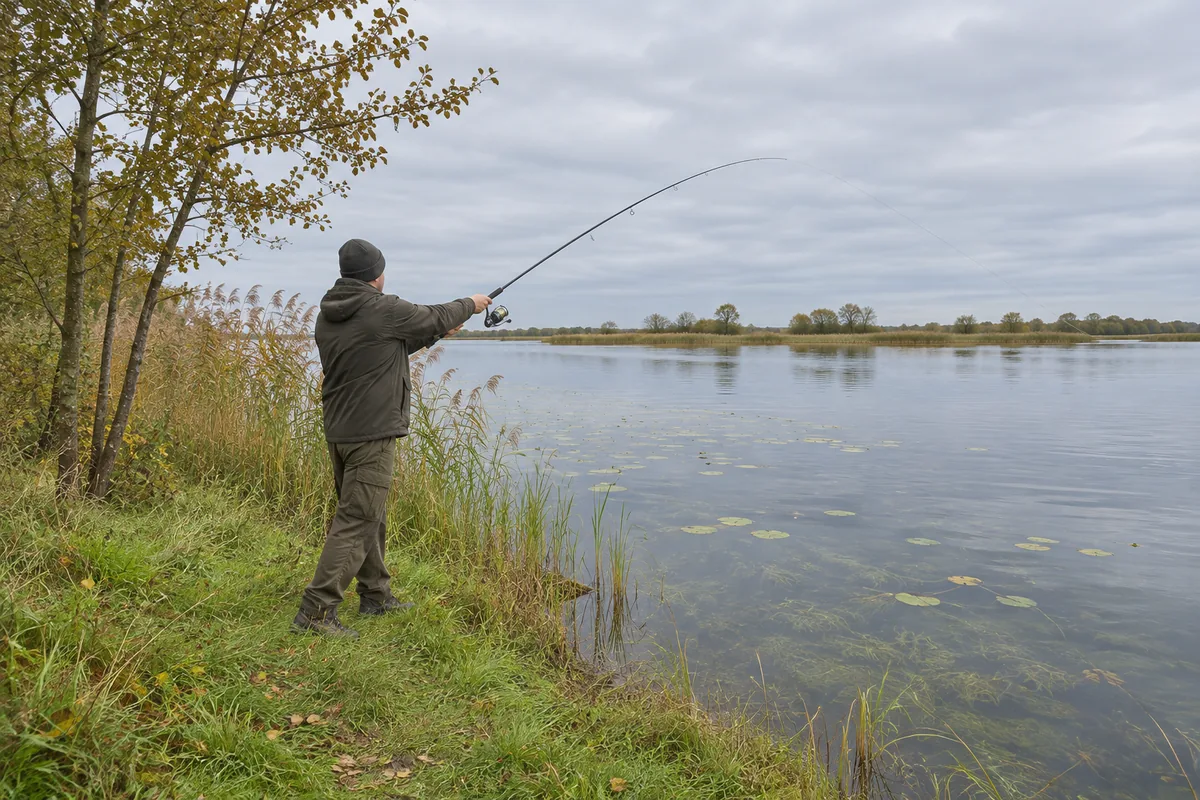
The catch calendar shows when each species bites well.
Papers and permit VISpas through a club, Vinkeveen only for the Midwest region
You get the VISpas with membership of an angling club (Rijksoverheid). Together with the list of waters (Lijst van VISwateren) or the VISplanner app, it is your written permit (Sportvisunie). More on the country page.
- Vinkeveen: The Algemene Weesper Hengelaars Bond (AWHB) holds the fishing rights on a large part of the plassen. It only accepts VISpassen from clubs in the former Midwest region, and the membership number must start with 07. For carp fishing you need the AWHB third rod; the nationwide permit does not apply here (AWHB). At night you may only fish with the AWHB night-fishing permit (list of waters). Ask the club before you buy whether your VISpas is suitable.
- Loosdrecht: The Loosdrechtse Plassen and Breukeleveense Plas (Stille Plas) appear in the list of waters together with the Stichting Sportvisserij Breukeleveense en Loosdrechtse plassen. Night fishing is only allowed on plassen 3, 4 and 5 (list of waters) and also needs the NachtVIStoestemming on top of the VISpas (Sportvisunie).
Special rules Zander limit, pike go back, banks and sand islands
- Catch in Vinkeveen: You may keep at most one zander of 55 cm or more, and you may carry baitfish; pike must not be taken home. If you fish for carp you need a landing net and an unhooking mat; for predator fishing, forceps and side cutters are part of the kit. Keepnets and retention sacks for carp and predators are banned (list of waters).
- Banks in Vinkeveen: No open fires, no mooring and no tents in the reeds or on protected banks. You may only go ashore on the public strips of land and the numbered sand islands (list of waters).
- Catch in Loosdrecht: The VISpas conditions apply. You fish with no more than two rods and keep at most one pike of 45 to 80 cm, two zander of 42 to 70 cm and three perch of 22 to 45 cm. Carp and eel always go back (VISpas conditions). You must not step onto the jetties and strips of land or moor there (list of waters).
- Baits in spring: From 1 April artificial lures, dead baitfish and fish strips are banned; from the last Saturday in May they are allowed again (Reglement voor de binnenvisserij, Uitvoeringsregeling visserij).
- Boating in Vinkeveen: In parts of the plassen anchoring and mooring are completely banned, in others only at night. The map belongs to the Verordening Vinkeveense Plassen. Motorboats are covered by a separate decision administered by the Recreatieschap Stichtse Groenlanden (municipal gazette). Ask there about the permitted speeds.
- Boating in Loosdrecht: Motorboats may go no faster than 12 km/h, and 9 km/h on the Stille Plas. Within 100 m of a bank, jetty or breakwater the limit is 6 km/h, as it is at night from half an hour after sunset, at 10 pm at the latest, until 8 am. In the east of the Vuntus and in the Ster van Loosdrecht area no engine may run, and jet skis are banned completely (Besluit Motorboten Loosdrechtse Plassen).
Correct as of October 2026. The list of waters shows the Vinkeveense Plassen without restriction, whereas the AWHB demands a VISpas with the number 07. Follow the club’s stricter rule. Minimum sizes and closed seasons are in the box.
Safety
There are many boats, swimmers, divers and water-skiers on the Vinkeveense Plassen (municipality of De Ronde Venen). Divers have a zone of their own (municipal gazette). In Loosdrecht the introduced water plant Cabomba is spreading. It tangles in the propeller, and that is dangerous (Waterschap AGV). Take a life jacket on the boat for everyone on board (Rijkswaterstaat). More under Boat and life jacket.
Related
- Fishing on a lake and Fishing in the Netherlands
- More lakes in the Netherlands: Frisian lakes and Randmeren
- Pike, zander, perch and carp in the fish lexicon
- Closed season and minimum size explained and Returning fish
Sources
- Uitvoeringsregeling visserij und Reglement voor de binnenvisserij 1985
- Gemeinde De Ronde Venen: Verordening Vinkeveense Plassen 2009, Omgevingsvisie und Bekanntmachung zum Recreatieschap; Gemeinde Wijdemeren: Besluit Motorboten Loosdrechtse Plassen 2023
- Waterschap AGV: Defosfatering Vinkeveense Plassen, Visstandbeheer Loosdrechtse Plassen und Vaarroute Loosdrechtse Plassen
- Natura 2000: Oostelijke Vechtplassen
- AWHB: Vinkeveense Plassen und Sportvisunie: Gezamenlijke Lijst van Nederlandse VISwateren 2026 bis 2028 und VISpas-Bedingungen 2026 bis 2028 (abgerufen 04.10.2026)
Guide without guarantee, correct as of October 2026. The Dutch regulations on inland fisheries, the VISpas conditions including the list of waters, the AWHB rules and the ordinances of the municipalities of De Ronde Venen and Wijdemeren in their current versions are authoritative.