
Knowledge – Fish
Vendace: Features, habitat, spawning, protection
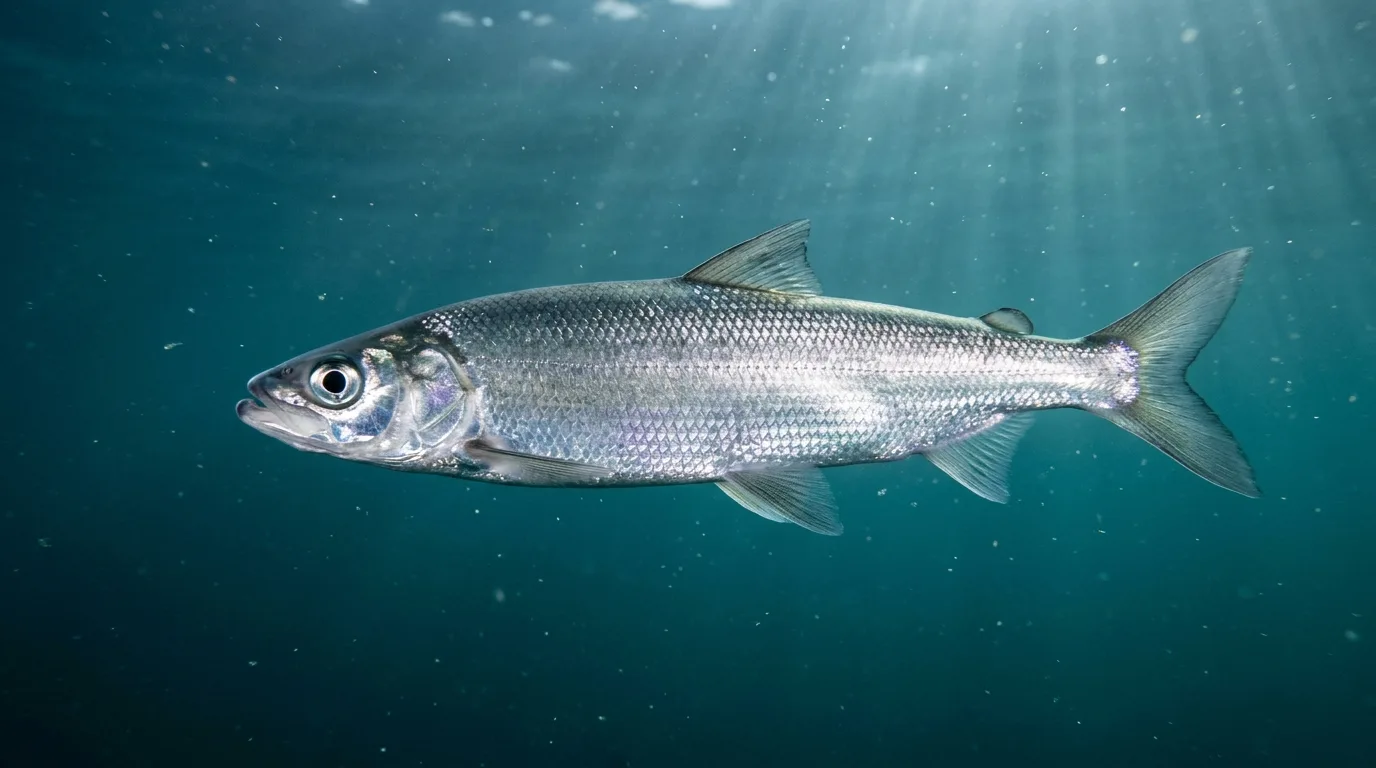
The vendace (Coregonus albula) is a slender, silvery salmonid with an adipose fin that lives in shoals in the open water of clear lakes and feeds on zooplankton. It is a species in its own right and not a young whitefish, and it usually stays under 25 centimetres. In Germany it is classed as threatened.
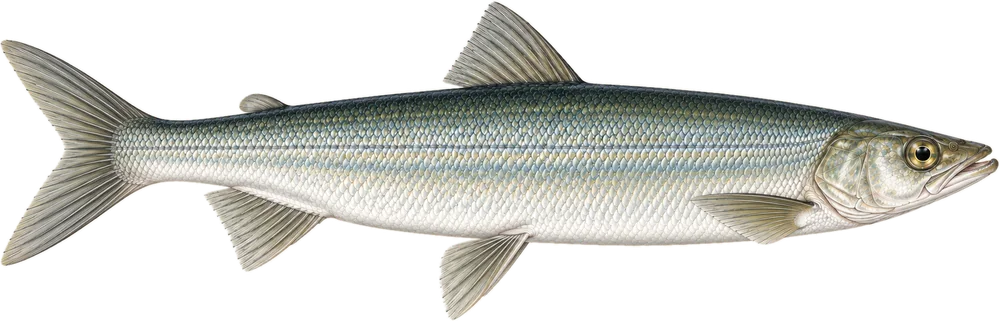
In short: The vendace is on Germany’s Red List as threatened and, as a Coregonus species, in Annex V of the Habitats Directive (FFH). It is a species of its own that stays small, and not a young whitefish. What to do with an accidental catch: Vendace as bycatch.
- Small adipose fin between the dorsal fin and the tail fin
- Slightly protruding lower jaw, the mouth looks superior
- Slender, herring-like body with a blue-green back and silver flanks
Catch chances through the year
- Hardly any chance
- Possible
- Good
- Peak season
- Spawning (observe the closed season)
Editorial assessment for waters in Germany, not a measured value and no guarantee. Spawning time is not the same as the legal closed season.
Species profile and sources in the catch calendarAll species compared month by monthThe rules of your federal state
How to recognise it
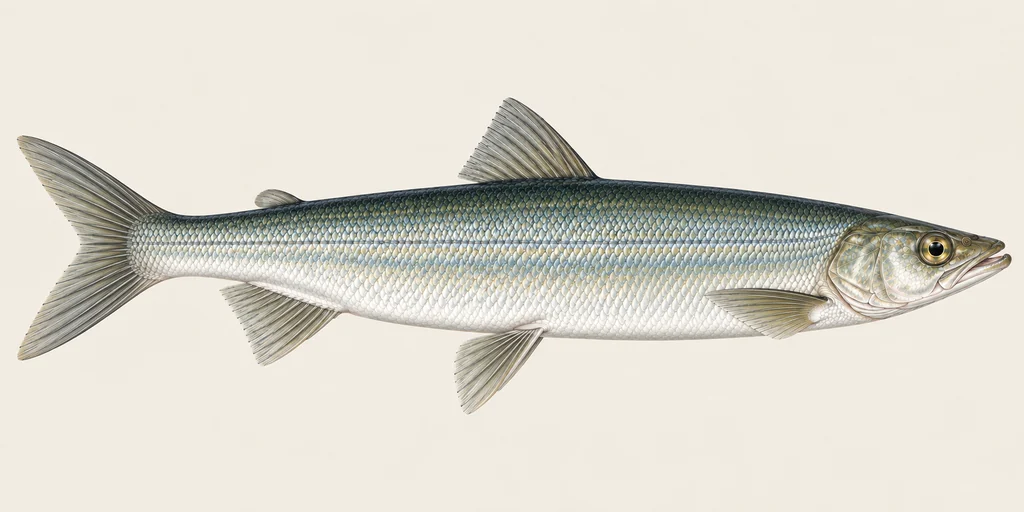
The vendace is slim and looks rather like a herring. The small adipose fin between the dorsal and tail fins shows, however, that it belongs to the salmonids. The lower jaw projects slightly, so the mouth looks upturned. The back is blue-green, the flanks and belly silver.
It usually measures 15 to 20 centimetres, and over 30 centimetres is rare according to HELCOM. As with all coregonids, experts tell the forms apart mainly by the number of gill rakers. These are comb-like projections on the gill arches with which the fish filter plankton from the water.
It is most often confused with the larger coregonids, which are called Maräne, Renke or Felchen depending on the region (whitefish). This group is covered in the profile Whitefish. According to LFV Bayern, whitefish average 25 to 45 centimetres in length; the vendace stays smaller and has a projecting lower jaw.
In the Stechlinsee in Brandenburg it is joined by the Fontane-Maräne (Fontane’s cisco), a species of its own found only there, which lives deeper and stays smaller. What sets it apart from the herring, which it resembles in shape, is the adipose fin.
Side by side
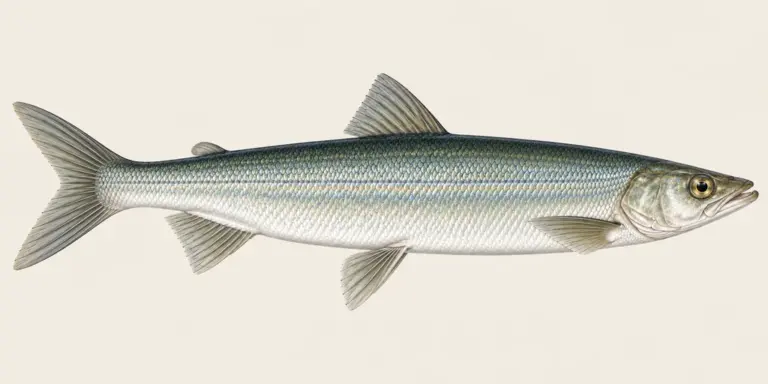
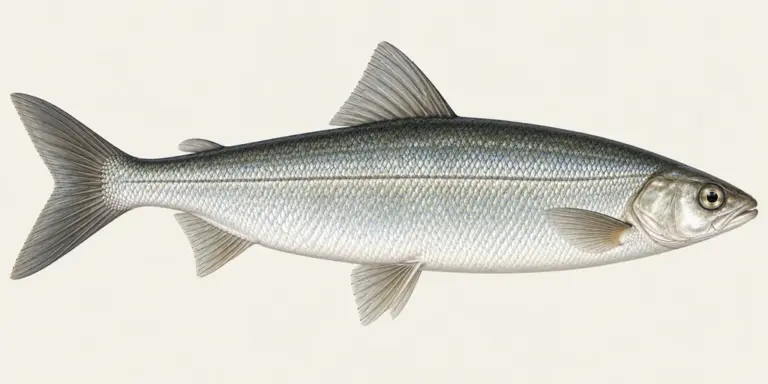
AI-generated illustrations.
Where it lives
The vendace is a shoaling fish of open water. It lives in larger, mostly clear and nutrient-poor lakes and forms pelagic shoals, that is, shoals in open water, in deeper lakes. FishBase gives a depth range of 6 to 24 metres. In the Baltic there are migratory forms that run briefly into rivers to spawn, and in the northern Gulf of Bothnia it even lives in the freshened sea.
Its natural range runs from the Baltic region to lakes on the upper Volga. In Germany it is native east of the Elbe and has died out on the lower Rhine. It is often stocked in lakes and reservoirs in northern and central Germany. According to the Red List it has lost habitat over the decades; some populations exist only because they are stocked regularly. Stocking is successful above all in lakes with no stocks of their own.
In clear, deep lakes, shoals of vendace are important prey for pike and big perch. The magazine Blinker describes how these predators follow the shoals out into open water.
Holding spots in the picture
Choose the season and time of day: the picture shows where the species stands then. Spots outlined in red apply only in the chosen season. Tap a fish or a spot in the list to bring it closer. The picture is schematic and AI-generated, every water is different.
In the lake
Shelf edge
Vendace is found here in autumn only.
Open water
Vendace is found here all year round.
The vendace travels in shoals through the open water of clear, nutrient-poor lakes and filters plankton. There it is important prey for pike and large perch.
Autumn: When the lake cools and mixes in late autumn, the fish come into shallower areas near the shore to spawn.
Depth: FishBase gives a range of 6 to 24 metres. In a clear lake in Brandenburg it mostly stayed deeper than 20 metres during the day.
Size comparison: AI-generated drawing, schematic.
How it feeds and spawns
According to FishBase, adult vendace feed on planktonic crustaceans; HELCOM also names insect larvae.
Spawning takes place in late autumn after the autumn turnover, when the lake water is fully mixed and measures 4 to 7 °C everywhere, mostly in November and December. Its eggs are about two millimetres across and sink onto sand, gravel or plants, usually at 3 to 10 metres depth, rarely down to 22 metres. In clear lakes it spawns deeper, in brown moorland lakes closer to the surface. Because of the cold water, the eggs take 100 to 120 days to develop.
According to HELCOM it can mature at just one year, Wikipedia gives two to three years. It lives up to ten years.
Is there a season?
In the catch calendar all months are set to zero for the vendace. It is threatened in Germany, so we do not list it as a target fish.
In late autumn the fish move to the shores and shallower areas to spawn. For the rest of the year they stay in open water, in a clear Brandenburg lake mostly below 20 metres during the day according to Blinker.
You will find the monthly overview of all species and the water temperature check in the catch calendar.
What to do with a bycatch
As bycatch: Fishing for vendace? – why the species is not a target fish and what to do with an accidental catch.
The vendace is not listed here as a target fish. As bycatch it can take the hook when fishing open water in lakes where other coregonids live.
Remove the hook in the water if you can and release the fish quickly. Whether the vendace may be kept in your water is governed by state law and your fishing permit (Erlaubnisschein).
Look at the lower jaw: A slightly projecting lower jaw and a length of around 20 centimetres point to the vendace. The adipose fin separates it from herring-type fish.
Read the rules first: Whether and how whitefish may be fished for is set out in state law and the water’s own rules. Check both before you fish the open water of a whitefish lake.
Suitable lures
We deliberately show no baits for this species.
Threatened (Red List 2023) and Annex V of the Habitats Directive (FFH): do not target it; whether an accidental catch may be kept is governed by state law and your fishing permit (Erlaubnisschein).
What you need to observe
The vendace is listed as threatened in Germany’s 2023 Red List, and its stock is considered very rare. In the previous list it was classed as not threatened; according to the Red List the new classification rests on better knowledge. As a species of the genus Coregonus it is in Annex V of the Habitats Directive (FFH). According to the Federal Agency for Nature Conservation, Annex V species may be used only if this is compatible with a favourable conservation status.
Closed seasons, minimum sizes and harvest windows are set by the federal states (Bundesländer). They differ by state, type of water and time of year. We give figures only with a date and a source; what is always binding is the fisheries regulation of your federal state and your fishing permit (Erlaubnisschein). You will find a list of links to the official sources in the catch calendar.
A fish of legal size that you want to keep you stun and kill at once, in line with animal welfare rules. Protected, undersized fish or fish too large under a harvest slot you unhook, if possible still in the water and with wet hands, and release gently. What exactly applies is regulated by state law and your fishing permit (Erlaubnisschein).
What closed season, minimum size and harvest slot mean and where to find them is explained on the page Closed season and minimum size explained.
Frequently asked questions (FAQ)
Is the vendace a young whitefish?
No. It is a species of its own, Coregonus albula, and usually stays under 25 centimetres. Whitefish and other lake coregonids belong to other Coregonus species.
What does the vendace eat?
Mainly zooplankton, that is, small crustaceans drifting in open water. That is why it lives in shoals in the open.
When does the vendace spawn?
In late autumn, mostly in November and December, when the lake water has cooled to 4 to 7 °C.
Sources
The rating of catch chances is an editorial assessment. The facts come from these sources, and the text is worded in our own words. The illustration is an original design by Angel Momente in the style of a natural history plate (AI-generated, see the AI notice).
- FishBase: Coregonus albula (Größe, Alter, Lebensraum, Laichen, Verbreitung)
- HELCOM Red List: Species Information Sheet Coregonus albula (2013)
- Rote-Liste-Zentrum: Kleine Maräne (Rote Liste der Süßwasserfische Deutschlands 2023: gefährdet)
- Wikipedia: Kleine Maräne (Merkmale, Laichzeit, Eientwicklung)
- Landesfischereiverband Bayern: Fischlexikon (Renke, Maräne, Felchen)
- Blinker: Angeln am Stechlinsee, im Reich der Maräne (2024)
- Bundesamt für Naturschutz: Artenschutz der FFH-Richtlinie (Entnahme von Anhang-V-Arten)
Created with AI support from the sources listed. Figures only appear in the text if a source gives them. Last updated: 27 October 2026. Found a mistake? Write to us. Who is behind this site: About me.
More in the lexicon
- All fish species at a glance
- Catch calendar – month, water temperature and profile for 93 species
- Line calculator – breaking strain after the knot, drag guideline, backing
- Angling methods