
Knowledge – Fish
Peacock bass (Tucunaré): Species, season, baits
Peacock bass, called tucunaré in Brazil, is not a single fish but the cichlid genus Cichla with 16 species in the Amazon and Orinoco. The largest is the Speckled Peacock Bass (Cichla temensis) at up to 99 cm. The most important sport fishing waters for these fish are on the middle Rio Negro in Brazil.
In short: According to the catch calendar, the best time is September to October. Good spots on a lake: drop-off at the edge of the shallows and sunken tree; on a river: undercut bank and rock riprap. Proven baits: bucktail jigs, diving crankbaits and large surface lures. Peacock bass is a collective name for the cichlid genus Cichla with 16 species. On the middle Rio Negro the species is mostly caught and released; the rules of the authority on the spot are binding. Step by step: Peacock bass fishing.
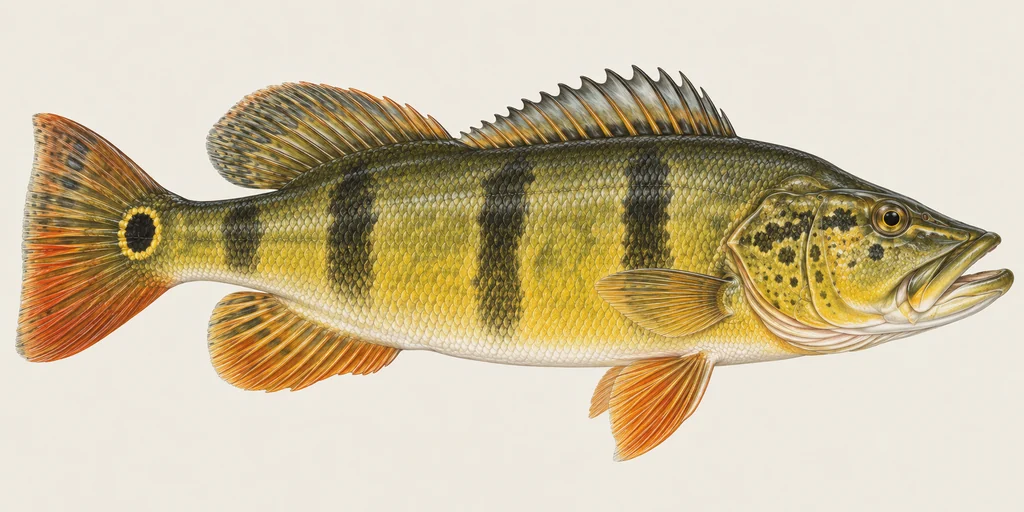
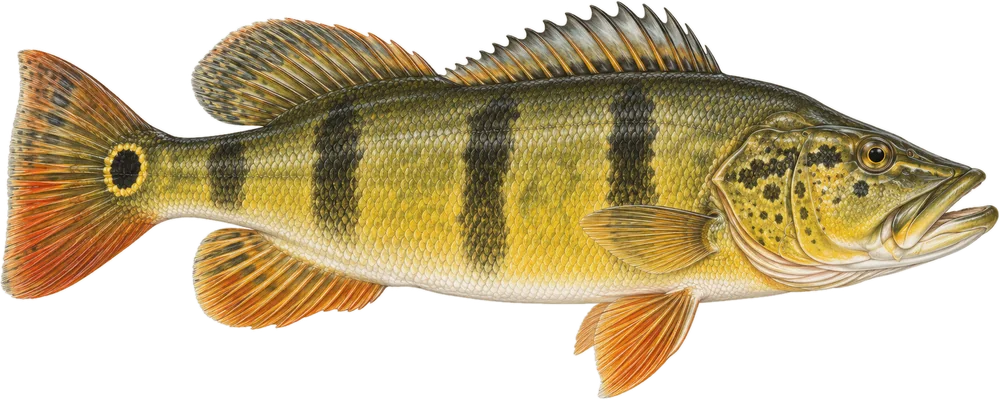
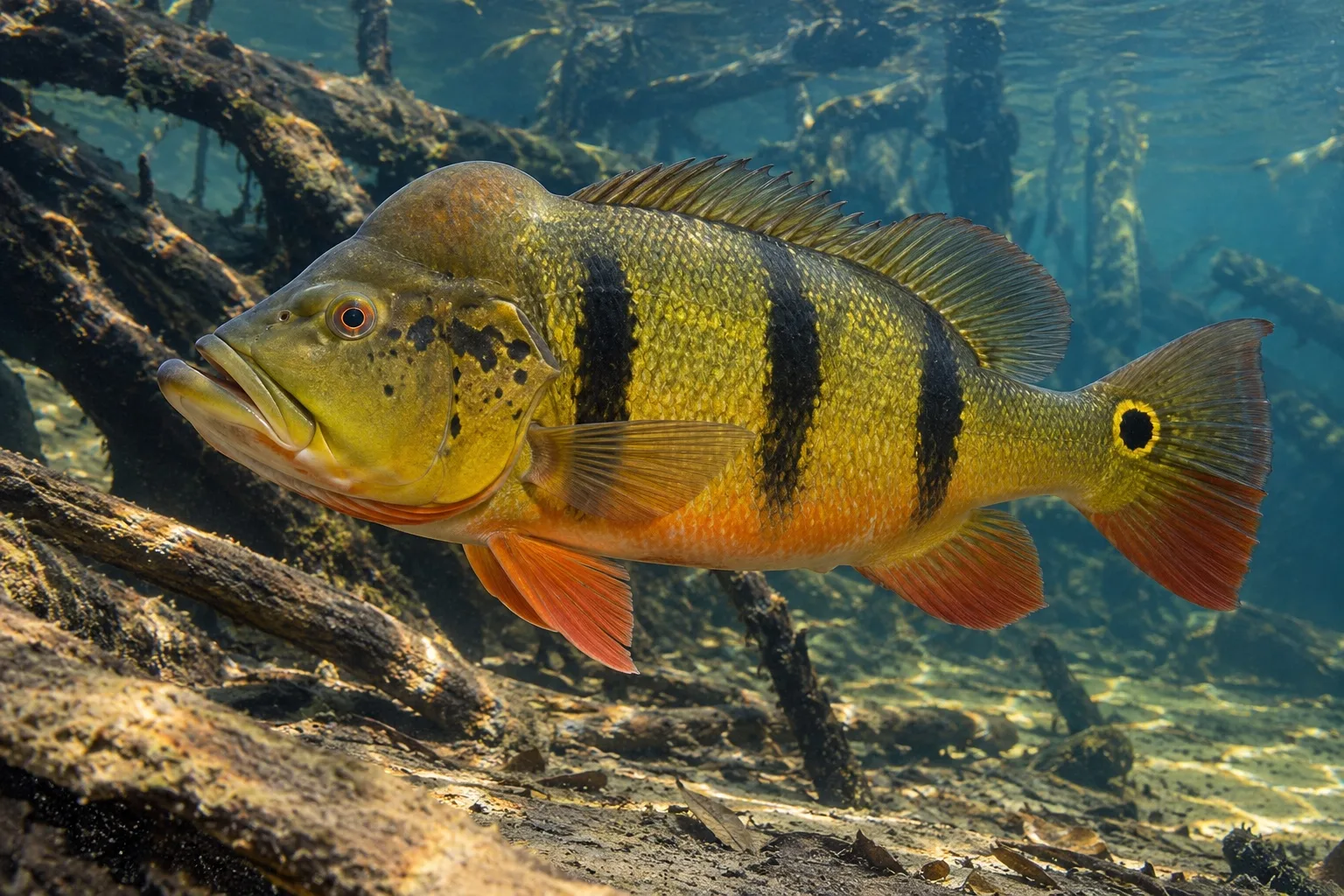
- Black eyespot ringed with gold at the base of the tail fin
- Three to four dark vertical bars on an olive to golden body
- Deep notch between the hard and soft parts of the dorsal fin, large mouth
Catch chances through the year
- Hardly any chance
- Possible
- Good
- Peak season
- Spawning (observe the closed season)
Editorial assessment for the native range (Rio Negro and Amazon basin (Brazil)), not a measured value and not a guarantee. The rules of the country you are travelling to are binding.
How to recognise it
All peacock bass are elongated cichlids with a large mouth. A deep notch lies between the spiny and the soft part of the dorsal fin. Typical features are dark bars on an olive to golden ground colour and a black, gold-rimmed eyespot at the base of the tail. Juveniles do not have this spot yet.
The species differ in markings, scale count and size. The Butterfly Peacock (Cichla ocellaris) has three to four black vertical bars and, according to FishBase, grows to 74 cm.
The Speckled Peacock (Cichla temensis) is larger and slimmer, with very small scales and a continuous dark band behind the eye. Younger fish show a dark lateral band and four rows of pale spots, hence the name. FishBase gives up to 99 cm total length and 12,2 kg.
The species of the genus Cichla are sometimes very similar, and nine of them were only redescribed in 2006. On the Rio Negro anglers catch mainly three: the Speckled Peacock (C. temensis), the Popoca (C. monoculus) and C. orinocensis, called borboleta in Portuguese. In English it too is known as Butterfly Peacock, but on this page the name stands for C. ocellaris from the Guiana countries.
Despite the English name, the peacock bass is not a black bass like the largemouth bass but a cichlid from the family Cichlidae.
Side by side
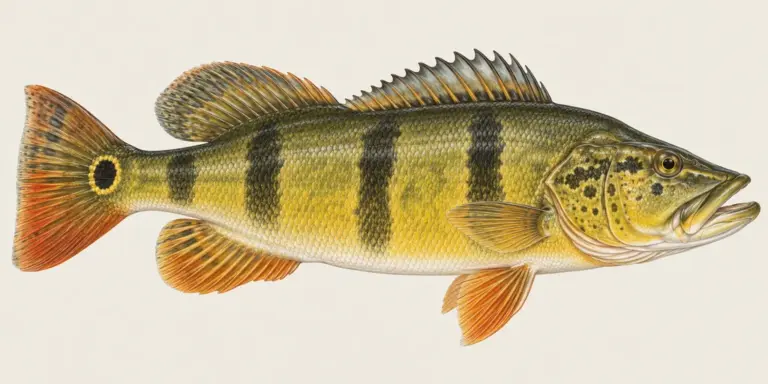
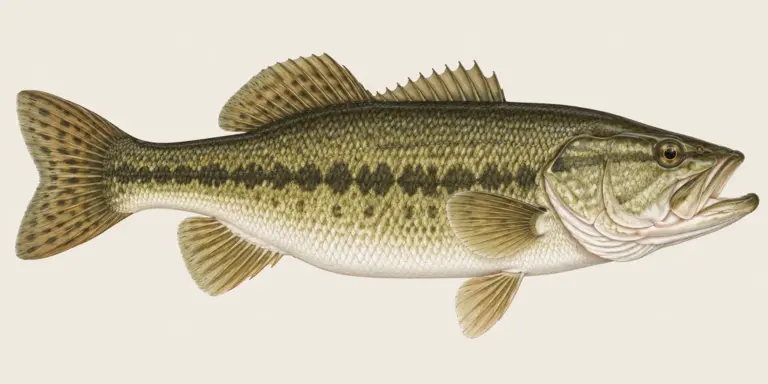
AI-generated illustrations.
Where it holds
Peacock bass are native to the Amazon and Orinoco basins and to the rivers of the Guiana countries. They are considered the most common and widespread predatory fish in the clear and black waters of these basins.
Adult Speckled Peacocks hold in the deeper bank zones of lagoons and along sandy and rocky banks of the main rivers. The Popoca prefers still, clear water and uses fallen trees and branches as cover. On the Rio Negro the water temperature varies over the year only between about 29 and 32 °C.
Outside South America the Butterfly Peacock has been introduced to southern Florida, among other places, where it lives in large canals, creeks and lakes.
Holding spots in the picture
Choose the time of day: the picture shows where the species holds. We do not show German seasons for travel fish; the bars give the chance of a catch for each month. Tap a fish or a spot in the list to bring it closer. The picture is schematic and AI-generated, and every water is different.
Chance of a catch per month according to the catch calendar
- J
- F
- M
- A
- M
- J
- J
- A
- S
- O
- N
- D
Spawning season
In the lake
Shelf edge
Peacock bass (tucunaré) are found here all year.
Sunken tree
Peacock bass (tucunaré) are found here all year.
In lagoons big speckled peacocks stand in the deeper shore zones. The popoca looks for still, clear water and hides among fallen trees and branches. To spawn, the pairs build nests near solid ground or on beaches, in the Amazon usually at the start of the high water.
In the river
Undercut bank, overhanging branches, timber
Peacock bass (tucunaré) are found here all year.
riprap, sheet piling, harbour
Peacock bass (tucunaré) are found here all year.
In the main rivers adult speckled peacocks stay along sandy and rocky banks. The best-known fishing grounds are on the middle Rio Negro, where the season usually runs from September to February or March.
Size comparison: AI-generated drawing, schematic.
How it hunts and spawns
Peacock bass are fish hunters. The Speckled Peacock feeds mainly on small fish, especially characins, while the Butterfly Peacock lives, according to FishBase, only on small fish.
To reproduce, pairs build nests near firm ground or on beaches and guard eggs and larvae intensively. In the Popoca, spawning usually coincides with the start of the high water, in the Amazon roughly November to March. A female carries on average around 8.600 mature eggs. In the Butterfly Peacock (C. ocellaris) the parents carry the hatched larvae in their mouths to prepared pits.
When and where the season is
A survey of sport fishing operators on the middle Rio Negro found a season of six months on average: usually September to February or September to March. Speckled Peacocks over 62 cm count as trophies there.
After that the high-water season begins, at the start of which the Popoca spawns. In other waters, such as the Orinoco or the Guiana countries, the rainy and dry seasons are shifted and a different calendar applies.
What you catch it with
Step by step: Fishing for peacock bass: tips on baits, rigs and tackle – season, holding spots, baits, tackle and rules on one page.
On the Rio Negro anglers fish with artificial lures. In a study there, the researchers fished with baitcasting rods and 36 kg braided line. They used surface lures of about 20 cm, diving plugs 15 to 20 cm long and a hair jig with a single hook. 59 per cent of the fish took the jig, 8 per cent the surface lure. On the Rio Unini researchers used the same jigs and shallow-running plugs as the sport anglers.
Of 162 fish of all three species that were caught and released in the same study, five died, all under 42 cm standard length. Injuries to the gills and throat were the main cause of death. A second study on the Rio Unini found no mortality in fish caught on jigs.
Unhook quickly, keep air time short: In the Rio Negro study, less than a minute usually passed between the bite and lifting the fish out, and air time was kept as short as possible. Small fish and gill-hooking are the biggest risk.
With a jig and a surface lure: The hair jig produced the most bites and no losses on the Unini. With the surface lure not a single fish died in the Rio Negro study.
Suitable lures
Hair jigs, diving plugs and large surface lures.
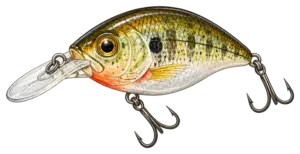
AI-generated illustrations. A click opens the lure’s page.
Mostly catch and release on the Rio Negro; avoid gill-hooking.
Which rules apply
In Brazil sport fishing is mostly practised as catch and release, on the middle Rio Negro above all when peacock bass are the target. Researchers also report shrinking sizes of Speckled Peacocks in the region because fishing pressure is high (Boletim do Instituto de Pesca).
Licences, protected areas and fishing rules are set by the federal government and the individual state. The information given by the competent authority on the spot is binding, in Brazil that of IBAMA and the state environment agency. Where the species has been introduced, for example in Florida, the rules of the local fisheries authority (Fischereibehörde) apply.
According to FishBase, the IUCN Red List classes the Speckled Peacock, the Butterfly Peacock and C. orinocensis as not threatened worldwide.
Frequently asked questions (FAQ)
How many species of peacock bass are there?
FishBase lists 16 species of the genus Cichla. On the Rio Negro anglers mainly catch the Speckled Peacock, the Popoca and C. orinocensis (Borboleta).
When is the season on the Rio Negro?
Most operators on the middle Rio Negro fish from September to February or March. After that the high water begins, and with it the spawning season.
Does a peacock bass survive release?
Usually yes. On the Rio Negro 3,5 per cent of the Speckled Peacocks died, and across all species 5 of 162 fish, all of them under 42 cm. A short time in the air and careful unhooking improve the odds.
Sources
The rating of catch chances is an editorial assessment. The facts come from these sources, and the text is worded in our own words. The illustration is an original design by Angel Momente in the style of a natural history plate (AI-generated, see the AI notice).
- FishBase: Cichla temensis
- FishBase: Cichla ocellaris
- FishBase: Artenliste der Gattung Cichla
- Thomé-Souza et al. (2014), Acta Amazonica: Peacock bass mortality associated with catch-and-release sport fishing in the Negro River
- Barroco et al. (2017), Brazilian Journal of Biology: Estimation of peacock bass mortality rate during catch-release fishing
- Boletim do Instituto de Pesca (2023): Sport fishing in the middle Negro River
- Instituto Mamirauá: Gonadal development of the peacock bass Cichla monoculus in the middle Solimões
- Florida Museum of Natural History: Butterfly Peacock Bass (Cichla ocellaris)
- FishBase: Cichla orinocensis
Created with AI support from the sources listed. Figures only appear in the text if a source gives them. Last updated: 27 October 2026. Found a mistake? Write to us. Who is behind this site: About me.
More in the lexicon
- All fish species at a glance
- Catch calendar – month, water temperature and profile for 93 species
- Line calculator – breaking strain after the knot, drag guideline, backing
- Angling methods