
Knowledge – Fish
Largemouth bass: Features, season
The largemouth bass (Micropterus salmoides) is a predatory fish of the sunfish family. It is native to the east of North America, where it is one of the most important angling fish in warm fresh water. In Texas, according to the local fisheries authority, it is by far the fish anglers want most.
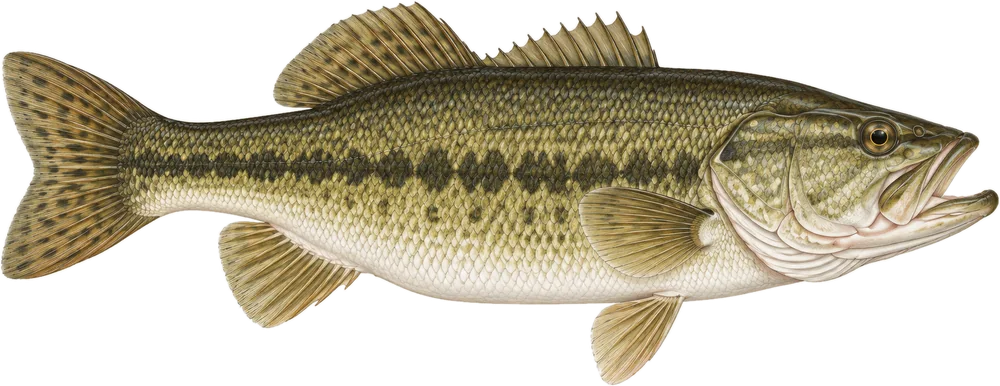
In short: According to the catch calendar the best time is February to June and September to November. Good spots on a lake: weed beds, sunken trees and jetties; on a river: a quiet bay, an undercut bank and rock rubble. Proven lures: soft plastic worms, twister tails, jigs, plugs, poppers and spinnerbaits, plus large baitfish and crayfish. The upper jaw reaches well behind the eye, whereas on the similar smallmouth bass it ends in front of it. In Europe the species is introduced and non-native. Step by step: Fishing for largemouth bass.
- Upper jaw reaches well past the rear edge of the eye
- Broad dark longitudinal band along the middle of the flank, often broken into blotches
- Almost divided dorsal fin with a spiny front section
Catch chances through the year
- Hardly any chance
- Possible
- Good
- Peak season
- Spawning (observe the closed season)
Editorial assessment for the home waters (southern USA (e.g. Texas)), not a measured value and no guarantee. The rules of the country you are visiting are binding.
How to recognise it
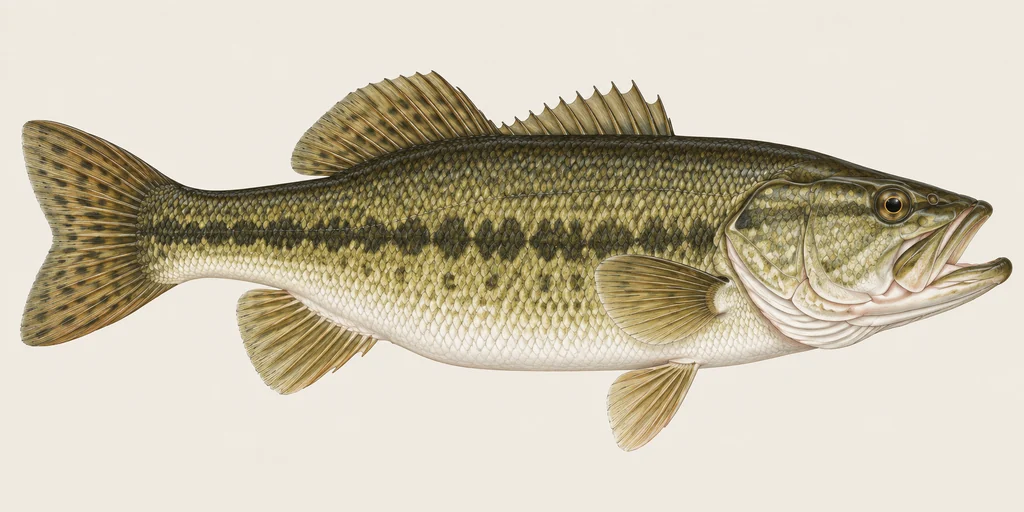
The largemouth bass has an elongated, powerful body. The back and head are green to olive green, the underside pale to almost white. A broad dark band runs along the middle of the flank and often breaks up into separate blotches. In adult fish the upper jaw reaches far behind the rear edge of the eye. That is where the English name Largemouth comes from.
The dorsal fin is almost divided in two: a spiny section at the front, with a soft-rayed one behind. The tongue has no teeth. Fish of around 40 centimetres are usual. FishBase gives maximum values of 97 centimetres total length, 10,1 kilograms and 23 years. According to figures from Texas, a largemouth bass grows 10 to 15 centimetres in its first year and reaches about 40 centimetres in its third year.
The smallmouth bass often lives in the same waters. It is brownish to bronze, has vertical, broken bars, and its upper jaw ends in front of the rear edge of the eye. The largemouth bass is greener, rounder in cross-section and has a distinctly larger mouth.
It is not closely related to the native perch, although both have a spiny dorsal fin. The small, deep-bodied pumpkinseed belongs to the same family.
Side by side
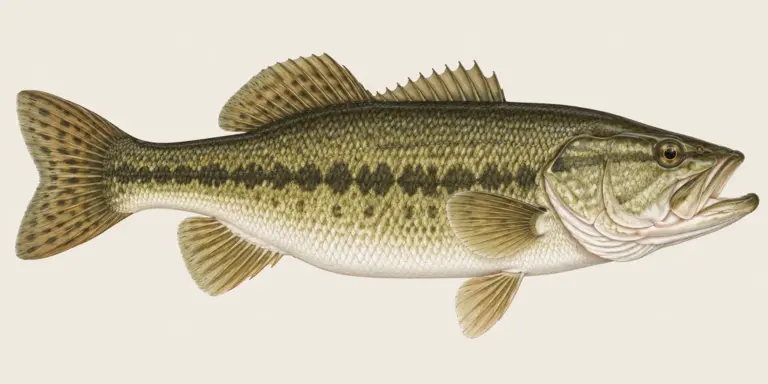
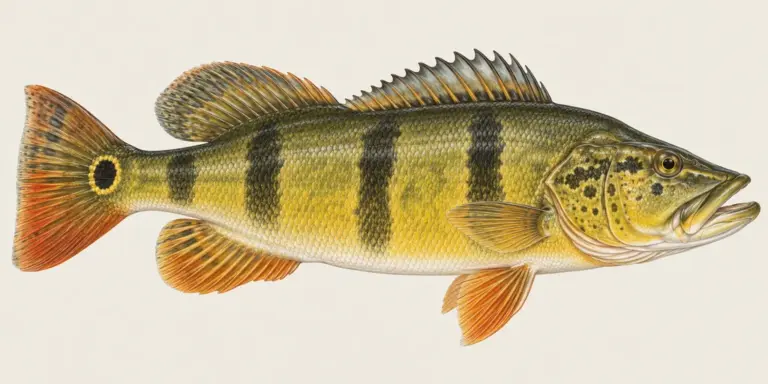
AI-generated illustrations.
Where it holds
The largemouth bass is originally found in the drainage of the St Lawrence, the Great Lakes and the Mississippi, from southern Quebec and Minnesota to the Gulf of Mexico, and also in the rivers flowing into the Atlantic and the Gulf between North Carolina, Florida and northern Mexico. As an angling fish it has been introduced to many countries, including Europe. According to FishBase, several countries report damage to native wildlife. The US Geological Survey describes how stocked largemouth bass have preyed on small fish species until they disappeared.
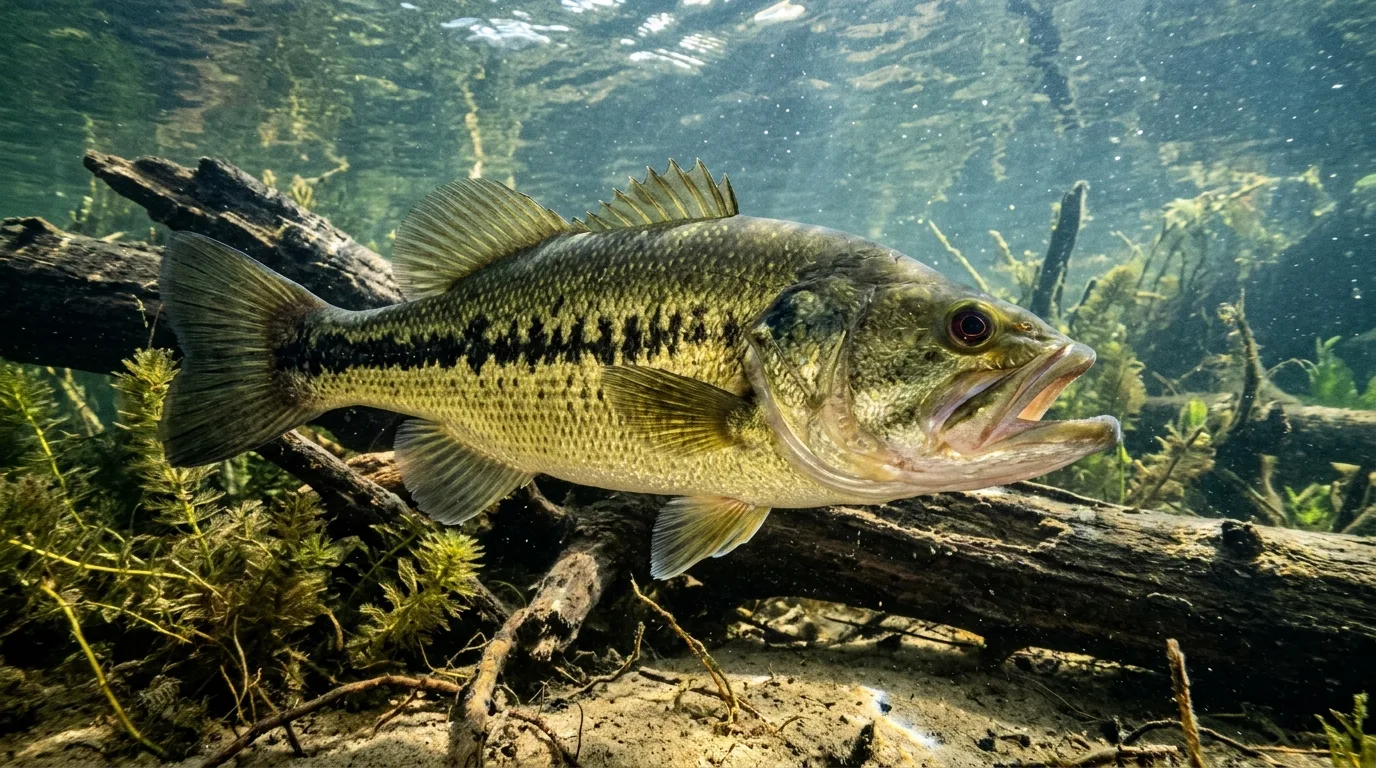
It lives in lakes, ponds, swamps, reservoirs and calm stretches of small to large rivers. It is most common in warm, nutrient-rich and heavily weeded waters. It likes to stand in the shallow margins near cover: sunken trees, rocky edges, weed beds and jetties. It prefers clear, calm water to cloudy water because it hunts mainly by sight.
Holding spots in the picture
Choose the time of day: the picture shows where the species holds. We do not show German seasons for travel fish; the bars give the chance of a catch for each month. Tap a fish or a spot in the list to bring it closer. The picture is schematic and AI-generated, and every water is different.
Chance of a catch per month according to the catch calendar
- J
- F
- M
- A
- M
- J
- J
- A
- S
- O
- N
- D
Spawning season
Active time According to data from Missouri it is most active at dawn and dusk. In summer early morning and early evening are best, in spring and autumn the daytime hours too.
Not the main time According to data from Missouri it is most active at dawn and dusk. In summer early morning and early evening are best, in spring and autumn the daytime hours too.
In the lake
Water lilies and weed bed
Largemouth bass is found here all year round.
jetty, sheet piling, harbour
Largemouth bass is found here all year round.
Shelf edge
Largemouth bass is found here all year round.
Sunken tree
Largemouth bass is found here all year round.
In a lake the largemouth bass lurks on its own by cover in the shallow margins: in weed banks, by sunken trees, under jetties and on rocky edges. Warm, weedy waters with clear water suit it best, because it hunts by sight. In spring the male builds its nest on firm bottom in calm shallow water.
In the river
Undercut bank, overhanging branches, timber
Largemouth bass is found here all year round.
riprap, sheet piling, harbour
Largemouth bass is found here all year round.
Calm bay with aquatic plants
Largemouth bass is found here all year round.
In a river you find it in quiet stretches without strong current. It sits there by weed edges, fallen trees, roots and rock riprap on the bank.
Depth: It mostly stays in shallow water close to the bank.
Size comparison: AI-generated drawing, schematic.
How it hunts and spawns
The fry feed on zooplankton and insect larvae. From a length of about five centimetres the young fish hunt other fish. Adults eat almost only fish and large invertebrates such as crayfish, plus frogs, and larger specimens also smaller members of their own species. Adults are mostly loners that lie in wait for prey among plants, roots or branches. According to the Missouri fisheries authority the species is most active at dawn and dusk.
Spawning takes place in spring, as soon as the water reaches about 15 degrees. In Texas it can begin between February and May depending on the part of the state, in Missouri the spawning period runs from mid-April to the end of May or June. The male builds the nest on firm ground, in calm water without current or wave action. After the eggs are laid he drives off the female and guards the clutch and the fry alone. According to FishBase, largemouth bass do not feed while spawning, nor at water temperatures below 5 or above 37 degrees.
When and where the season is
For big fish the weeks before and during the spawning season are regarded as the best time. An analysis by the Texas fisheries authority from 2004 put 44 per cent of 346 recorded fish over about six kilograms in March, 26 per cent in February and 13 per cent in April.
In summer activity shifts to the edges of the day: the Pennsylvania fisheries authority then recommends early morning and early evening, whereas in spring and autumn it recommends daytime. How long the season lasts depends on the water. In Pennsylvania, for instance, bass have their own season rules and size limits, which you should look up before your trip.
What you catch it with
Step by step: Fishing for largemouth bass: tips on lures, rigs and tackle – season, spots, lures, tackle and rules on one page.
Fishing is mostly done with artificial lures, from the bank or from a boat. The Pennsylvania fisheries authority names jigs, plugs (crankbaits), soft plastic worms, twister tails and poppers, that is surface lures that push water when you twitch them. It recommends black, brown, purple and green as colours. Natural baits are large baitfish and crayfish, on the bottom or under a float.
In the Texas analysis the big fish took soft plastics in 45 per cent of cases, jigs in 23 per cent, spinnerbaits (wire lures with a spinner blade and skirt) in 12 per cent and plugs and live baits in 9 per cent each. Pennsylvania names lines rated at 6 to 14 lb, which is roughly 2,7 to 6,4 kilograms, and hooks in sizes 4 to 3/0.
Cast the lures close to cover: at weed edges, fallen trees, jetties and rock banks. Because the largemouth bass hunts by sight, clear bays usually repay the effort more than cloudy water.
Identify it by the jaw: With the mouth closed, look at the upper jaw. If it reaches behind the eye it is a largemouth bass, if it ends in front of it a smallmouth bass. In Texas, for instance, different minimum lengths apply to the individual bass species.
Spot the spawning beds: In spring the males guard their nests in calm shallow water, and then the eggs and the fry. Anyone fishing deliberately on nests disturbs the brood care. Check what the country you are visiting prescribes during the spawning season.
Suitable lures
Soft plastic worms, twister tails, jigs, plugs, poppers and spinnerbaits, plus large baitfish and crayfish.

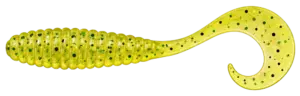
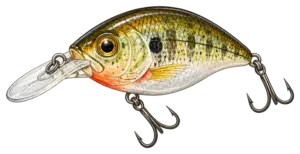
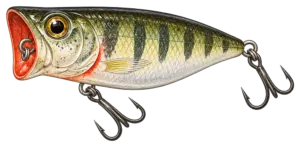
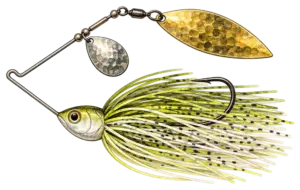
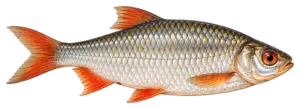
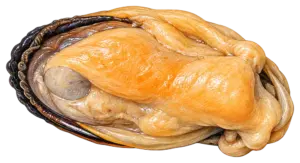
AI-generated illustrations. A click opens the lure’s page.
Rigs for these lures: float rig, running ledger rig.
Cast lures close to weed, wood and other cover.
Licences and rules in the country you visit
Anyone fishing in the USA needs a fishing licence from the state in question. Texas, for instance, offers licences for residents and for visitors from outside the state. Daily bag limits, minimum lengths and exceptions for individual waters are set by each state itself. In Texas, special rules for certain waters apply alongside the statewide limits. The competent local authority is always the one that counts, in Texas the Texas Parks and Wildlife Department.
Worldwide the species is classed as not threatened on the IUCN Red List. Outside North America it is non-native. For waters in Germany, the fisheries regulation of your federal state (Bundesland) and your fishing permit (Erlaubnisschein) are what counts. You will find a list of links to the official sources in the catch calendar.
Frequently asked questions (FAQ)
Where can you fish for largemouth bass?
In their home range in the east and south of the USA, in south-eastern Canada and in northern Mexico. As a stocked fish the species now also occurs in many other countries, including Europe.
How big does a largemouth bass get?
Around 40 centimetres is usual. FishBase gives maximum values of 97 centimetres and 10,1 kilograms.
When do big largemouth bass bite best?
In Texas the majority of the recorded big fish fell in the months from February to April, that is before and during spawning. In summer, morning and evening are best.
Sources
The rating of catch chances is an editorial assessment. The facts come from these sources, and the text is worded in our own words. The illustration is an original design by Angel Momente in the style of a natural history plate (AI-generated, see the AI notice).
- FishBase: Micropterus salmoides, Largemouth black bass
- U.S. Geological Survey, Nonindigenous Aquatic Species: Largemouth Bass
- Texas Parks and Wildlife Department: Largemouth Bass (Micropterus salmoides)
- Texas Parks and Wildlife Department: March is Big Bass Month (2004)
- Texas Parks and Wildlife Department: Bag and Length Limits, Freshwater
- Texas Parks and Wildlife Department: Fishing Licenses, Endorsements & Tags
- Missouri Department of Conservation: Largemouth Bass (Field Guide)
- Pennsylvania Fish and Boat Commission: All About Bass
Created with AI support from the sources listed. Figures only appear in the text if a source gives them. Last updated: 27 October 2026. Found a mistake? Write to us. Who is behind this site: About me.
More in the lexicon
- All fish species at a glance
- Catch calendar – month, water temperature and profile for 93 species
- Line calculator – breaking strain after the knot, drag guideline, backing
- Angling methods