
Knowledge – Fish
Permit: Features, flats, spawning and methods
The permit (Trachinotus falcatus) is a deep-bodied jack from the western Atlantic. On the flats of southern Florida, the Bahamas and the Caribbean it is regarded as one of the hardest fish to catch, especially on the fly.
In short: According to the catch calendar, the best time is all year round. Good spots on the coast: seagrass, sandy bottom and the channel in front of the sandbank. Proven baits: small live crabs, crab flies and weighted jigs. In the Special Permit Zone in southern Florida, stricter rules and a closed season (Schonzeit) during spawning apply. Young permit are easily confused with the smaller Florida pompano. Step by step: Fishing for permit.
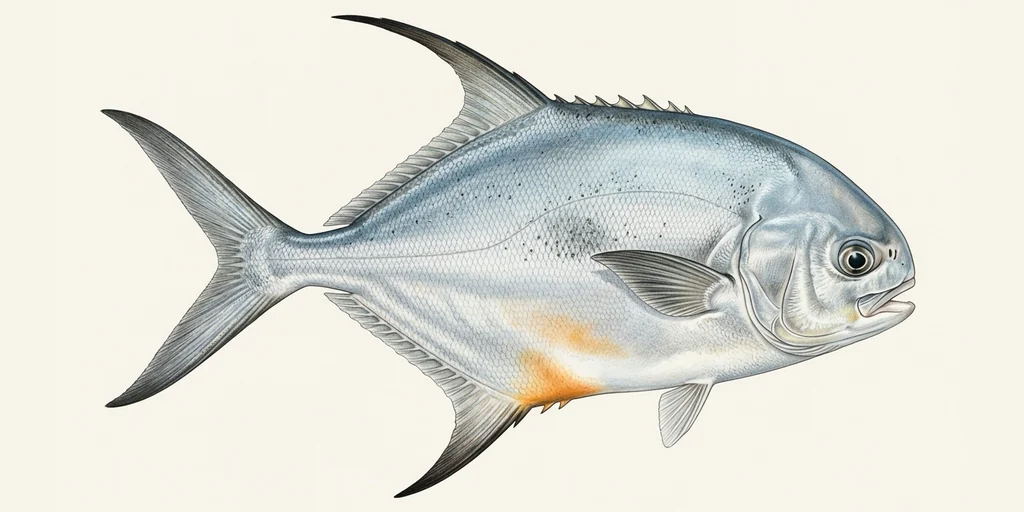
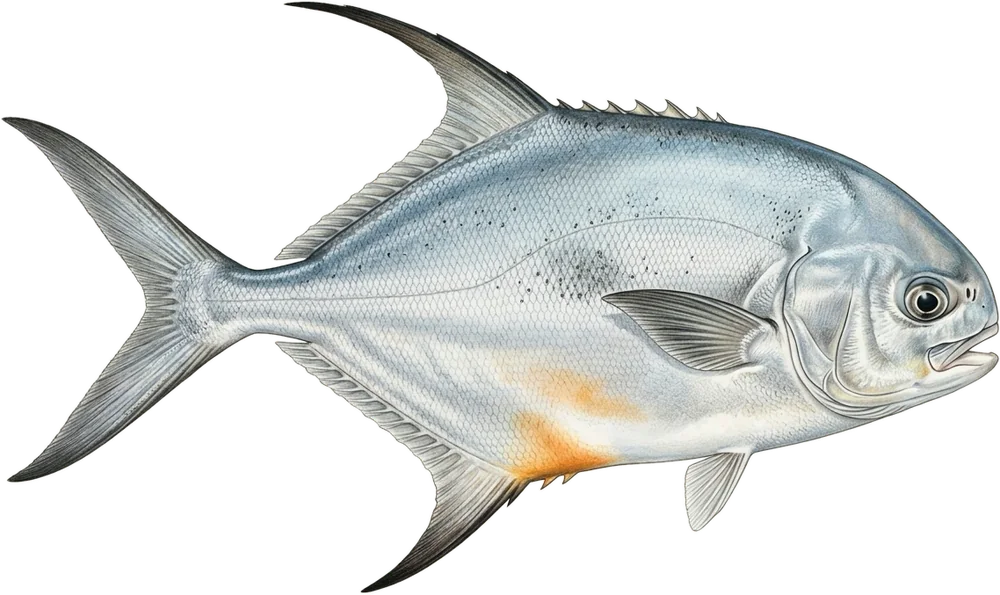
- Long, sickle-shaped front lobes of the dorsal and anal fins
- Orange-yellow patch on the belly in front of the anal fin
- Deeply forked tail fin
Catch chances through the year
- Hardly any chance
- Possible
- Good
- Peak season
- Spawning (observe the closed season)
Editorial assessment for the home range (southern Florida, the Bahamas and the Caribbean), not a measurement and no guarantee. The rules of the country you visit are what count.
How to recognise it
The permit is strongly flattened from the sides and therefore narrow and tall. Juveniles look almost round from the side, adults more elongated oval. Striking are the long, dark front lobes of the dorsal and anal fins, which look like sickles. The species name falcatus goes back to this. The tail fin is deeply forked.
The flanks gleam bright silver, and the back is blue-green to brownish. In front of the anal fin there is often a broad orange-yellow patch on the belly, and the pectoral fins are blackish. The permit has no true teeth, only granular tooth patches on the tongue, with which it crushes shellfish and crustaceans.
According to FishBase and the Florida Museum, the permit reaches at least 122 centimetres and 36 kilograms, and the greatest known age is 23 years. Males mature at about 2,3 years and around 49 centimetres, females at about 3,1 years and around 55 centimetres.
The permit is most often confused with the closely related Florida pompano (Trachinotus carolinus), especially in small fish. The pompano stays distinctly smaller: FishBase gives a maximum of 64 centimetres and 3,8 kilograms. A fish of over about 65 centimetres within the range is practically always a permit.
On the flats you often meet it together with the bonefish. The bonefish is slender and spindle-shaped, while the permit is deep-bodied with sickle-shaped fins.
Side by side
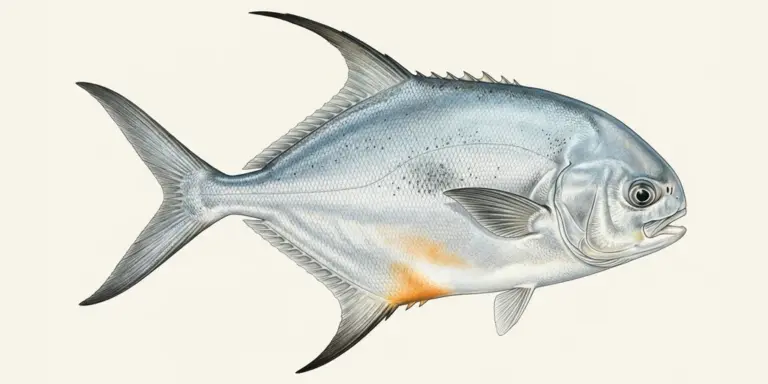
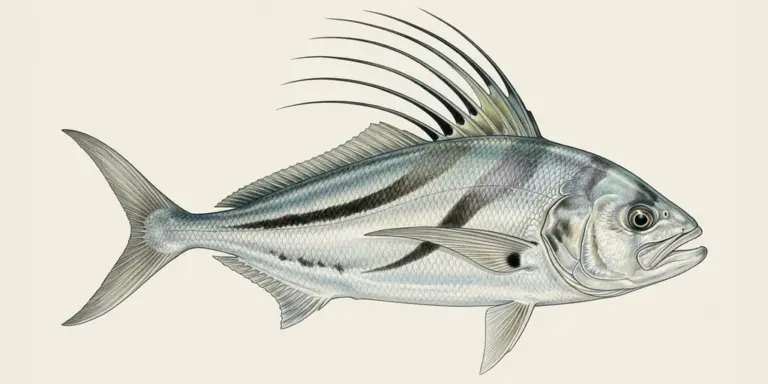
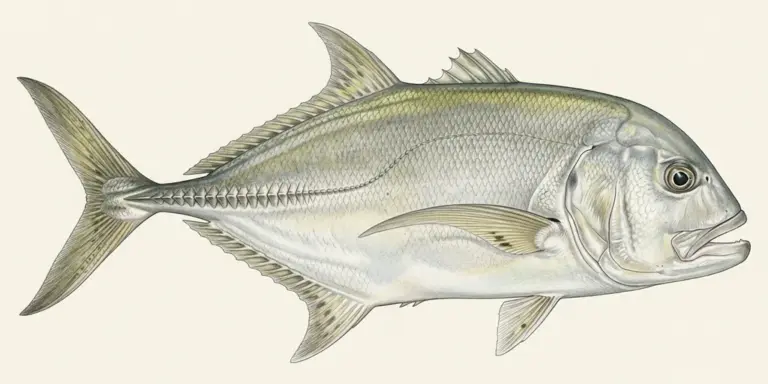
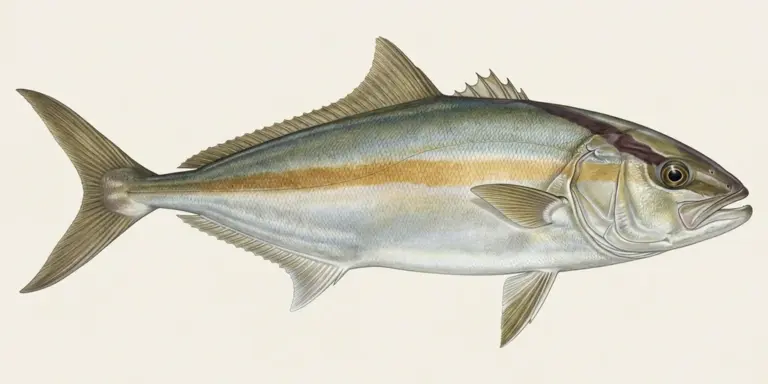
AI-generated illustrations.
Where it holds
The permit lives in the western Atlantic from Massachusetts to south-eastern Brazil, in the Bahamas, the Caribbean and the Gulf of Mexico. It is most common in southern Florida. According to FishBase, reports from Africa are mostly based on confusion with another species.
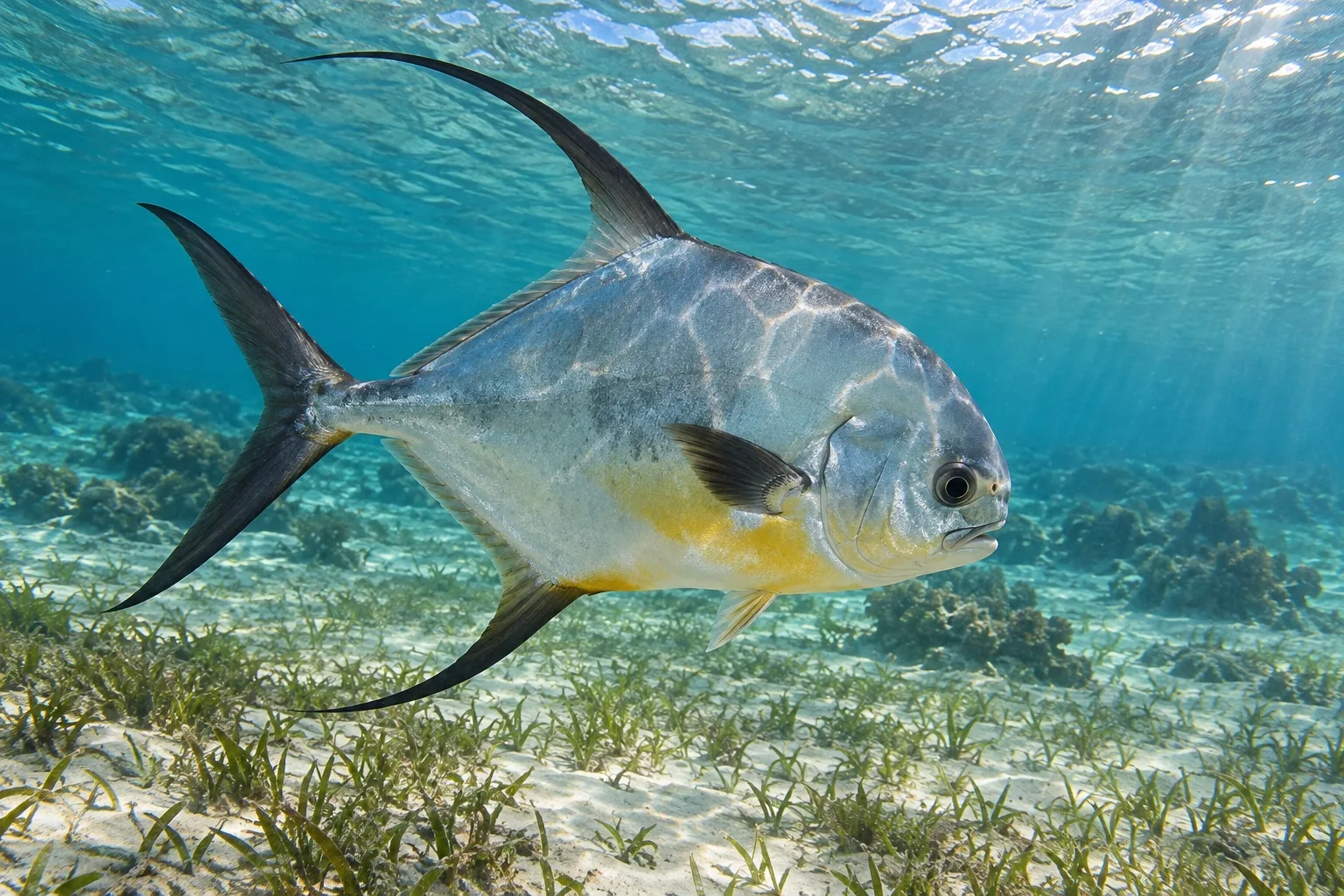
It uses two very different habitats. To feed, it moves onto shallow flats over sand, mud, marl or seagrass and onto sandy beaches, often in less than 60 centimetres of water. Because of their deep bodies, large fish do not come quite as shallow as bonefish. In deeper water down to about 30 metres it stands at reefs, jetties and wrecks, often there in large schools. In the Florida Keys many permit move regularly between flats and reefs.
Holding spots in the picture
Choose the time of day: the picture shows where the species holds. We do not show German seasons for travel fish; the bars give the chance of a catch for each month. Tap a fish or a spot in the list to bring it closer. The picture is schematic and AI-generated, and every water is different.
Chance of a catch per month according to the catch calendar
- J
- F
- M
- A
- M
- J
- J
- A
- S
- O
- N
- D
Spawning season
Time of day The tide sets the rhythm: as the water rises, the permit move from the troughs onto the flats.
On the coast
gully in front of the sandbank
Permit are here all year.
Seagrass, gravel and stones in the shallows
Permit are here all year.
Sandy bottom
Permit are here all year.
Wreck, reef
Permit are here all year.
To feed, the permit comes onto shallow flats over sand, mud or seagrass and to sandy beaches. In between it waits in deeper troughs. In deeper water it often stands in schools at reefs, jetties and wrecks.
Depth: On the flats it often stands in less than 60 centimetres of water, at reefs and wrecks down to about 30 metres.
Size comparison: AI-generated drawing, schematic.
How it feeds and spawns
Permit feed on the flats and in the tidal zone. With the rising tide they come from the deeper channels onto the shallows. Like the bonefish, they root in the bottom with their mouths. Adult fish eat mainly snails, sea urchins, mussels and crabs, as well as shrimp and small fish.
They mostly travel in groups of about ten, while large permit often feed alone or in pairs. Spawning takes place communally in aggregations on natural and artificial reefs. According to the Florida Museum, the main spawning time in the Keys is in May and June, with less activity in the weeks before and after and hardly any spawning in winter. Predators are mainly sharks and barracuda.
When and where the season is
In southern Florida and the Caribbean the permit is fished all year round. On the flats the catch depends mainly on the tide, because the fish come from the channels onto the shallows with the rising water and are cast to there on sight.
From about April to July, permit gather at reefs and wrecks to spawn. Because the fish then stand in large schools, the catch rate there is high, but so is the pressure on the stock. In Florida a closed season (Schonzeit) has been set up for this in one part of the area, and a protected area for an important spawning site was also created around Western Dry Rocks.
What it is caught on
Step by step: Fishing for permit: tips on bait, rig and tackle – season, spots, bait, tackle and rules on one page.
The permit is caught with fly and spinning tackle. In a survey of anglers and guides in Florida, most used both. In a study in the Florida Keys, the researchers caught permit mainly on small live crabs of about four to five centimetres carapace width on small hooks, or on weighted jigs.
On the flats the fish is cast to on sight. Anglers report that permit often follow a bait and then refuse it after all, which is why catching one on the fly counts as a special achievement. At wrecks and reefs, fishing is mostly with live crab and stronger tackle.
Allow for sharks at wrecks: In the study from the Keys, no hooked permit were eaten by sharks on the flats, but at individual reefs and wrecks 35 to 90 per cent were. Where sharks accompany the fight, change your spot.
Short fight, short air time: The researchers recommend keeping the fight short and bringing the fish into the air as little as possible. At places with many sharks, that alone is not enough.
Suitable lures
Small live crabs, crab flies and weighted jigs.
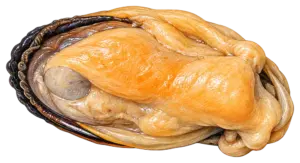
AI-generated illustrations. A click opens the lure’s page.
In Florida’s Special Permit Zone, stricter rules and a closed season (Schonzeit) during spawning
What you need to know in the country you visit
In Florida, Chapter 68B-35 of the Florida Administrative Code regulates the catching of pompano and permit. Since 2011 there has been a Special Permit Zone in southern Florida with stricter rules on keeping fish and an extended closed season (Schonzeit) from April to July. Anyone fishing in salt water generally needs a licence, and visitors can also get one for three or seven days (Florida Statutes 379.354).
In the Bahamas you have needed a personal fishing licence for fishing on the flats since 2017 (Flats-Fishing-Verordnung 2017). In Mexico, Belize and the other countries of the Caribbean, separate licensing and protection rules apply. The competent local fisheries authority (Fischereibehörde) is always the one that counts. The IUCN classes the permit worldwide as Least Concern.
Frequently asked questions (FAQ)
Why is the permit considered so hard to catch?
It is shy, feeds by sight and often refuses the bait at the last moment. Many anglers regard a permit on the fly as the high point of their fishing.
How do I tell a permit from a Florida pompano?
Mainly by size: according to FishBase the pompano reaches 64 centimetres at most. The permit grows much larger and has long, sickle-shaped front lobes on the dorsal and anal fins.
When does the permit spawn?
Mainly from April to July at reefs and wrecks, in the Florida Keys with a peak in May and June.
Sources
The rating of catch chances is an editorial assessment. The facts come from these sources, and the text is worded in our own words. The illustration is an original design by Angel Momente in the style of a natural history plate (AI-generated, see the AI notice).
- FishBase: Trachinotus falcatus, Permit
- FishBase: Trachinotus carolinus, Florida pompano
- Florida Museum of Natural History: Discover Fishes – Permit
- Piczak et al. (2023): Permit Fishing Quality and Conservation Threats in the Florida Keys, Gulf and Caribbean Research (Carleton University)
- Holder et al. (2020): Stress, predators, and survival – Permit catch-and-release fishing mortality in the Florida Keys, J. Exp. Mar. Biol. Ecol. (Carleton University)
- Florida Department of State: Florida Administrative Code, Chapter 68B-35 Pompano, African Pompano, and Permit
- Florida Senate: Florida Statutes 379.354, Recreational licenses, permits, and authorization numbers
- UNEP-LEAP / FAOLEX: Bahamas, Fisheries Resources (Jurisdiction and Conservation) (Flats Fishing) Regulations 2017
Created with AI support from the sources listed. Figures only appear in the text if a source gives them. Last updated: 27 October 2026. Found a mistake? Write to us. Who is behind this site: About me.
More in the lexicon
- All fish species at a glance
- Catch calendar – month, water temperature and profile for 93 species
- Line calculator – breaking strain after the knot, drag guideline, backing
- Angling methods