
Knowledge – Fish
Nile perch: Features, Lake Victoria, Lake Nasser, baits
The Nile perch (Lates niloticus) is one of Africa’s largest freshwater fish and grows up to 200 cm long. It is native to the Nile and other rivers of the Sahel, and was introduced into Lake Victoria in the 1950s. There it changed the ecosystem profoundly, and in Lake Nasser it is an important food fish.
In short: According to the catch calendar, the best time is the whole year. Good spots on a lake: deep bottom; on a river: pools. Proven baits: large deep-diving crankbaits when trolling, soft plastics and baitfish, and in spring streamers from the bank as well. Native to the Nile, Chad, Niger and Volta basins, introduced into Lake Victoria since the 1950s. There its mass appearance coincided with the disappearance of hundreds of cichlid species. Step by step: Nile perch fishing.
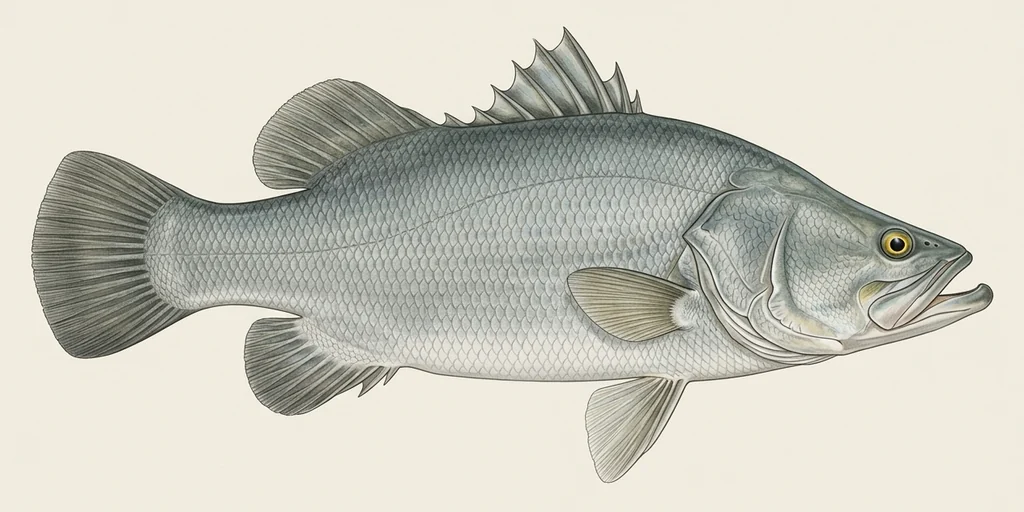
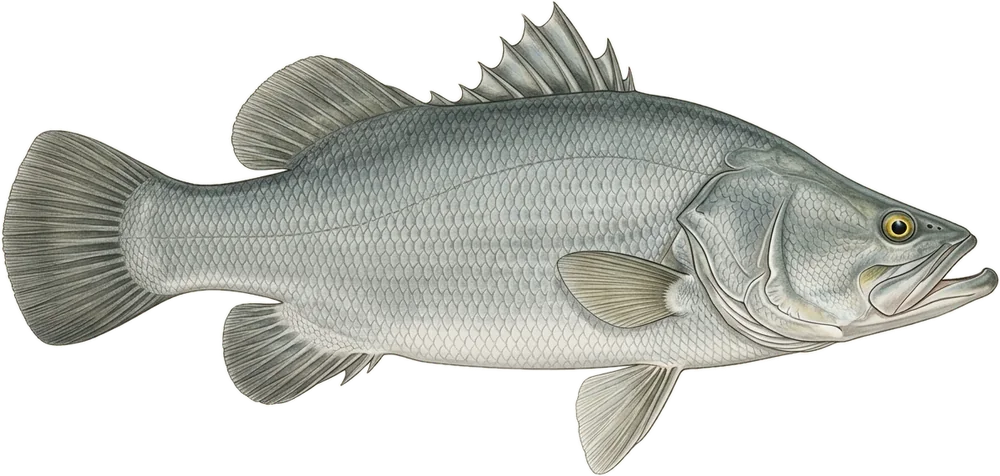
- Dorsal fin divided by a deep notch into a hard part and a soft part
- Large, protrusible mouth with a slightly projecting lower jaw and a strong gill-cover spine
- Rounded tail fin, body silvery to grey-blue, eye yellow on the inside
Catch chances through the year
- Hardly any chance
- Possible
- Good
- Peak season
- Spawning (observe the closed season)
Editorial assessment for the home water (Lake Nasser (Egypt) and East African lakes), not a measured value and not a guarantee. The rules of the country you travel to are binding.
How to recognise it
The Nile perch has a laterally flattened body and a large, protrusible mouth. The lower jaw projects slightly, and the jaws and palate carry numerous small brush-like teeth. A strong spine sits on the gill cover.
The dorsal fin is split by a deep notch into a spiny and a soft part, and the tail fin is rounded. The body is silvery, or dark grey-blue on the back. The eye, yellow on the inside, is striking. Juveniles are brownish with a paler marbling.
FishBase gives the maximum length as 200 cm and the heaviest published weight as 200 kg, and fish of around 100 cm are common. A fish of 180 cm and 164 kg is documented from Lake Albert.
Despite its name the Nile perch is not a true perch like the perch. It belongs to the family Latidae. Its close relative is the barramundi from Southeast Asia and Australia, which belongs to the same genus Lates.
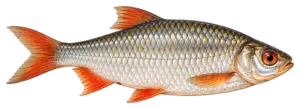
Side by side
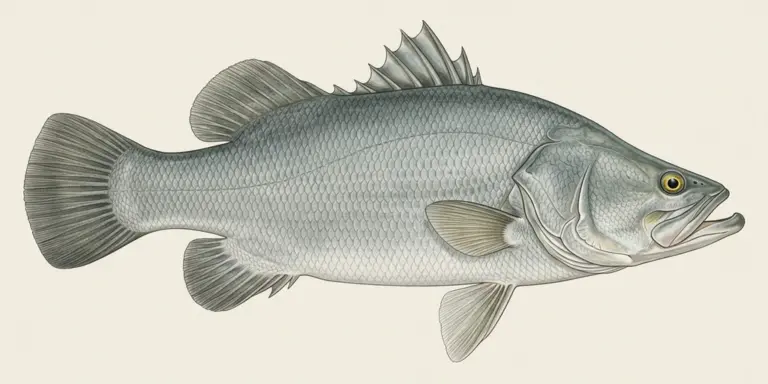
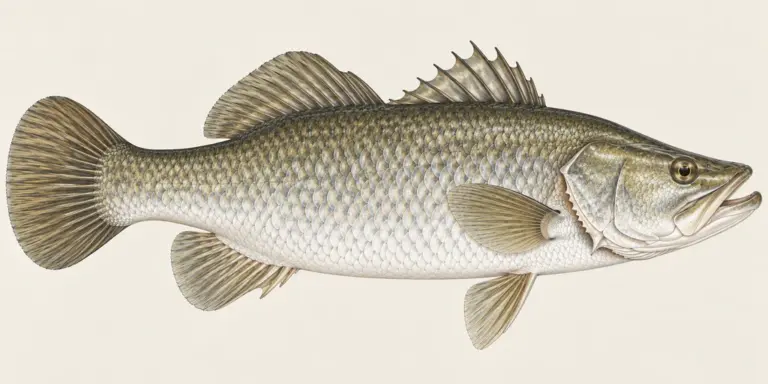
AI-generated illustrations.
Where it lives
The Nile perch is native to the large river basins of the Sahel: Senegal, Niger, Volta, Chad and Nile. It also occurs in the Congo basin and in Lakes Albert, Turkana and Tana. It lives in river arms, lakes and irrigation canals.
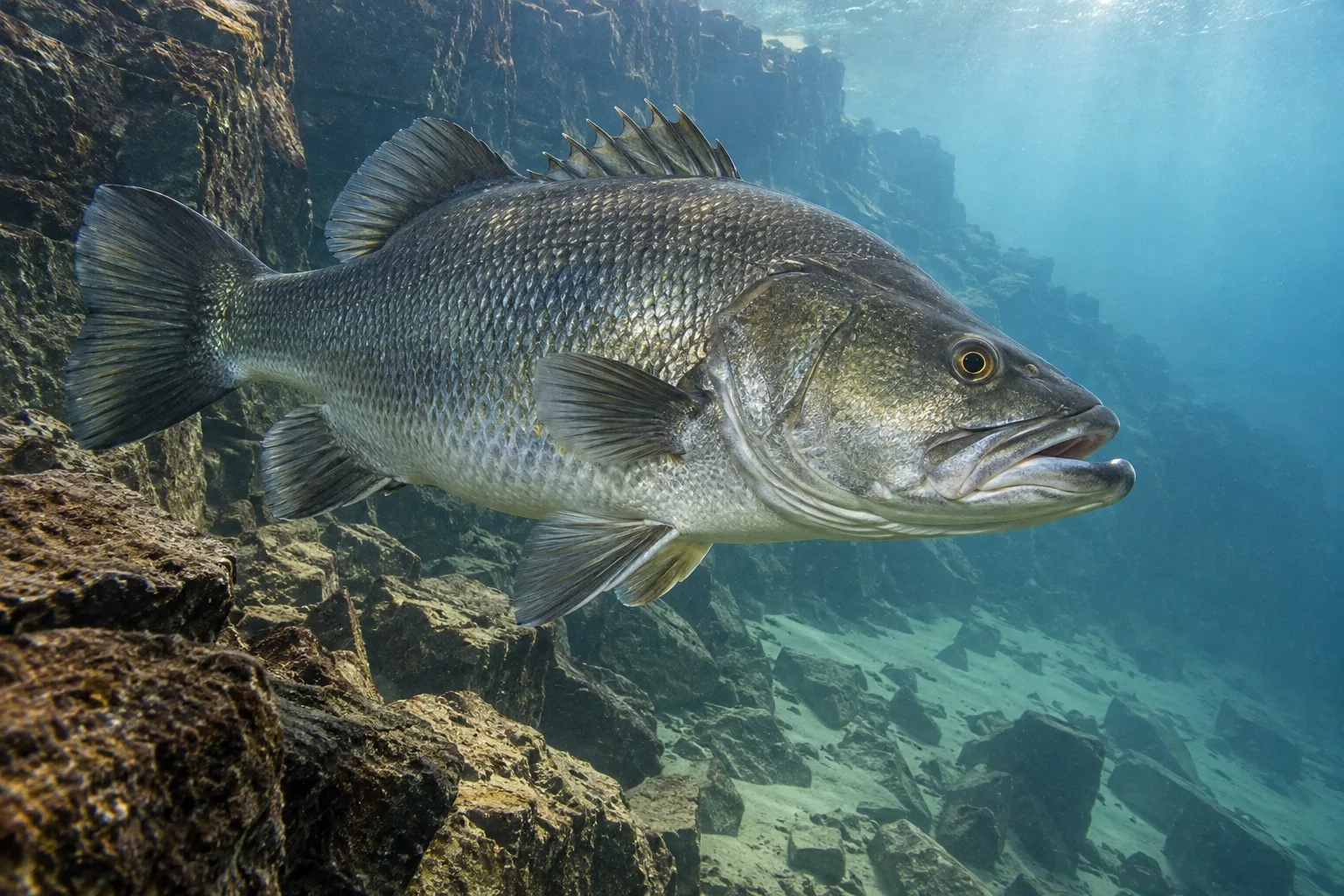
Adult Nile perch stand in deep water, and FishBase gives 10 to 60 m. Juveniles stay in the shallows.
In Lake Victoria a few Nile perch were released on the Ugandan and Kenyan side between 1954 and the early 1960s, partly to set up a sport fishery. For 25 years it remained rare, and between 1979 and 1987 it then spread explosively. It also became dominant in Lakes Kyoga and Nabugabo, whereas in its native lakes it occurs only at low density.
Holding spots in the picture
Choose the time of day: the picture shows where the species holds. We do not show German seasons for travel fish; the bars give the chance of a catch for each month. Tap a fish or a spot in the list to bring it closer. The picture is schematic and AI-generated, and every water is different.
Chance of a catch per month according to the catch calendar
- J
- F
- M
- A
- M
- J
- J
- A
- S
- O
- N
- D
In the lake
Deep bottom
Nile perch are found here all year.
In large lakes such as Victoria, Albert or Nasser, adult Nile perch stay in deep water. The juveniles, on the other hand, grow up in shallow shore zones.
In the river
Pools, deep spot
Nile perch are found here all year.
In the rivers of the Sahel it lives in river arms and irrigation canals. You will find big fish there in the deep spots.
Depth: For adult fish FishBase gives a depth of 10 to 60 metres. Juveniles stay in shallow water.
Size comparison: AI-generated drawing, schematic.
How it feeds and reproduces
Nile perch hunt fish, according to FishBase mainly clupeids and characins of the genus Alestes. In Lake Victoria cichlids are the preferred prey; where they are absent, Nile perch eat more of their own kind. Smaller Nile perch also take larger crustaceans and insects, and juveniles live on plankton.
The Nile perch spawns freely in the water and does not look after its young. The females release their eggs in several batches. According to FishBase it becomes sexually mature at around 76 cm, with a range of 53 to 85 cm.
In Lake Victoria several hundred cichlid species disappeared as the Nile perch rose in the early 1980s. Whether the Nile perch was the main cause or whether over-fertilisation and oxygen deficiency had already weakened the cichlids earlier is disputed in research.
When and where the season is
For the Nile perch there are no reliable spawning months in the accessible sources, so a fixed season cannot be derived from them. The time to travel depends more on climate, water level and the rules of the country you visit.
In Lake Nasser it is the most important fresh fish of commercial fishing after the tilapias, accounting for about 11 percent of the catch in 2002. On Lake Victoria it is the main target fish of hook and net fishing.
What it is caught on
Step by step: Nile perch fishing: tips on bait, rig and tackle – season, spots, baits, tackle and rules on one page.
On Lake Victoria commercial fishermen catch the Nile perch with gill nets and above all with longlines. Hooks are set passively, trolled or fished as a handline. In a study in Napoleon Gulf in Uganda all the fishermen worked with live baitfish: small cichlids, catfish and Nile pikes, hooked through the back.
Which baitfish was used had a clear influence on catch rate and size of the Nile perch caught in this study. Sport anglers on Lake Nasser rely mainly on spinning from a boat: they troll large deep-diving crankbaits along rocky edges and islands, often in 9 metres and deeper, and then cast to schools they have found with soft plastics or baitfish. In spring big fish hunt in the shallows under 3 metres for a few months, and then fly fishing from the bank also works.
Baitfish from the same water: On Lake Victoria the baitfish were caught on the spot and offered alive. Use only baitfish that are native to the water and permitted there.
Look for the depth: According to FishBase, adults stand at 10 to 60 m. On Lake Nasser, however, anglers located schools at only 6 to 8 m, and in spring big fish come into the shallows. So search the edges with the echo sounder instead of fishing only very deep.
Suitable lures
Large deep-diving crankbaits when trolling, soft plastics and baitfish, and in spring streamers from the bank as well.
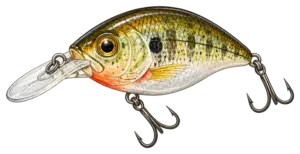
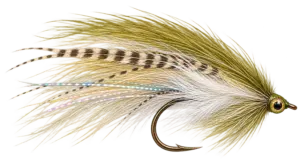
AI-generated illustrations. A click opens the lure’s page.
Use only native and permitted baitfish, and never move Nile perch to other waters.
Which rules apply
According to the IUCN Red List the Nile perch is not globally threatened, but it is regarded as overfished regionally. In Lake Victoria stocks are falling despite increasing fishing effort. For Lake Nasser an FAO overview rates its vulnerability to overfishing as very high.
For Lake Victoria the Lake Victoria Fisheries Organization recommends a slot limit, within which only fish of a certain size may be taken. Licences and catch rules are set by the fisheries authorities of the riparian states Uganda, Kenya and Tanzania, and on Lake Nasser by the Egyptian authorities. Information from the competent local authority is the one that counts.
Never move Nile perch to other waters. Because of the genetic differences between West and East African stocks, researchers advise weighing any transfer carefully, and Lake Victoria shows what consequences an introduction can have.
Frequently asked questions (FAQ)
Is the Nile perch native to Lake Victoria?
No. It was introduced between 1954 and the early 1960s and spread massively from 1979. It is native, among other places, to the Nile and to Lakes Albert and Turkana.
How big does a Nile perch get?
According to FishBase up to 200 cm and 200 kg, and fish of around 100 cm are common. It becomes sexually mature at around 76 cm.
What do you catch Nile perch with?
Commercial fishermen on Lake Victoria use live baitfish on longlines and handlines. Sport anglers on Lake Nasser usually troll large deep-diving crankbaits, with soft plastics, baitfish and, in spring, the fly added.
Sources
The rating of catch chances is an editorial assessment. The facts come from these sources, and the text is worded in our own words. The illustration is an original design by Angel Momente in the style of a natural history plate (AI-generated, see the AI notice).
- FishBase: Lates niloticus
- FishBase: Reproduction of Lates niloticus
- van Zwieten et al. (2016), Canadian Journal of Fisheries and Aquatic Sciences: The Nile perch invasion in Lake Victoria (Manuskript, University of Toronto)
- Downing et al. (2013), PLOS ONE: Was Lates Late? A Null Model for the Nile Perch Boom in Lake Victoria
- Basiita et al. (2018), PLOS ONE: Gene flow and genetic structure in Nile perch from African freshwater rivers and lakes
- FAO Fisheries and Aquaculture Technical Paper 557: Review of tropical reservoirs and their fisheries (Lake Nasser, Lake Volta, Indo-Gangetic Basin)
- Bassa (2011), Nachweis in FAO AGRIS: The effect of hook size on the catch rate and size of the Nile perch fishery in the Napoleon Gulf, Lake Victoria
- BLINKER: Die Monsterbarsche vom Nil – Angeln am Nassersee (O. Portrat, akt. 29.11.2022)
- The Field: Fishing for monster Nile perch (06,10,2011)
Created with AI support from the sources listed. Figures only appear in the text if a source gives them. Last updated: 21 November 2026. Found a mistake? Write to us. Who is behind this site: About me.
More in the lexicon
- All fish species at a glance
- Catch calendar – month, water temperature and profile for 93 species
- Line calculator – breaking strain after the knot, drag guideline, backing
- Angling methods