
Knowledge – Fish
King salmon (Chinook): Features, season, fishing
The king salmon (Oncorhynchus tshawytscha), called chinook or king salmon in North America, is the largest of the Pacific salmon. It grows up in the North Pacific and runs up the rivers between California and Alaska to spawn, where it dies after spawning. In Alaska it is the state fish and for many anglers the most important sport fish.
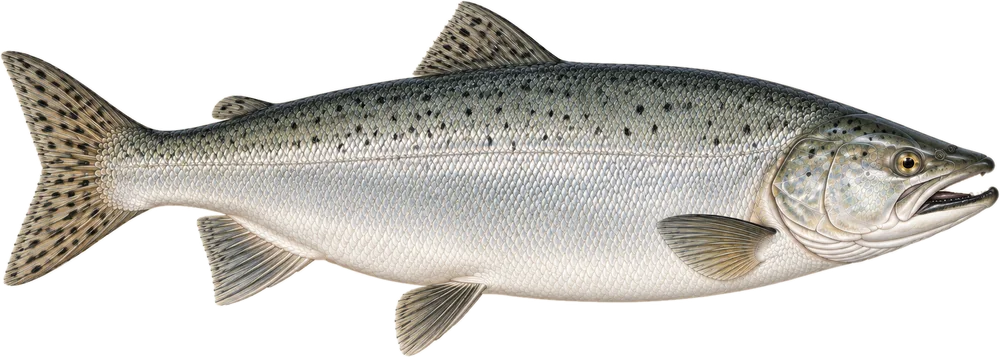
In short: According to the catch calendar the best time is June. Good spots on the coast: open water and deep water; in the river: current seam and main current. Proven baits: trolled herring, octopus imitations, plugs, spoons and spinners, in the river also salmon eggs and flies. The largest Pacific salmon, with black gums and spots on both lobes of the tail fin. In Alaska a King Salmon Stamp is required in addition to the fishing licence. Step by step: Fishing for king salmon.
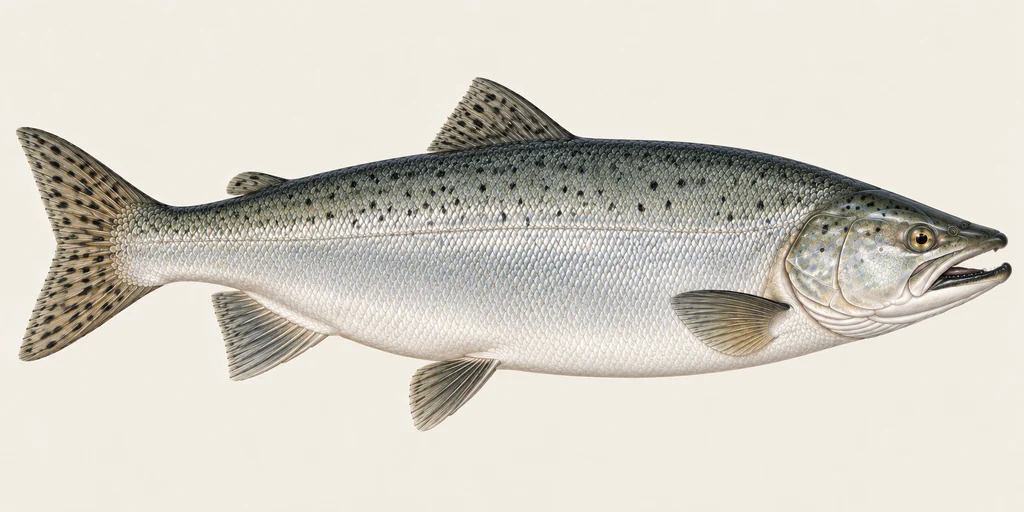
- Small black spots on both lobes of the tail fin
- Black-coloured gum on the lower jaw
- Irregular black spots on the back and dorsal fin
Catch chances through the year
- Hardly any chance
- Possible
- Good
- Peak season
- Spawning (observe the closed season)
Editorial assessment for the native range (Alaska and the Pacific coast of North America), not a measured value and not a guarantee. The rules of the country you are travelling to are binding.
How to recognise it
At sea the king salmon is a powerful, deep-bodied fish. The back and top of the head are blue-green, the flanks silver, the belly white. Small, irregular black spots sit on the back, dorsal fin and both lobes of the tail fin. The gum of the lower jaw is black, hence the regional name blackmouth.
In fresh water fish ready to spawn turn olive-brown, red or purple, the males more strongly than the females. Older males develop a high back and a hooked jaw. Females stay torpedo-shaped with a stout mid-body and a blunt snout.
According to NOAA, fish ready to spawn are usually around 90 centimetres long and weigh about 14 kilograms. As maximum values FishBase gives 150 centimetres and 61,4 kilograms, and the Alaska fisheries authority (Fischereibehörde) gives 58 inches and 126 pounds as the record, that is about 147 centimetres and 57 kilograms.
It is most often confused with the coho salmon. The coho lacks spots on the lower lobe of the tail fin, and its gum is white instead of black. Small king salmon that return after only one winter at sea are called jacks and are mostly males.
It shares the migratory way of life with the Atlantic salmon, but belongs to the Pacific genus Oncorhynchus, which also includes the rainbow trout. Unlike the Atlantic salmon, every king salmon dies after spawning.
Side by side

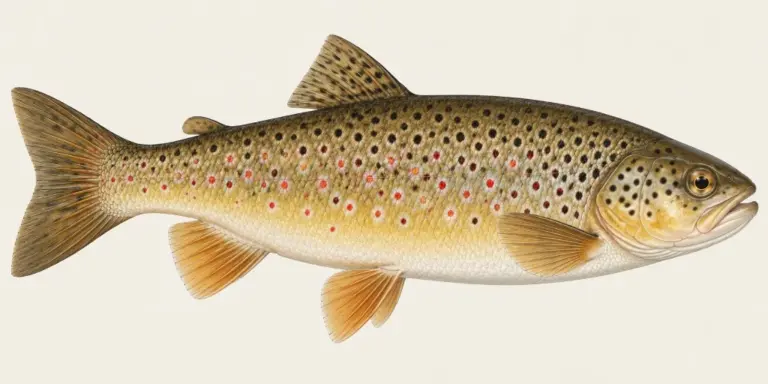
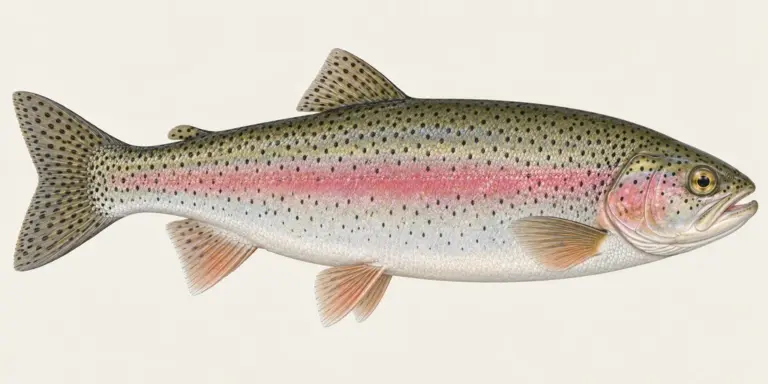
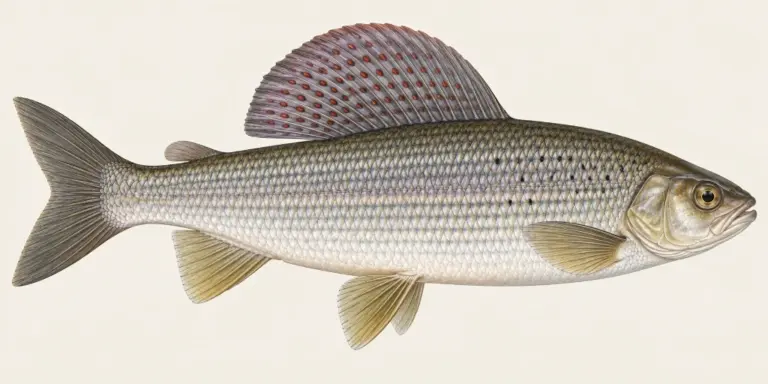
AI-generated illustrations.
Where it lives
In North America the range runs from Monterey Bay in California to the Chukchi Sea off Alaska, in Asia from the Anadyr in Siberia to Hokkaido in Japan. In Alaska it is common from the south-east to the Yukon. Large runs return to the Yukon, Kuskokwim, Nushagak, Susitna and Kenai, among others. The species has also been brought to other countries, and according to FishBase several of them report ecological damage.
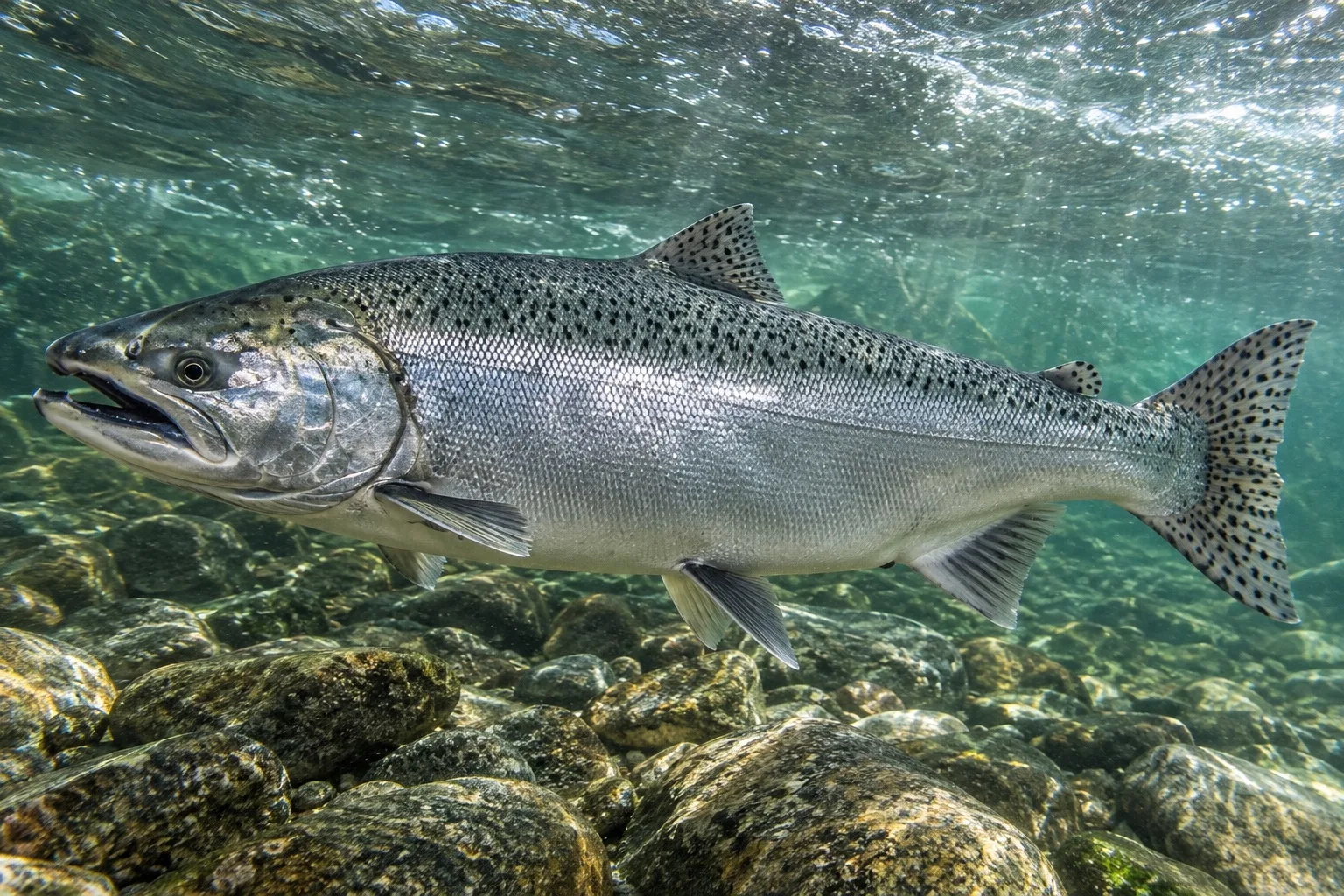
The king salmon spends its youth in streams, rivers, estuaries and wetlands, and the rest of its life in the open sea. Some fish stay near the coast all their lives, others make long migrations.
Holding spots in the picture
Choose the time of day: the picture shows where the species holds. We do not show German seasons for travel fish; the bars give the chance of a catch for each month. Tap a fish or a spot in the list to bring it closer. The picture is schematic and AI-generated, and every water is different.
Chance of a catch per month according to the catch calendar
- J
- F
- M
- A
- M
- J
- J
- A
- S
- O
- N
- D
Spawning season
On the coast
Deep, colder water
The king salmon (chinook) is found here all year round.
Open water, mid-water
The king salmon (chinook) is found here all year round.
At sea the king salmon lives in open water and eats herring, sand lance, squid and crustaceans. Some fish stay near the coast, others travel far out. Fishing is done mainly from a boat, for example in Southeast Alaska and in Cook Inlet.
In the river
Current seam
The king salmon (chinook) is found here all year round.
Free current in mid-river
The king salmon (chinook) is found here all year round.
To spawn it runs up into its home river, in Alaska mostly from May to July, and no longer feeds there. In inland Alaska people troll in eddies or cast from the bank. The spawning redds lie in rather deep, fast-flowing water.
Depth: At sea, baits for king salmon are fished deeper and more slowly than for coho. With mooching you can search several depths in turn.
Size comparison: AI-generated drawing, schematic.
How it migrates and spawns
After hatching, the larvae live for a few weeks in the gravel and feed on the yolk sac. In Alaska most juveniles stay a year in the river and go down to the sea in their second spring as smolt, that is, silvered young salmon. There they feed on herring, sand eels, squid and crustaceans and often double their weight in a single summer.
After one to five years at sea they return to their home river, usually at three or four years old. In Alaska the run usually comes from May to July. In fresh water they no longer feed and live off their reserves. Fish bound for the upper Yukon cover more than 2000 river miles in about 60 days, that is, over 3200 kilometres. Each female lays 3000 to 14000 eggs in several redds in rather deep, fast-flowing water. After that all king salmon die, and their carcasses fertilise the river.
When and where the season is
The season follows the run. In interior Alaska the authority recommends July for trolling in eddies. It is fished especially intensively in south-east Alaska and in Cook Inlet, at sea mainly from a boat.
Many stocks in Alaska are declining, others are stable or growing. The authority can close or open fisheries at short notice during the season. In 2026 the Kenai River and upper Cook Inlet, among others, were closed to king salmon from 1 May to 15 August, including for catch and release (as of October 2026). So check the current Emergency Orders for your water immediately before you travel. High and murky water clearly lowers the chances of catching in the river.
What you catch it with
Step by step: Fishing for king salmon: tips on baits, rigs and tackle – season, holding spots, baits, tackle and rules on one page.
At sea trolling with prepared herring is the preferred method. Rubber octopus imitations, plugs or flies are also towed, often behind a flasher, a attractor plate that creates movement and flash. King salmon are trolled more slowly and deeper than coho. In mooching the boat drifts or is anchored and the current moves the herring. This makes it easy to cover different depths. The authority gives lines of 15 to 40 pounds breaking strain.
In the river anglers fish with artificial lures and salmon eggs. In interior Alaska the authority advises backtrolling large plugs in eddies from a boat or casting spoons, plugs and spinners from the bank.
If you release, use single hooks or crimp the barbs, play the fish quickly and leave it in the water. Nothing should go under the gill covers. If the hook cannot be removed, cut the line close to the hook. Afterwards hold the fish head into the current until it swims off by itself.
Look in the mouth: Black gums and spots on both tail lobes mean king salmon. Check this before you keep a fish, because separate catch limits often apply to king salmon in Alaska.
Closed means closed: If a water is closed to salmon fishing, in Alaska this also applies to catch and release.
Suitable lures
Trolled herring, octopus imitations, plugs, spoons and spinners, in the river also salmon eggs and flies.
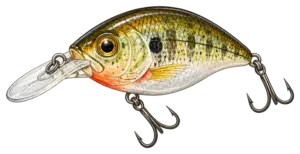
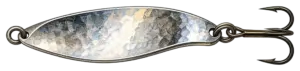
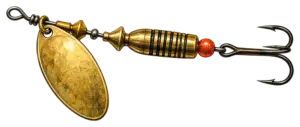
AI-generated illustrations. A click opens the lure’s page.
In Alaska a King Salmon Stamp is required in addition to the licence.
Licences and rules in the country you visit
In Alaska adults need a sport fishing licence, non-residents from the age of 16. Anyone fishing for king salmon also needs a King Salmon Stamp, even if they only catch and release. Stocked lakes with no connection to the sea are exempt. For fisheries with an annual catch limit a catch record (Harvest Record) is compulsory. Opening times, daily limits and tackle regulations are in the regional regulation booklets. The Alaska Department of Fish and Game is the binding authority.
On the US West Coast, according to NOAA Fisheries, several king salmon stocks are listed as endangered or threatened under the Endangered Species Act, in Alaska none. In Canada and the other states the licences and rules of the respective authority apply.
Frequently asked questions (FAQ)
How do I tell a king salmon from a coho?
The king salmon has black gums and spots on both lobes of the tail fin. In the coho the gum is white and the lower tail lobe is unspotted.
When is king salmon season in Alaska?
In Alaska the fish usually run up the rivers from May to July. In interior Alaska the authority names July. Short-notice closures are possible.
Do I need a special permit in Alaska?
Yes. In addition to the sport fishing licence a King Salmon Stamp is required for king salmon, even when releasing. For fisheries with an annual limit a catch record is added.
Sources
The rating of catch chances is an editorial assessment. The facts come from these sources, and the text is worded in our own words. The illustration is an original design by Angel Momente in the style of a natural history plate (AI-generated, see the AI notice).
- FishBase: Oncorhynchus tshawytscha, Chinook salmon
- NOAA Fisheries: Chinook Salmon
- Alaska Department of Fish and Game: Chinook Salmon (Species Profile)
- Alaska Department of Fish and Game: Coho Salmon (Species Profile)
- Alaska Department of Fish and Game: Sport Fishing Licenses, King Salmon Stamps
- Alaska Department of Fish and Game: Sport Fishing Regulations Southcentral 2023, Licensing
- Alaska Department of Fish and Game: Fishing in northern Southeast Alaska (Juneau)
- Alaska Department of Fish and Game: Roadside Salmon Fishing in the Tanana River Drainage
- Alaska Department of Fish and Game: Emergency Orders 2026 (Kenai River, Kasilof, Cook Inlet saltwater), Stand 09.02.2026
Created with AI support from the sources listed. Figures only appear in the text if a source gives them. Last updated: 27 October 2026. Found a mistake? Write to us. Who is behind this site: About me.
More in the lexicon
- All fish species at a glance
- Catch calendar – month, water temperature and profile for 93 species
- Line calculator – breaking strain after the knot, drag guideline, backing
- Angling methods