
Knowledge – Fish
Vimba / Rußnase: Features, habitat and protection
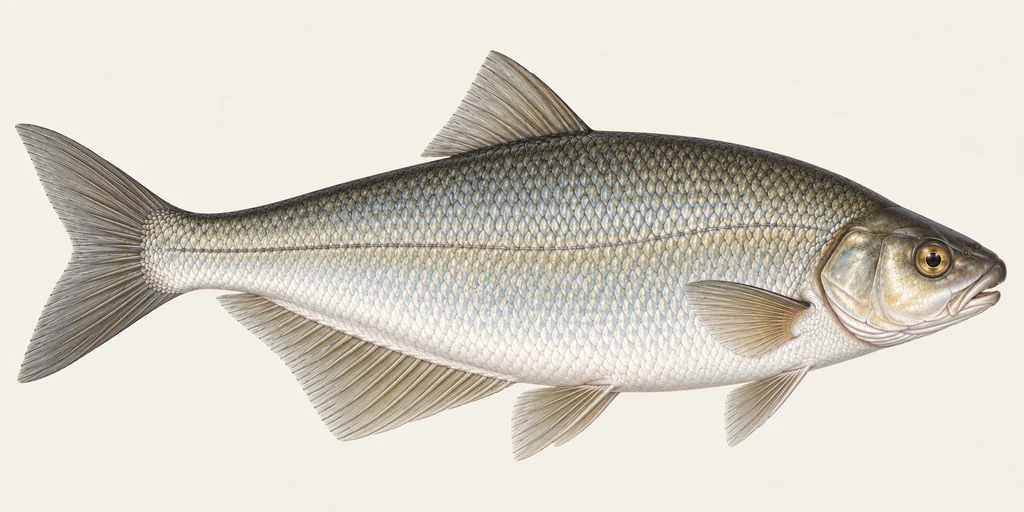
The vimba bream (Vimba vimba), also called Rußnase, is a sociable cyprinid of large rivers with a dark, protruding snout and a long anal fin. In Germany it is very rare and considered critically endangered. You should therefore not target it, and should return a bycatch gently.
In brief: The vimba bream is considered critically endangered in Germany (Red List 2023). It is not a target fish. What to do with a bycatch: Vimba bream as bycatch.
- Dark, cone-shaped snout protruding over the inferior mouth
- Long anal fin with 17 to 20 rays
- Sharp keel of scales on the back behind the dorsal fin
Catch chances through the year
- Hardly any chance
- Possible
- Good
- Peak season
- Spawning (observe the closed season)
Editorial assessment for waters in Germany, not a measured value and no guarantee. Spawning time is not the same as the legal closed season.
Species profile and sources in the catch calendarAll species compared month by monthThe rules of your federal state
How to recognise it
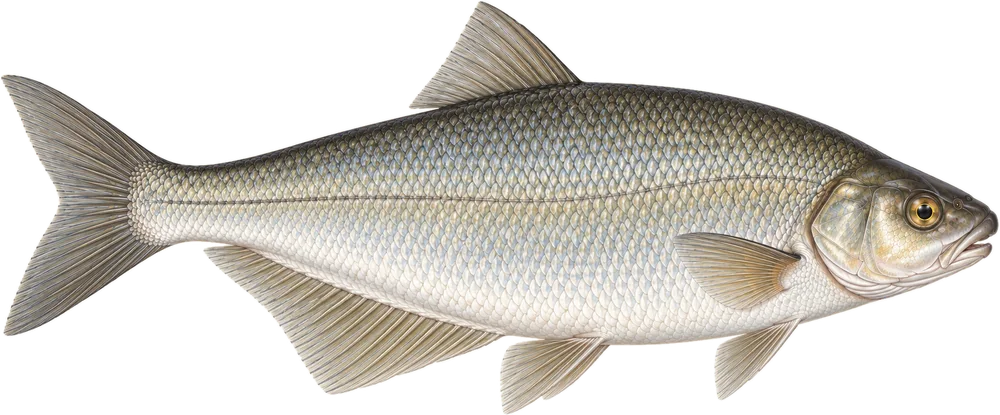
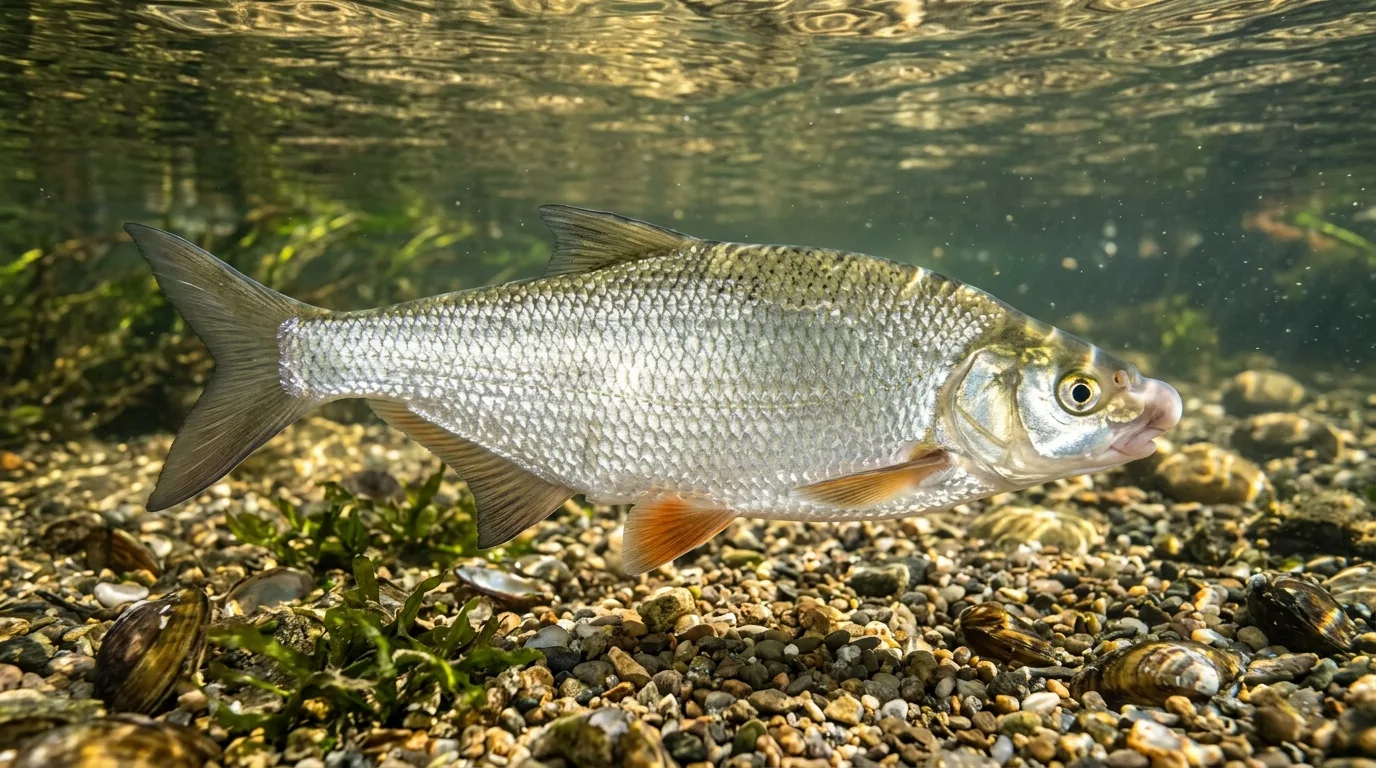
The vimba bream has an elongated, laterally flattened body. The mouth lies well below the tip of the snout, is protrusible and curved like a horseshoe. The snout itself projects like a cone-shaped nose and is dark in colour, hence the name Rußnase. Behind the dorsal fin the scales form a sharp keel, and the anal fin is strikingly long.
The back is dark grey to bluish, the sides gleam silver, the belly is silvery white. Pectoral, pelvic and anal fins are pale yellow with an orange-yellow base. In the spawning season both males and females show a nuptial dress with a fine, granular rash, stronger in the male. The males are then blackish-brown, orange on the cheeks and partly on the belly.
Typical sizes are 20 to 40 centimetres. The Landesfischereiverband Bayern gives 30 to 40 centimetres on average, FishBase a common length of 20 centimetres and 50 centimetres and 1.4 kilograms as maximum values.
The vimba bream is most often confused with the common nase. In the nase the gape is straight with hard edges, whereas in the vimba bream the edges of the mouth are soft and fleshy. The vimba bream also has a clearly longer anal fin.
In the lakes of southern Bavaria lives the Seerüßling, a lake form of the vimba bream. The Bavarian fisheries regulation lists both together as one species (Vimba vimba), so the same rules apply to it there.
Side by side
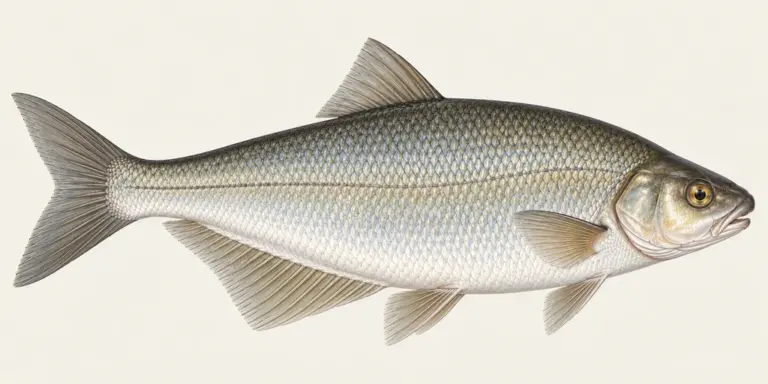
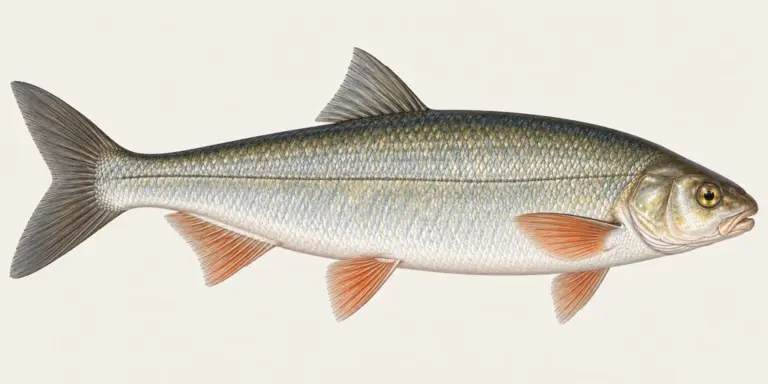
AI-generated illustrations.
Where it lives
The vimba bream is found as a shoaling fish close above the bottom, mostly in the bream and barbel zones, that is, in the middle and lower sections of larger rivers over sand or mud. Some stocks occur in lakes, others in the brackish water of estuaries. FishBase also describes resident stocks that live even in small rivers of the barbel zone. The Landesfischereiverband names six geographical races, some of which stay put while others migrate.
The natural range in Germany extends, in the North Sea catchment, from the Elbe to the Ems, plus tributaries of the Baltic Sea. There are also stocks in Bavaria. In the Rhine an established population has lived for about 30 years and is slowly spreading.
According to the 2023 Red List, the vimba bream is very rare in Germany and its stock has fallen sharply over the long term. In the short term it is considered stable: in Bavaria it is stable, in Mecklenburg-Western Pomerania it has increased markedly, in the Elbe and Weser it is declining. The species has so far not been able to fully reconquer its historical range.
Holding spots in the picture
Choose the season and time of day: the picture shows where the species stands then. Spots outlined in red apply only in the chosen season. Tap a fish or a spot in the list to bring it closer. The picture is schematic and AI-generated, every water is different.
In the river
Gravelly shallow (riffle)
Vimba is present here only in spring and summer.
Calm bay with aquatic plants
Vimba is present here all year round.
The vimba lives in groups near the bottom of slow-flowing lower reaches of large rivers. It looks for food in the calm bank zone. It also occurs in the brackish water of river mouths and in some lakes.
Spring: This is the spawning period, so observe the closed seasons (Schonzeit). From mid-April migratory stocks move upstream in large shoals as far as the barbel zone. Spawning takes place over gravel in shallow, fast-flowing water.
Summer: This is the spawning period, so observe the closed seasons (Schonzeit). Spawning lasts until July. After that the fish return to their feeding grounds.
Size comparison: AI-generated drawing, schematic.
How it feeds and spawns
Vimba breams look for food on the bottom. The Landesfischereiverband names snails, worms, insect larvae and small crustaceans, FishBase mainly small molluscs and insect larvae.
At spawning time the fish travel far upstream in large shoals. Spawning takes place over gravelly or stony bottom in shallow, flowing stretches, and the sticky eggs cling to the bottom and to plants. Lake-dwelling stocks migrate into fast-flowing tributaries, and those that feed in brackish water or at sea sometimes migrate far to the spawning ground. Afterwards the fish return to their feeding grounds.
The Landesfischereiverband and FishBase name cross-river structures as a threat. Weirs fragment the habitat and deprive the fish of spawning grounds. Where passability has been restored, for example in Mecklenburg-Western Pomerania, a small remnant population recovered and colonised further waters.
When it appears
Depending on the source, the spawning migration begins in mid-April or in May and lasts until July. The Landesfischereiverband Niederösterreich calls the species a summer spawner (Sommerlaicher). During this time the fish are on the move and particularly vulnerable.
In Eastern European rivers the migration begins as early as September, rests in winter and continues from March to May, according to FishBase. Whether German stocks migrate similarly is not known to us.
There is no catch calendar in the usual sense for the vimba bream. If at all, it takes the hook as a bycatch in the warm season.
You will find the monthly overview of all species and the water temperature check in the catch calendar.
What to do with a bycatch
As a bycatch: Fishing for vimba bream? – why the species is not a target fish and what to do with a bycatch.
The vimba bream is not a target fish, and in several states catching it is banned; the rules are under „Was du beachten musst“. It takes the hook almost only as a bycatch, when small natural baits for bream or barbel lie on the bottom in large rivers.
If you have hooked a vimba bream, play it quickly and guide it into the landing net. The fish stays in the water and lies in the net or on a wet unhooking mat. Remove the hook with a disgorger, if possible without lifting the fish out of the water, then return it immediately. More on this on the pages Landing and unhooking a fish and Returning a fish.
Look at the anal fin first: The long anal fin and the soft mouth with a nose-like, protruding dark snout point to the vimba bream. A straight mouth with hard edges points to the nase.
Handle a bycatch briefly and gently: keep the fish in the water, touch it only with wet hands and skip photos and prolonged handling.
Respect the spawning migration: in spring and early summer the fish travel upstream to their spawning grounds. Avoid shallow gravel bars below weirs during this time and return every fish quickly.
Suitable lures
Not a target fish: these baits are meant for other fish, and the species is only occasionally caught on them as bycatch. It is not fished for deliberately.
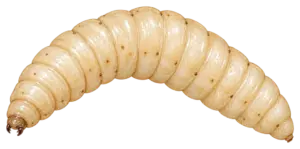
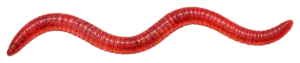
AI-generated illustrations. A click opens the lure’s page.
Critically endangered, threatened with extinction in individual states: do not target. Return a bycatch gently and observe state law (Landesrecht).
What you need to observe
The vimba bream is listed in the Red List of Germany of 2023 as critically endangered, with a very rare stock situation. The states keep their own Red Lists, which can differ from the federal list. Whether the species has a closed season (Schonzeit) and whether you may take it is set by state law (Landesrecht).
In Brandenburg, Saxony and Thuringia the vimba bream has a year-round closed season, Hesse bans catching and taking it, Bremen taking it and using it as bait, Hamburg targeted fishing. Mecklenburg-Western Pomerania protects it from 1 May to 31 July, Bavaria lists it without a closed season or minimum size. As of October 2026. What is binding is the fisheries regulation of your federal state (Bundesland) and your fishing permit (Erlaubnisschein); the values for each state are shown on the page Vimba bream as bycatch.
A vimba bream you catch is returned immediately, even where state law does not specifically protect it. Keep it in the water and touch it only with wet hands (Returning a fish).
What closed season, minimum size and harvest slot mean and where to find them is explained on the page Closed season and minimum size explained.
What state law sets for the closed season (Schonzeit) and minimum size (Mindestmaß) of this species is in the box „Auf einen Blick“ on the state pages for Brandenburg, Bremen, Hamburg, Hesse, Mecklenburg-Western Pomerania, Saxony and Thuringia. Our overview does not list this species for the other states; the state fisheries regulation (Landesfischereiverordnung) is what counts there.
Frequently asked questions (FAQ)
Are vimba bream and Rußnase the same thing?
Yes. Rußnase is another name for the vimba bream (Vimba vimba) and refers to the dark snout.
How do I tell a vimba bream from a nase?
The vimba bream has a long anal fin and a horseshoe-shaped mouth with soft edges. The nase has a short anal fin and a straight mouth with hard edges.
How is the vimba bream classified in Germany?
The 2023 Red List lists it as critically endangered, with a very rare stock situation. Seven federal states (Bundesländer) protect it with a closed season (Schonzeit) or a ban on catching or taking it (as of October 2026). You should not target it anywhere.
Sources
The rating of catch chances is an editorial assessment. The facts come from these sources, and the text is worded in our own words. The illustration is an original design by Angel Momente in the style of a natural history plate (AI-generated, see the AI notice).
- Landesfischereiverband Bayern: Fischlexikon (Laichzeit, Lebensraum, Nahrung, Aktivität)
- FishBase: Vimba vimba (Höchstalter, Lebensraum, Nahrung)
- Rote-Liste-Zentrum: Zährte (Rote Liste der Süßwasserfische Deutschlands 2023: stark gefährdet)
- Bundesamt für Naturschutz: Rote Liste und Gesamtartenliste der Süßwasserfische und Neunaugen Deutschlands (Naturschutz und Biologische Vielfalt 170 (6), 2023)
- Niederösterreichischer Landesfischereiverband: Fischarten in Niederösterreich, Rußnase
- Wikipedia: Zährte (Größe, Merkmale, Laichzeit, Gefährdung)
- Wikipedia (englisch): Vimba vimba (Wanderung)
- Fischereibehörde Sachsen: Artenkunde, verwechselbare Fischarten (Zährte und Nase)
- Bayern.Recht: Verordnung zur Ausführung des Bayerischen Fischereigesetzes (AVBayFiG), Anlage Schonzeiten und Schonmaße
- Land Brandenburg: Fischereiordnung des Landes Brandenburg (BbgFischO), Anlage zu § 2
- Freistaat Sachsen: Sächsische Fischereiverordnung, Anlage Schonzeiten und Mindestmaße
- LALLF Mecklenburg-Vorpommern: Binnenfischereiverordnung (BiFVO M-V), §§ 3 bis 5
- Land Hessen: Hessische Fischereiverordnung (HFischV), § 1 Fang- und Entnahmeverbote
- Freie Hansestadt Bremen: Bremische Binnenfischereiverordnung, § 2
- Freie und Hansestadt Hamburg: Durchführungsverordnung zum Hamburgischen Fischerei- und Angelgesetz, § 6
- Freistaat Thüringen: Thüringer Fischereiausführungsverordnung, § 1
Created with AI support from the sources listed. Figures only appear in the text if a source gives them. Last updated: 27 October 2026. Found a mistake? Write to us. Who is behind this site: About me.
More in the lexicon
- All fish species at a glance
- Catch calendar – month, water temperature and profile for 93 species
- Line calculator – breaking strain after the knot, drag guideline, backing
- Angling methods