
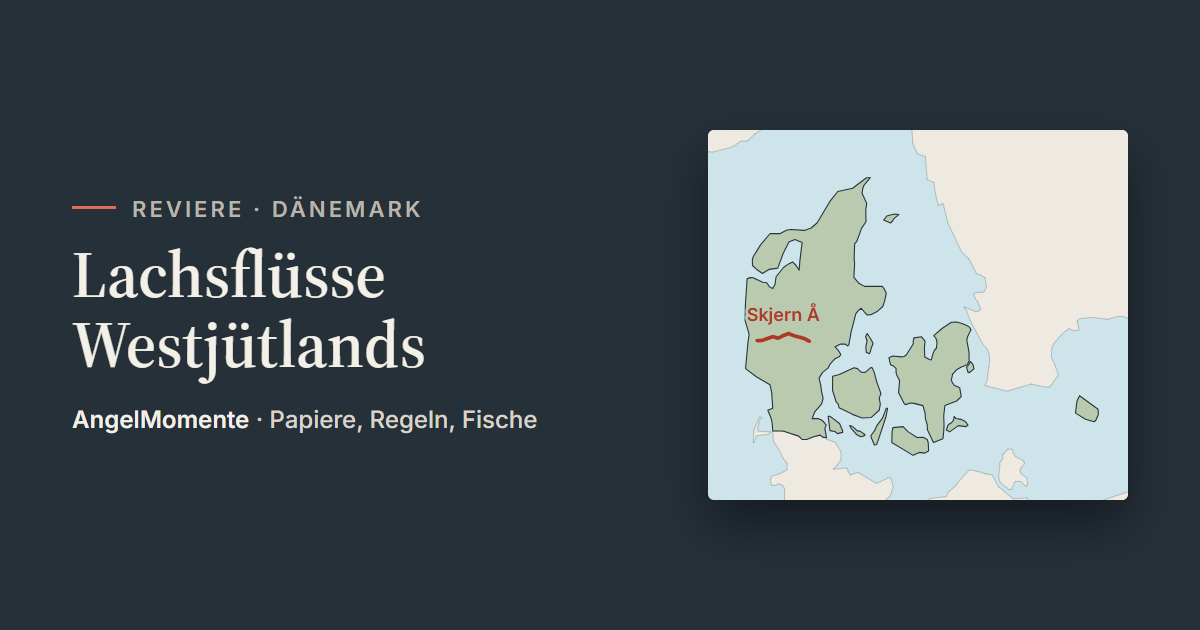
Waters · Denmark
Fishing on the salmon rivers of West Jutland
The salmon rivers of West Jutland are the Skjern Å, Storå, Varde Å and Sneum Å. They still hold the original Danish salmon strains. Salmon are protected there all year round, and you may only keep one within an annual quota.
- Papers
- Fishing licence, club permit; Skjern Å and Storå: additional permit
- Season
- Primary salmon water from 16.4. to 15.10. (Skjern Å, Storå) or to 31.10. (Varde Å, Sneum Å); other stretches 1.3.–31.10.
As of October 2026
At a glance
- Papers
- Fishing licence, club permit; Skjern Å and Storå: additional permit
- Licence and permit
- Season
- Primary salmon water from 16.4. to 15.10. (Skjern Å, Storå) or to 31.10. (Varde Å, Sneum Å); other stretches 1.3.–31.10.
| Fish | Minimum size | Closed season | Catch limit | Note |
|---|---|---|---|---|
| Atlantic salmon | 40 cm | protected all year round | 1 per season | Keeping only while the quota is open; report every catch by midnight |
| Sea trout | 40 cm | 16.11.–28.2. | – | Skjern Å: the club protects it for the whole season |
| Brown trout | 30 cm | 16.11.–28.2. | – | |
| Pike | 60 cm | 15.3.–30.4. | – | |
| Eel | – | protected all year round | – | Fishing ban since 1.8.2026, also in fresh water |
Freshwater Regulation No. 1198/2021 and river Regulations No. 202, 203 and 204 of 2024; the clubs‘ permit conditions may be stricter. As of October 2026. What counts is the regulation and your fishing permit (Erlaubnisschein).
Location and waters Skjern Å, Storå, Varde Å, Sneum Å and Karup Å
- Skjern Å: Denmark’s river with the greatest volume of water. It rises east of Tinnet Krat and flows 94 km westward with a very gentle gradient. South-west of Skjern it enters the Ringkøbing Fjord through a delta (Lex, Skjern Å).
- Storå: At 104 km, the second-longest river in the country. It comes from Gludsted Plantage, flows through Holstebro and enters the Nissum Fjord at Felsted Kog (Lex, Storå).
- Varde Å: About 40 km long, it is formed by the Ansager Å and Grindsted Å and flows into Ho Bugt on the Wadden Sea. It is the only Danish river with an open mouth without a sluice or dyke (Lex, Varde Å).
- Sneum Å: It flows through a sluice in the sea dyke into the Wadden Sea and falls under the Wadden Sea regulation.
- Karup Å: It does not flow into the North Sea but into the Skive Fjord on the Limfjord. Its mouth has a regulation of its own on protection zones (Fisheries authority, Central Jutland).
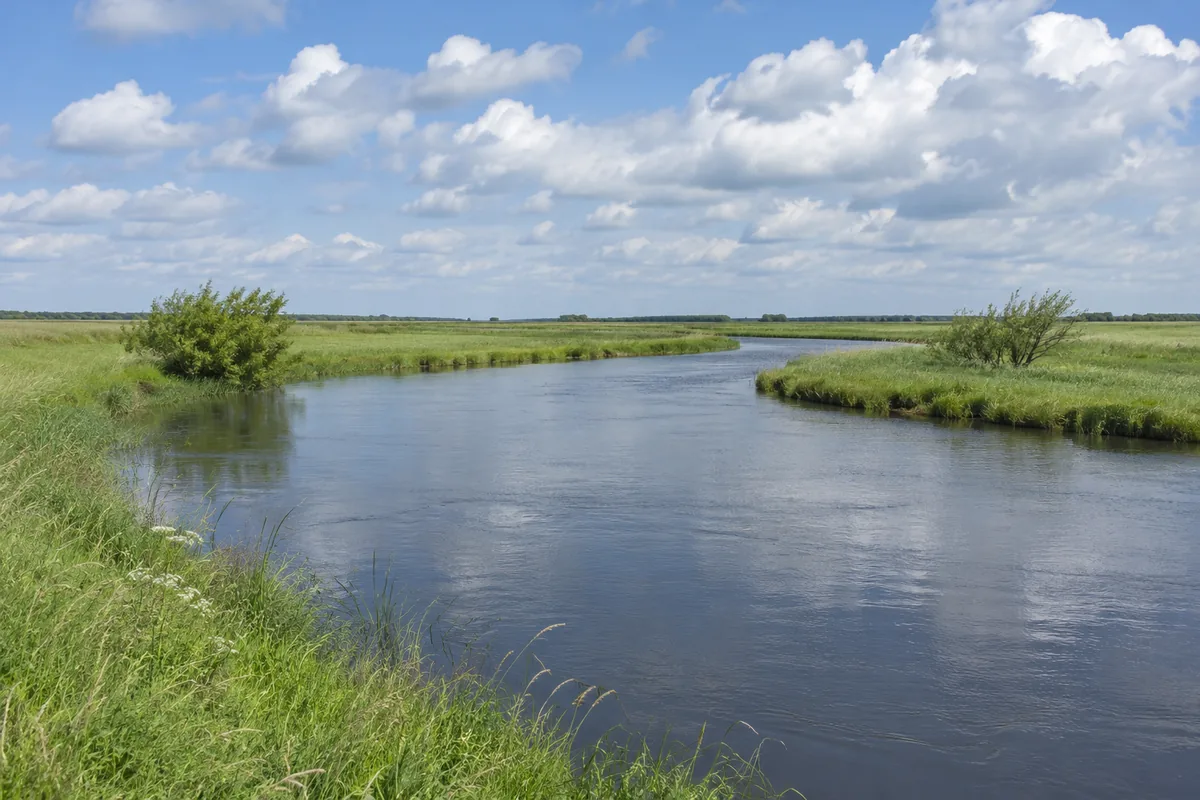
Fish and best time Salmon and sea trout: runs and stocks
DTU Aqua monitors eight West Jutland salmon rivers: besides the four above, also the Kongeå, Ribe Å, Brede Å and Vidå (DTU Aqua, status of the salmon). Only salmon from the original strains are stocked. The money for this comes from fishing licences, and the young fish are reared by the Danmarks Center for Vildlaks (DTU Aqua, salmon stocking).
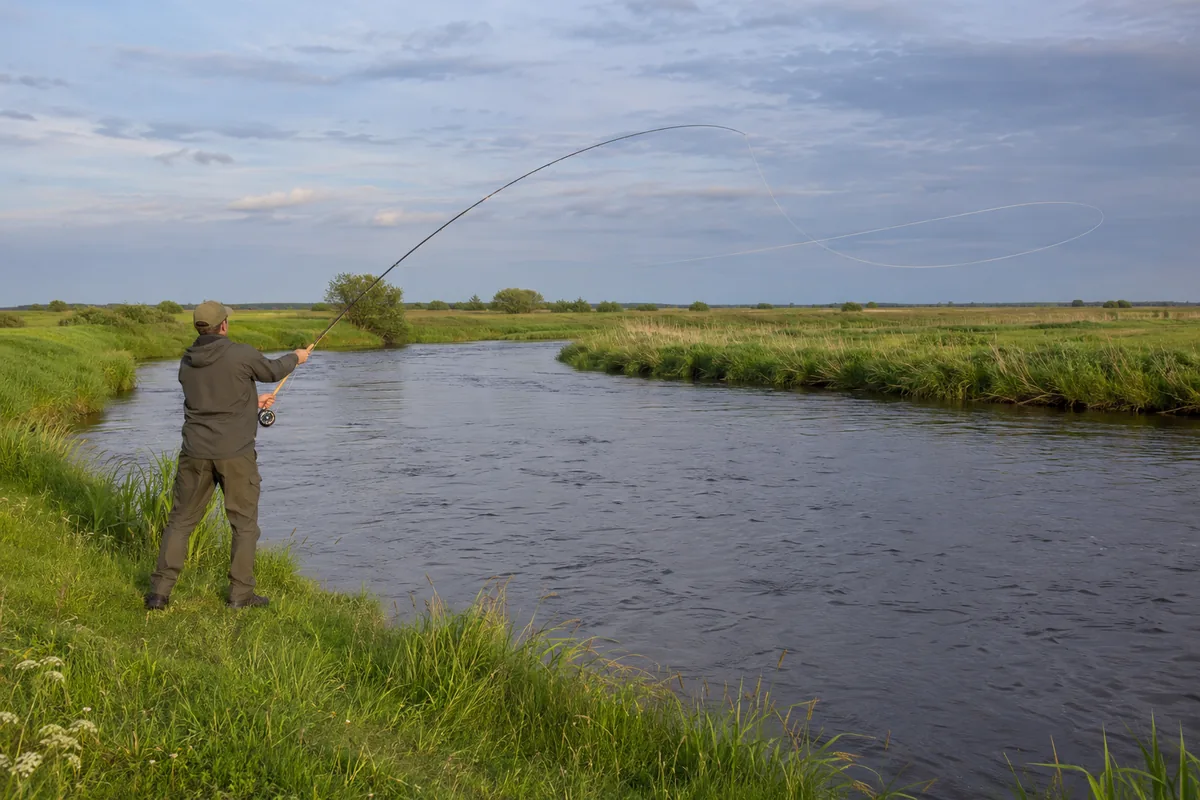
- Salmon in the Skjern Å: In 2025, DTU Aqua estimates that around 4200 salmon ran upstream, almost a third of them from stocking (DTU Aqua, Skjern Å). The offspring in 2024 was weaker than in any previous count.
- Salmon in the Storå: In 2025 around 1400 fish ran upstream, 72 % fewer than in 2022. There has been no stocking there since 2017 (DTU Aqua, Storå).
- Sea trout: In the Skjern Å, DTU Aqua found natural trout offspring at a good half of the sites fished in 2025, more than ever since 1990 (Fish management plan for the Skjern Å 2026). On the Storå, some clubs gave sea trout complete protection for three years in 2023.
- Pike: The lakes and canals of the Skjern Å system also hold pike and perch.
The catches of the season are shown by the statistics of the Skjern Å Sammenslutning and the Sammenslutningen ved Storå. When salmon and sea trout run in general is shown by the catch calendar.
Papers and permit Fishing licence, club day permit, Storåkort
You need the Danish fishing licence (fisketegn). In natural fresh waters it is only valid together with the owner’s permission (fisketegn.dk). The fishing right belongs to the owner of the bank plot, and in many places an angling club holds it (Fisheries Act, § 28).
- Skjern Å: The local clubs sell day permits for their own stretches. The Skjern Å Sammenslutning lists them with their permit pages. From the age of 18, the Skjern Å quota of the Sammenslutning is added.
- Storå: Between the Ringvejen in Holstebro and the mouth you also need, from the age of 18, the Storåkort of the Sammenslutningen ved Storå. It is valid for one season.
- Varde Å and Sneum Å: The salmon quota of the Varde Å is held by the Varde Å Sammenslutningen. Which stretch is issued by whom, you ask at the club on the river.
For each river, an open association of the fishing-rights holders (sammenslutning) receives the quota. In the allocation it counts whether the association contributes to looking after the waters (Permit of the fisheries authority for the Varde Å, 12.06.2026).
Special rules Salmon protected all year, harvest quota
- Salmon: Protected all year round in all four rivers, and every catch goes straight back. On application, the authority can allow a harvest quota (laksekvote). The number follows the advice of DTU Aqua (Regulation No. 202, Skjern Å, No. 203, Storå, No. 204, Wadden Sea with Varde Å and Sneum Å).
- Quota: It is divided by size, up to 73 cm and above. Within the quota you may keep at most one salmon per season. Once it is used up, that is it. In June 2026 the authority cut the harvest of large salmon over 73 cm in all eight rivers, and on the Storå it has been stopped completely until the end of the year (Sammenslutningen ved Storå).
- Reporting your catch: You report every salmon, whether kept or released, to the Sammenslutning by midnight on the day of the catch. This includes whether it had an adipose fin. On the Skjern Å this also applies to every sea trout (Mandatory rules Skjern Å).
- Season: On the stretches that count as primary salmon water, you may fish from 16 April, on the Skjern Å and Storå until 15 October, on the Varde Å and Sneum Å until 31 October. In the rest of the system, 1 March to 31 October applies, in lakes the whole year. Which stretches are primary is set anew every year in the list of salmon waters.
- Baits and hooks: Prawns and roe are banned. Only one hook on the line is allowed. Barbs are only permitted on single hooks with a hook gape of up to 6 mm, and with natural bait you fish only with a single hook.
- Skjern Å: The Sammenslutning protects sea trout for the whole season. At a water temperature above 18 degrees, fishing is suspended.
- Protection zones at the mouths: In front of the Skjern Å in the Ringkøbing Fjord and in front of the Storå in Felsted Kog you may not fish at all. In front of the Varde Å the zone extends up to 1500 m out, in front of the Sneum Å it begins at the sluice in the dyke. In the rivers, fishing is banned within 50 m of the gates of the sea-dyke sluices. In the Ringkøbing and Nissum Fjord, salmon and trout are protected all year round, more under Hvide Sande and Ringkøbing Fjord.
- Eel: Since 1 August 2026, also banned in fresh water (Regulation No. 670).
As of October 2026. The quotas and the list of salmon waters are set anew every year, and the authority can cut a quota during the season. Before every day’s fishing, check on the Sammenslutning’s page whether the quota is open. The clubs‘ rules can be stricter than the regulation.
Related
- Fishing on a river and Bank and waders
- West coast of Jutland and Hvide Sande and Ringkøbing Fjord
- Fishing in Denmark with all the rules for the whole country
- Salmon and sea trout in the fish lexicon, plus fly fishing and spinning
- Releasing a fish and Fishing permit and water map
Sources
- Verordnungen über die Skjern Å (Nr. 202), die Storå (Nr. 203) und das Wattenmeer mit südjütischen Flüssen (Nr. 204), alle vom 28.02.2024
- Verordnung Nr. 1198 über Mindestmaße und Schonzeiten im Süßwasser, Nr. 1482 über den Ringkøbing Fjord, Nr. 1311 über den Nissum Fjord und Nr. 670 über das Aalfangverbot
- DTU Aqua: Lachsquoten je Fluss, Lachsgewässer 2026 und Junglachse in der Skjern Å 2024
- Fischereibehörde: Salmon, Mindestmaße und Schonzeiten und Lachserlaubnis Varde Å 2026
- Skjern Å Sammenslutning: Pflichtregeln und Sammenslutningen ved Storå: Storåkort
- fisketegn.dk und Lex: Skjern Å
A guide without guarantee, status October 2026. What counts are the Danish fisheries regulations, the annual salmon permit of the fisheries authority, the conditions of the clubs‘ permits and the signs at the water.