
As of 26 October 2026. Checked: coastal fisheries regulation (Küstenfischereiverordnung) as amended on 11 September 2026, winter holding area orders as amended on 2 July 2024 and 20 September 2024.
At a glance
- What
- harbours and lower river reaches where fish overwinter packed together
- Legal basis
- § 13 of the coastal fisheries regulation, implemented by general order of the LALLF
- Areas
- seven winter holding areas on the LALLF list, as of October 2026
- Period
- depending on the order, from 12 October or from 1 November
- Before you fish
- read the current version, start the catch record before the first cast
Understanding a winter holding area as a protected zone
Which spots fish seek out in winter is covered in the article Where fish hold in winter. For the Bodden, the Leibniz-Institut für Gewässerökologie und Binnenfischerei (IGB) notes that large numbers of fish gather in some harbours in the cold, pike among them. Because a lot is regularly taken there, a local pike stock can shrink.
On top of that comes foul-hooking, meaning a hook that catches the fish in the side of the body. According to the IGB, this happens more often in dense gatherings. LALLF inspections showed a sharp rise in angling pressure. Its rules are meant to prevent foul-hooking, spare undersized fish, reduce the taking of fish ready to spawn and protect the pike that gather before spawning.
Tracing the legal basis from the act to the order
The rules rest on three levels. In § 18, the state fisheries act (Landesfischereigesetz) counts parts of waters that serve fish for overwintering among the protected zones (Schonbezirke). Below it sits the coastal fisheries regulation. Its § 13 allows the higher fisheries authority to restrict fishing for a given time and area, to attach conditions to it or to ban it, including by general order. Under § 23 of the act, this authority is the LALLF.
The LALLF bases all winter holding areas on the coast on this § 13. Each order is deemed announced on the day after its publication in the official gazette (Amtlicher Anzeiger), can be revoked at any time and is immediately enforceable. Violations are administrative offences; the coastal fisheries regulation provides for a fine of up to 75,000 euros.
The permanent protected zones are listed in the regulation itself; their changes of 29 September 2026 are summarised on Pike on the coast of Mecklenburg-Western Pomerania. Winter holding areas only apply in coastal waters, which the act defines to include sounds, Bodden, Wieken, lagoons, the Achterwasser and the Peenestrom. Inland, according to the LALLF, the holder of the fishing rights sets the protected zones; they are printed on your fishing permit. Other federal states regulate winter holding areas themselves, Bavaria for example as a separate type of protected zone.
Finding the current version at the LALLF
The texts are on the LALLF website under “Fischerei”, “Rechtsvorschriften”, “Landesrecht”, in the “Allgemeinverfügungen” block. For each winter holding area there is a sketch map and a consolidated version that combines all changes in one text. I download both to my phone. I compare the date of the last change at the top with the list.
The LALLF overview of protected zones names seven winter holding areas: Hafen Stralsund, Lanckener Bek, Neuendorfer Wiek, Udarser Wiek with Koselower See, the lower Ryck in Greifswald, Hafen Wolgast with adjacent waters and the lower Uecker. It warns itself that the protected zone rules of 29 September 2026 are not yet included there.
The rules change. A general order can be revoked or amended at any time, and reading versions such as the working copy of the coastal fisheries regulation are not legally binding. Check the current version at the LALLF before every fishing day. This is not legal advice; if in doubt, ask the LALLF or the fisheries inspectorate (Fischereiaufsicht).
Reading the period and area in the order
I look for the period first. It usually stands in its own point at the end, and the word “jeweils” (in each case) makes it the rule for every winter. In Hafen Stralsund and on the lower Ryck it runs from 12 October to 10 March, in Lanckener Bek, Hafen Wolgast and on the lower Uecker from 1 November to 31 March, and in Neuendorfer Wiek as well as Udarser Wiek and Koselower See from 1 November to 28 February.
I go through the area boundary by boundary. Some orders describe it by bridges and streets, on the lower Ryck for example by the Steinbecker Brücke and the street “An den Wurthen”. Others give coordinates in the WGS 84 reference system; I enter those into a map app.
A winter holding area is often divided into zones. In Hafen Stralsund all fishing is banned in the northern part and in the canals; in the southern part and from the northern pier you may fish from land with conditions. On the lower Ryck the section up to “An den Wurthen”, including a marina, is closed; downstream as far as the Dänische Wiek, conditions apply.
Checking conditions and exceptions point by point
Then I read whom a point addresses. The fishing rules are aimed at permit holders, meaning everyone with a fishing permit for the coastal waters. In the open zones of Hafen Stralsund, Lanckener Bek and the lower Ryck, these conditions apply:
- fishing is allowed daily from 10 am to 6 pm
- one hand-held rod is allowed with a single hook whose gap between point and shank measures no more than 9 millimetres
- natural bait only on a fixed float rig
- soft lures only on the drop shot rig, with a lure length of at least 10 centimetres, at least 50 centimetres between weight and hook knot and at most 5 centimetres of hook link
- at most one pike, two zander and six perch a day, and the catch stays with the angler until the end
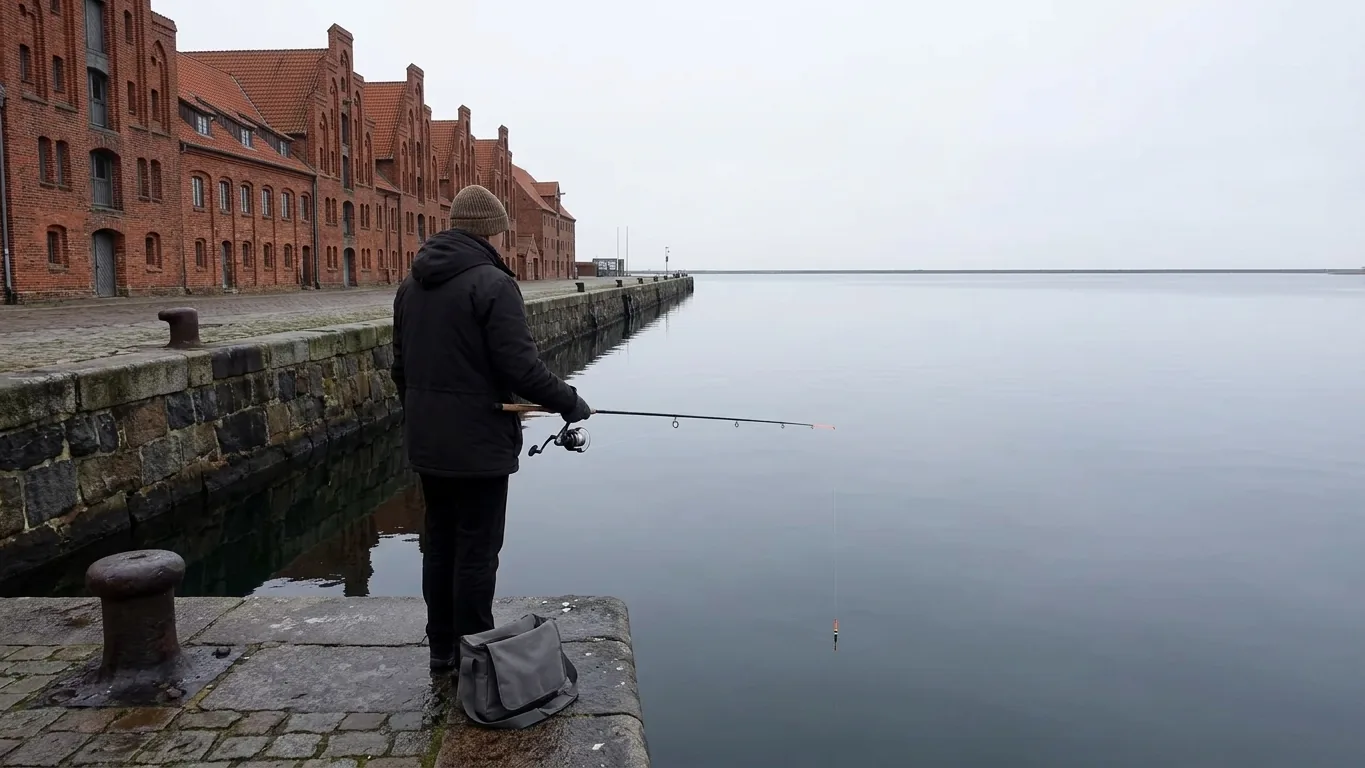
According to the LALLF, the order for Udarser Wiek and Koselower See targets commercial fishing gear and bans gill nets. But it also requires pike from other fishing gear to be released at once. Whether that includes the hand-held rod, the order does not say explicitly. The coastal fisheries regulation counts the hand-held rod as fishing gear, so I read the point as applying to anglers too. Until the LALLF confirms otherwise, I return every pike there, as described under Returning fish.
| Winter holding area | Period | Fishing | Pike |
|---|---|---|---|
| Hafen Stralsund | 12 Oct to 10 Mar | northern part and canals closed, otherwise 10 am to 6 pm with conditions | one a day |
| Lower Ryck, Greifswald | 12 Oct to 10 Mar | closed up to “An den Wurthen”, downstream 10 am to 6 pm with conditions | one a day |
| Lanckener Bek | 1 Nov to 31 Mar | 10 am to 6 pm with conditions | one a day |
| Hafen Wolgast, lower Uecker | 1 Nov to 31 Mar | restricted, details in the respective order | see the order |
| Neuendorfer Wiek | 1 Nov to 28 Feb | 10 am to 6 pm, natural bait only on a fixed float, no bait fish | release at once |
| Udarser Wiek, Koselower See | 1 Nov to 28 Feb | no fishing hours of its own, gill nets banned | release, see text |
Carrying the rod can be regulated too. On Stralsund’s northern pier no fishing gear is allowed outside fishing hours, and in the closed part of the Ryck only packed gear. Exceptions are also in the text: on the Ryck, the LALLF can allow joint fishing for the children’s and youth work of local clubs. The exception only applies once the authority has granted it.
Starting the catch record before the first cast
In winter holding areas with fishing hours, the orders require a catch record (Fangdokumentation) for every fishing day. With a day or week permit it is on the back. With an annual permit, a free catch diary from the fisheries inspection stations also works; you show the original permit to get one.
Before the first cast I enter the winter holding area, date and time, with abbreviations such as HST for Hafen Stralsund. If a pike, zander or perch comes ashore, I note species and length before the rig goes back in the water, with a ballpoint pen and legibly. When the permit expires, the record goes to the LALLF; you may black out personal data.
Reading boundaries on the shore correctly
Besides the harbour rules covered under Fishing in harbours and from piers, there are separate markers: barrels, signs or buoys with a yellow triangular flag, also for the areas under § 13. During the protection period the regulation bans gear ready for fishing there. So I carry the rod taken apart until I stand at a spot where fishing is allowed at that time.
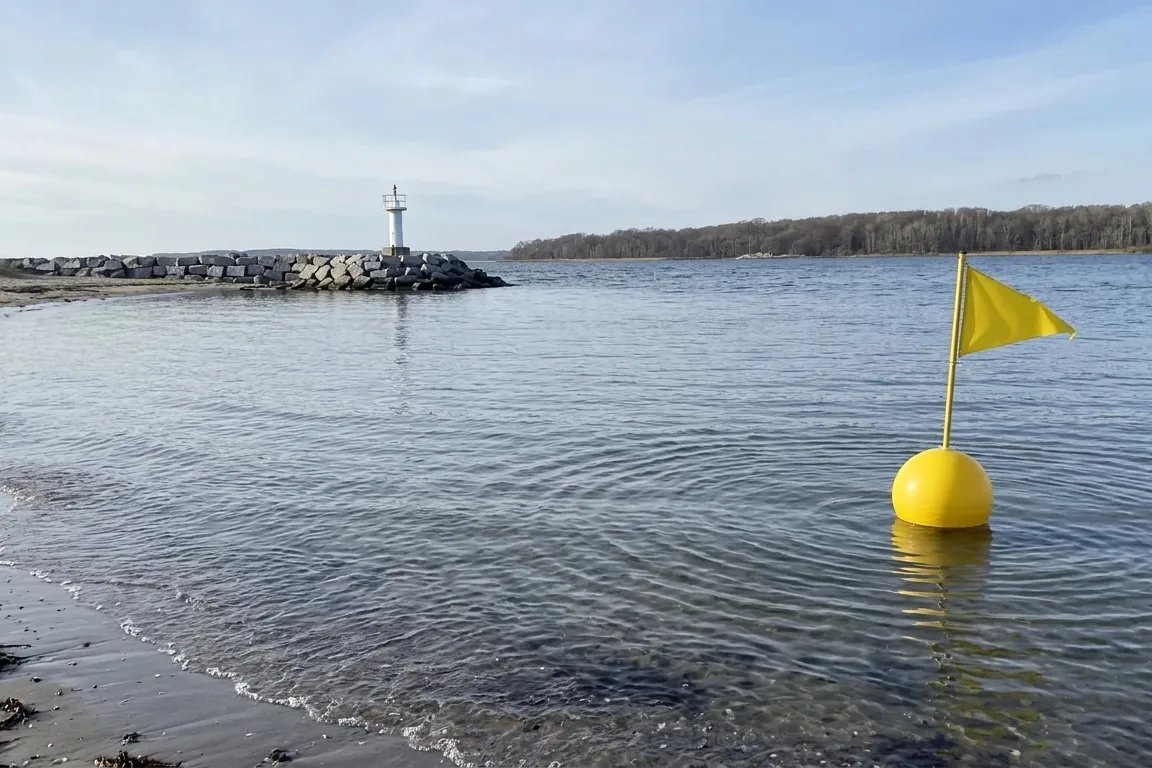 AI-generated
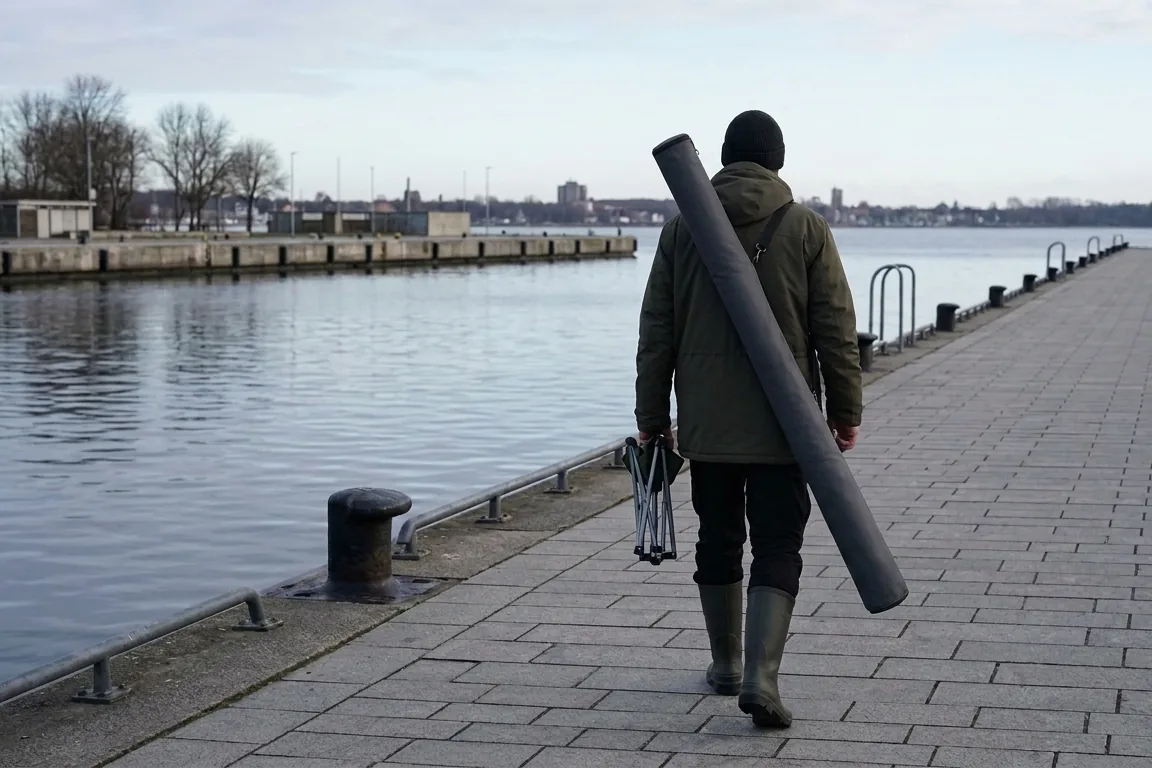 AI-generated
Since 2026 the state fisheries act also allows the authority to mark protected zones digitally. A missing sign on the shore therefore does not mean that nothing applies there.
Frequently asked questions
May I walk through a winter holding area with my rod?
What is regulated is carrying gear. It must not be ready for fishing in these areas during the protection period, and on Stralsund’s northern pier none is allowed at all outside fishing hours. Taken apart and packed, you are on the safe side.
Do winter holding areas also apply to inland lakes?
No, the LALLF orders concern coastal waters. Inland, the holder of the fishing rights sets the protected zones; they are printed on your fishing permit.
Do I need a separate permit for a winter holding area?
The orders know no separate winter holding area permit. They are aimed at holders of a fishing permit for the coastal waters, which includes the fishing licence (Fischereischein). What is new in the winter holding area is the catch record for every fishing day.
Will new winter holding areas be added?
That is open. In the Bodden pike project, the working group spoke out without dissent in favour of further winter holding areas (IGB). A new area would only apply once the LALLF has announced an order.
Related
- Pike: way of life and the pike of the Bodden in profile
- Pike fishing: holding spots, lures and rules in order
- Zander: the second species with a daily limit in the winter holding area
- Perch: features and habitat in the profile
- Fishing in Bodden, Förde and fjord: papers, sizes and spots on the flat coast
- Baltic coast of Mecklenburg-Western Pomerania: the region and its rules at a glance
- Pike on the coast of Mecklenburg-Western Pomerania: the slot limit since 29 September 2026
- Closed season and minimum size explained: terms and how to measure
Sources
- LALLF Mecklenburg-Vorpommern: Schonbezirke (sieben Winterlager, § 13, Ziele, Fangdokumentation)
- LALLF Mecklenburg-Vorpommern: Rechtsvorschriften, Landesrecht (Fundstellen der Verfügungen)
- LALLF Mecklenburg-Vorpommern: Aktuelles aus der Fischerei (Udarser Wiek, berufliche Fanggeräte)
- LALLF Mecklenburg-Vorpommern: Küstenfischereiverordnung, Arbeitskopie 2026 (§§ 1, 2, 11, 13, 16, 25)
- LALLF Mecklenburg-Vorpommern: Landesfischereigesetz, Arbeitskopie 2026 (§§ 1, 18, 23)
- LALLF Mecklenburg-Vorpommern, Allgemeinverfügungen (konsolidierte Fassungen): Hafen Stralsund, unterer Ryck, Lanckener Bek, Neuendorfer Wiek, Udarser Wiek und Koselower See (Zeiträume, Zonen, Auflagen, Fangdokumentation)
- LALLF Mecklenburg-Vorpommern: Allgemeinverfügung Udarser Wiek und Koselower See vom 20. September 2024 (Stellnetzverbot, Hechte zurück)
- Leibniz-Institut für Gewässerökologie und Binnenfischerei: Empfehlungen für das künftige Management des Boddenhechts (Fischansammlungen, Reißen, neue Winterlager)
- Freistaat Bayern: Bayerisches Fischereigesetz, Art. 59: Schonbezirke (Winterlager in einem anderen Land)
Text AI-assisted, title image, drawing and all images in the text AI-generated. Sources opened and checked in October 2026; no graphic was taken from the sources.
All information is a guide only and without guarantee. Winter holding areas can change with every new order. What applies at your water is set by state law.